

Published by Oravbiere Osayomore Promise.
The All Progressives Congress (APC) has unveiled a comprehensive leadership structure for its 2026 presidential primary, appointing Rivers State Governor Siminalayi Fubara and dozens of other serving and former governors as state coordinators and collation officers across the 36 states and the Federal Capital Territory. The party also named a seven‑member Presidential Primary Election Committee headed by former Senate President Pius Anyim, and a separate appeal committee chaired by former Katsina State Governor Aminu Masari. The announcement, contained in guidelines issued by the APC National Secretariat in Abuja on Thursday, May 21, 2026, and signed by National Secretary Senator Ajibola Basiru, confirmed that the primary would be conducted through a direct voting system, allowing all registered party members nationwide to participate in the exercise across the country’s 8,809 wards on May 24, 2026.
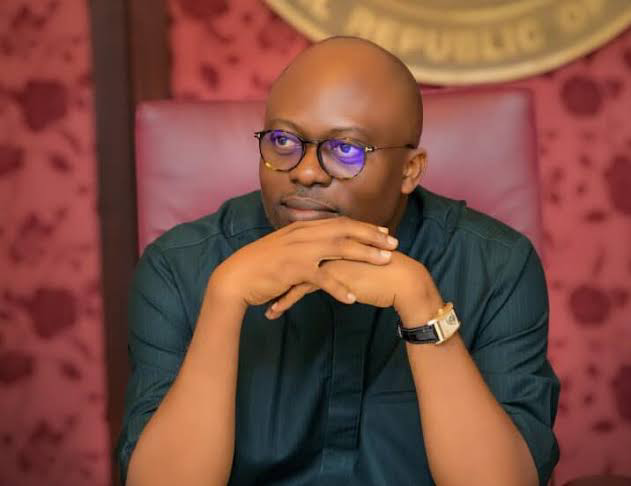
The appointment of Governor Fubara as Rivers State coordinator is particularly striking, coming just 48 hours after his dramatic withdrawal from the APC governorship primary. Fubara, who had purchased nomination forms to contest a second term, announced his exit on Wednesday, May 20, citing the need for peace, stability, and unity in Rivers State. His withdrawal followed intense political pressure linked to his estranged relationship with his predecessor and current Minister of the Federal Capital Territory, Nyesom Wike. Despite stepping aside from the gubernatorial race, Fubara has now been handed a prominent national role, tasked with overseeing the presidential primary in his state and collating results for transmission to the national committee in Abuja. The move signals the party’s determination to keep the Rivers governor within its fold and to leverage his influence in a state that has become a political battleground.
The list of state coordinators released by the APC reads like a who‑s‑who of the party’s top brass. Serving governors appointed include Hope Uzodimma (Imo), AbdulRahman AbdulRazaq (Kwara), Babagana Zulum (Borno), Babajide Sanwo‑Olu (Lagos), Uba Sani (Kaduna), Hyacinth Alia (Benue), Sheriff Oborevwori (Delta), Francis Nwifuru (Ebonyi), Monday Okpebholo (Edo), Peter Mbah (Enugu), Umar Namadi (Jigawa), Dikko Radda (Katsina), Nasir Idris (Kebbi), Usman Ododo (Kogi), Lucky Aiyedatiwa (Ondo), Caleb Mutfwang (Plateau), Ahmad Aliyu (Sokoto), Agbu Kefas (Taraba), Mai Mala Buni (Yobe), and Dauda Lawal (Zamfara). Several former governors and national assembly leaders were also named, including former Speaker Yakubu Dogara for Bauchi State, Deputy Speaker Benjamin Kalu for Abia State, Senator Teslim Folarin for Oyo State, former Osun Governor Adegboyega Oyetola, and former Senator Phillip Aduda for the FCT.
The Presidential Primary Election Committee, chaired by Pius Anyim, includes former Senate President Ken Nnamani, former Senate Leader Victor Ndoma‑Egba, former Deputy Governor Grace Titi Laoye‑Ponle, former Speaker Yakubu Dogara, and former Kogi State Governor Idris Wada. Senator Sanusi Musa will serve as secretary. The Appeal Committee is chaired by Aminu Masari, with Samuel Pwajok as secretary and former House Speaker Patricia Etteh as a member.
The adoption of a direct primary for the presidential ticket marks a historic departure from the delegate‑based model that has historically concentrated the power of nomination in the hands of a few party officials. Under the new system, every registered APC member across Nigeria’s 8,809 wards will be eligible to vote for the presidential aspirant of their choice. The party explained that results from each ward will be collated at the local government level by officers appointed jointly by the State Coordinator and the National Working Committee (NWC). State Coordinators and Collation Officers will then aggregate results from all local governments in their states and present them to the Presidential Primary Election Committee in Abuja on May 24, 2026. The guidelines also provide for the existing “Procedure for the Conduct of Direct and Consensus Mode of Primaries” previously transmitted to the Independent National Electoral Commission (INEC) on May 15, 2026.
The primary will feature two presidential aspirants: incumbent President Bola Ahmed Tinubu and businessman Stanley Osifo. The contest is widely viewed within political circles as a coronation exercise, with Tinubu expected to secure a landslide victory as the party prepares for the 2027 general election. However, the direct primary process represents a significant democratic experiment, offering ordinary party members a direct say in the nomination of the party’s flagbearer for the first time in the APC’s history.
Governor Siminalayi Fubara’s inclusion in the coordination team is a calculated move by the party leadership. Just two days before his appointment, Fubara had withdrawn from the Rivers State APC governorship primary, a decision he made after a meeting with President Tinubu. In his withdrawal statement, Fubara said he was stepping aside not out of fear but out of a conviction to sacrifice for Rivers State to “move forward in peace and unity.” Hours later, his elder brother, Blessing Fubara, picked up the governorship nomination form of the Nigeria Democratic Congress (NDC), signaling that the Fubara political dynasty was shifting allegiance to a different platform. Yet the younger Fubara’s appointment as Rivers State coordinator for the presidential primary suggests that the APC is not ready to let him go. His role will be critical in ensuring that the party’s presidential primary in Rivers State is conducted smoothly and that the state’s substantial voting bloc is delivered for President Tinubu.
The Rivers political landscape remains deeply fractured, with the fallout between Fubara and his predecessor, Nyesom Wike, continuing to shape the state’s politics. The APC screening committee had earlier disqualified dozens of Fubara’s loyalists from contesting House of Assembly primaries, while clearing candidates aligned with Wike. The tension spilled into the governorship primary, where all major aspirants except OK Chinda withdrew, leaving Chinda as the consensus candidate. Fubara’s new national assignment may be an attempt by the party to balance the competing interests within the Rivers APC and to keep the governor engaged at a higher level, away from the messy state‑level battles.
The successful conduct of the direct primary across 8,809 wards on May 24 will be a logistical challenge of unprecedented scale for the APC. The party has deployed its most senior governors and political leaders to oversee the exercise, underscoring the importance it attaches to a credible and transparent process. With the primary expected to reaffirm President Tinubu’s leadership and position the party for the 2027 elections, the performance of the state coordinators will be closely watched. For Governor Fubara, the assignment offers a chance to demonstrate his organisational capability on the national stage, even as his political future in Rivers State remains uncertain. As the APC prepares for its historic direct primary, all eyes are on the men and women who have been entrusted with the task of delivering a free, fair, and credible exercise – and on the millions of party members who will finally have a direct say in who leads their party into the 2027 election.
📩 Stone Reporters News | 🌍 stonereportersnews.com
✉️ info@stonereportersnews.com | 📘 Facebook: Stone Reporters News | 🐦 X (Twitter): @StoneReportNew | 📸 Instagram: @stonereportersnews
Add comment
Comments