

Reported by: Ijeoma G | Edited by: Oravbiere Osayomore Promise.
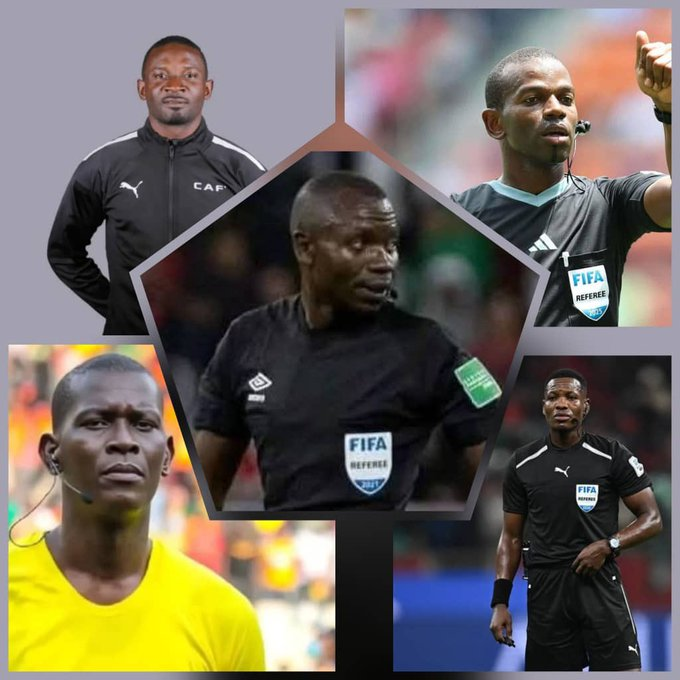
Reports emerging from multiple football media outlets indicate that five referees who officiated at the 2025 Africa Cup of Nations have been removed from consideration for the 2026 FIFA World Cup. While neither FIFA nor the Confederation of African Football has issued a detailed public confirmation naming affected officials, the development has triggered widespread discussion within officiating and football governance circles. The situation is being framed as part of a broader review of refereeing performance following a highly scrutinised AFCON tournament.
According to the reports, the decision is linked to internal performance assessments conducted after the conclusion of AFCON 2025, which was hosted in Morocco. The tournament was marked by several contentious refereeing decisions, including VAR interventions that sparked protests, match delays, and disputes between teams and officials. These incidents reportedly contributed to heightened scrutiny of referees who were under evaluation for possible inclusion in FIFA’s elite World Cup list.
The FIFA World Cup refereeing selection process is traditionally rigorous and multi-layered, involving continuous monitoring of referees across domestic leagues, continental competitions, and FIFA-sanctioned events. Officials are assessed on decision accuracy, consistency, fitness levels, positioning, communication with assistant referees, and adherence to VAR protocols. Performances at major tournaments such as AFCON are considered significant indicators in determining eligibility for global assignments.
While details remain unconfirmed officially, media reports suggest that the affected referees were part of a wider CAF officiating pool that underwent mid-tournament and post-tournament evaluations. CAF has in previous tournaments occasionally rotated or removed officials based on performance concerns, particularly in knockout stages where match intensity and pressure are significantly higher. However, the reported exclusion from World Cup consideration would represent a more consequential long-term impact on their international careers.
AFCON 2025 itself was widely described as one of the more controversial editions in recent years, with several matches drawing criticism for inconsistent officiating standards. Observers pointed to disputed penalty decisions, disallowed goals, and VAR delays that influenced match momentum. These issues intensified debates about the readiness of some referees for the highest levels of global competition and prompted calls for stronger training and evaluation systems.
CAF has been working in recent years to improve refereeing standards through enhanced training programmes, fitness testing, and the increased use of video analysis technology. These reforms aim to align African refereeing with global expectations and improve consistency in decision-making. Despite these efforts, challenges persist, particularly in managing high-pressure fixtures where interpretation of rules can vary between officials.
FIFA’s Referees Committee is responsible for the final selection of World Cup officials, although it relies heavily on recommendations and performance data provided by continental confederations such as CAF, UEFA, CONMEBOL, and others. As part of this process, referees who underperform in major tournaments may find their progression paused or halted, especially if errors are deemed to have had significant impact on match outcomes.
The reported removal of five referees from World Cup consideration has therefore been interpreted by analysts as a reflection of stricter global standards rather than an isolated disciplinary action. However, in the absence of official statements naming individuals or confirming sanctions, uncertainty remains regarding the exact basis and scope of the decision. Football governance bodies typically keep referee evaluation details confidential unless formal disciplinary proceedings are initiated.
Within African football circles, the development has renewed debate about referee development pathways and the pressure placed on officials representing the continent on the global stage. AFCON is often seen as a key platform for referees aspiring to World Cup appointments, meaning any negative assessment at this level can significantly influence future opportunities. Stakeholders continue to emphasise the need for consistent support systems and transparent evaluation frameworks.
As preparations continue for the expanded 2026 FIFA World Cup in North America, competition for officiating slots remains intense. With more teams participating than in previous editions, FIFA is expected to select a larger pool of referees, but standards remain uncompromising. Final appointments are expected to be confirmed closer to the tournament, which may provide clarity on whether the reported exclusions are permanent or part of an ongoing evaluation cycle.
Beyond the immediate tournament outcomes, FIFA’s referee assessment framework relies heavily on confidential match reports compiled by technical observers. These reports evaluate positioning accuracy, foul recognition, advantage application, and interaction with VAR officials. Each referee receives cumulative scores across multiple competitions, which are then reviewed during annual FIFA seminars. Continental confederations also submit independent evaluations, which may either reinforce or contrast FIFA’s internal grading, influencing final World Cup eligibility decisions.
AFCON 2025 also intensified debate over VAR consistency across African football, with several coaches publicly questioning delays and interpretation standards. Some matches reportedly experienced extended stoppages while referees reviewed contentious incidents on the pitch-side monitor. Although CAF defended the use of VAR as aligned with global standards, critics argued that uneven implementation affected match flow and player discipline, ultimately increasing pressure on referees already under scrutiny.
For referees implicated in the reported exclusion, the consequences extend beyond immediate tournament absence. Being omitted from World Cup consideration can reduce future appointment opportunities in continental finals and elite club competitions. It also affects professional reputation, as referee rankings are closely monitored by confederations and domestic associations. Psychological pressure within elite officiating has become an increasing concern, particularly as social media scrutiny amplifies criticism of individual match decisions.
Looking ahead, FIFA is expected to publish its final list of match officials for the 2026 World Cup following a series of preparatory seminars and fitness assessments scheduled across multiple continents. Observers anticipate that the expanded tournament format will require greater depth in officiating resources, but selection criteria will remain strict. For CAF, the focus is likely to remain on rebuilding confidence in African refereeing through sustained investment and structural reform.
Further updates are expected once FIFA releases official referee confirmation list updates.
📩 Stone Reporters News | 🌍 stonereportersnews.com
✉️ info@stonereportersnews.com | 📘 Facebook: Stone Reporters News | 🐦 X (Twitter): @StoneReportNew | 📸 Instagram: @stonereportersnews
Add comment
Comments