

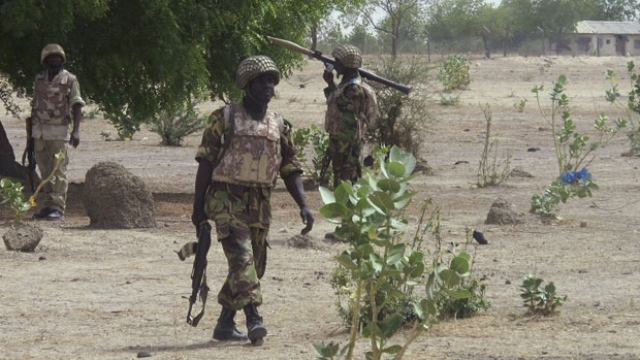
Adamawa Raid Yields 20 Arrests as Troops Intensify Security Sweep in Mubi North
Troops of the Nigerian Army’s 232 Battalion (Tactical) arrested 20 suspects and recovered cash and electronic items during a pre-dawn raid on suspected criminal hideouts in Mubi North Local Government Area of Adamawa State, according to security-linked reports published on April 11. The operation was said to have taken place at about 5:00 a.m. on April 10 in the Agwan Rami and Agwan Mallam areas, where troops, working alongside local hunters, moved into locations identified through intelligence. Reports on the raid were consistent on the central details, including the number of suspects arrested and the items recovered, although no detailed formal statement from the Nigerian Army was immediately visible in open-source reporting reviewed on Saturday.
According to the accounts, soldiers stormed the hideouts in a coordinated cordon-and-search exercise after what sources described as credible intelligence. Security sources said the operation targeted areas believed to be serving as bases for criminal activity. During the sweep, 20 suspects were taken into custody, while other individuals were reportedly picked up for loitering during curfew hours. Recovered items included seven mobile phones, eight touch lights, one ThinkPad laptop and ₦2,137,285 in cash. The suspects were said to be in custody for further investigation and possible prosecution.
The raid comes against a backdrop of mounting security pressure in and around Mubi, a strategic commercial and border-facing area in northern Adamawa that has long been vulnerable to spillover threats from the wider insurgency in the North-East as well as to banditry, kidnapping and other organised crime. Although Adamawa is not the epicentre of the Boko Haram conflict in the way Borno has been, Mubi North has repeatedly surfaced in recent security reporting as an area of concern, with troops and local auxiliaries conducting repeated operations there.
Only days before the latest raid, troops of the same 232 Battalion were reported to have arrested several suspected members of terrorist groups in another cordon-and-search operation in Mubi North. In that earlier operation, security reports said troops acted on intelligence and worked with local hunters in a pattern similar to the April 10 raid. That sequence suggests the latest arrests may be part of a sustained clearance campaign rather than a single isolated action, with security agencies focusing on disrupting both criminal hideouts and possible support structures used by armed groups.
The role of local hunters in the operation is also notable. Across parts of northern Nigeria, the military, police and other state security agencies have increasingly depended on hunters, vigilantes and other community-based actors for terrain knowledge, early warning and support in raids. In Mubi and nearby areas, this collaboration has become a visible feature of counter-crime and counter-insurgency operations, especially where communities are familiar with routes, settlements and suspicious movement patterns that outsiders may miss. Supporters of the approach argue that it improves intelligence quality and speed of response, though rights advocates have also repeatedly stressed the need for accountability, supervision and adherence to legal procedures whenever non-state auxiliaries take part in security operations.
The wider regional context has added urgency to such operations. In recent days, Nigeria’s North-East has again been in focus after a deadly attack on a military base in Benisheikh, Borno State, in which Brigadier General Oseni Omoh Braimah was killed, according to official and international reporting. At the same time, courts in Abuja have continued handling large batches of terrorism-related cases, underlining how the insurgency and related security threats remain central national concerns. Against that backdrop, operations in Adamawa are being interpreted not simply as anti-crime sweeps, but as part of a broader effort to prevent infiltration, logistics support and local criminal networks from deepening insecurity.
Security concerns in Adamawa have also driven longer-term military planning. In July 2025, multiple reports said the Armed Forces planned to establish a new sector command in Mubi to strengthen security coverage in the state, with senior military leadership citing the need to respond more effectively to threats from non-state actors and infiltration routes. While that announcement predated the latest arrests, it reflected how seriously authorities have viewed the security picture around Mubi and northern Adamawa. The recent operations appear broadly consistent with that effort to build a stronger and more permanent security footprint in the area.
What remains unclear for now is the precise identity of those arrested in Friday’s raid and whether investigators believe they are connected to insurgent networks, armed robbery, kidnapping rings or other criminal activity. Open-source reports reviewed so far describe the locations as criminal hideouts, but they do not provide individual names, charges or specific evidence linking the detainees to a particular organisation. Nor was there, at the time of review, a detailed public statement from the Army spelling out the investigative findings. That means the significance of the cash and recovered electronics remains uncertain until authorities disclose more from interrogations or any follow-up prosecutions.
Still, the operation is likely to be welcomed by many residents in Mubi North, where repeated security incidents have fed anxiety and disrupted daily life. The combination of intelligence-led raids, curfew enforcement and collaboration with local security partners points to an increasingly assertive posture by forces operating in Adamawa. Whether that translates into lasting improvement will depend on what investigators uncover, whether prosecutions follow, and whether authorities can sustain pressure without alienating communities whose trust is essential to intelligence gathering. For now, the April 10 raid stands as the latest sign that Mubi remains a key front in Adamawa’s effort to contain crime and prevent a broader deterioration in security.
📩 Stone Reporters News | 🌍 stonereportersnews.com
✉️ info@stonereportersnews.com | 📘 Facebook: Stone Reporters News | 🐦 X (Twitter): @StoneReportNew | 📸 Instagram: @stonereportersnews
Add comment
Comments