

Reported by: Oahimire Omone Precious | Edited by: Oravbiere Osayomore Promise.
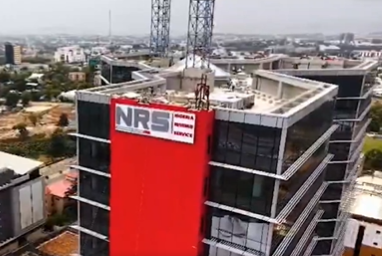
Abuja is set to host a major federal ceremony on April 14, 2026, as President Bola Ahmed Tinubu is expected to commission the newly completed corporate headquarters of the Nigeria Revenue Service, marking a key milestone in the country’s ongoing efforts to strengthen tax administration and expand non-oil revenue generation.
The project, originally approved about 14 years ago, had remained uncompleted for years before being revived and delivered under the current administration. Government officials say its completion reflects a renewed focus on policy continuity and infrastructure delivery within key federal institutions, particularly those tied to Nigeria’s fiscal stability.
The Nigeria Revenue Service, formerly known as the Federal Inland Revenue Service, is the federal agency responsible for tax assessment, collection, and administration on behalf of the federal government. It plays a central role in Nigeria’s economic structure, especially as the country continues to seek alternatives to its long-standing dependence on oil revenue.
The new headquarters is expected to serve as a central coordination hub for the agency’s nationwide operations. Officials say the building has been designed to support modern, technology-driven tax administration, including improved data systems, digital compliance tools, and enhanced operational efficiency. The aim is to reduce leakages, improve transparency, and streamline interactions between taxpayers and the government.
Under the leadership of Executive Chairman Zacch Adedeji, the agency has undergone a series of reforms focused on expanding the tax base and improving collection efficiency. Since assuming office, Adedeji has emphasized digital transformation, institutional restructuring, and closer collaboration with both public and private sector stakeholders to improve revenue performance.
Recent policy direction within the agency has prioritized non-oil revenue growth, reflecting Nigeria’s broader economic challenge of diversifying its income sources. With fluctuations in global oil prices and rising fiscal demands, government planners have increasingly turned to taxation as a more stable and predictable source of funding for public expenditure.
Officials familiar with the reform process say the revenue service has recorded improvements in efficiency, supported by automation systems that have simplified tax filing and compliance procedures. These changes are also aimed at reducing bureaucratic bottlenecks that have historically affected revenue collection in the country.
The completion of the headquarters is being presented by government sources as part of a wider institutional strengthening agenda. Over the years, several federal projects have experienced delays due to funding constraints, administrative challenges, or changes in government priorities. The delivery of this project is therefore being viewed as a demonstration of renewed focus on completing long-standing infrastructure commitments.
Abuja, as the federal capital, continues to serve as the administrative centre of Nigeria. Since its establishment as the capital in 1991, it has hosted key government institutions, including ministries, departments, agencies, and diplomatic missions. The city’s role as the seat of power makes it a symbolic location for major national events such as the commissioning of federal infrastructure.
Policy analysts note that the Nigeria Revenue Service headquarters project also carries symbolic weight beyond its physical structure. It represents the government’s broader ambition to modernise public institutions and strengthen the systems that support economic governance. For many stakeholders, efficient tax administration is seen as critical to addressing Nigeria’s growing fiscal pressures.
At the same time, the country continues to face significant economic challenges, including rising public debt, inflationary pressures, and the need for increased investment in infrastructure and social services. In this context, improving domestic revenue generation has become a central policy priority for the federal government.
The administration has repeatedly emphasized that sustainable economic growth will depend heavily on expanding the tax net and improving compliance across different sectors of the economy. This includes efforts to bring more informal sector activities into the formal tax system and reduce reliance on oil-related income.
The upcoming commissioning event is expected to attract senior government officials, policymakers, and representatives from the financial and economic sectors. It is also likely to serve as a platform for highlighting ongoing reforms within the tax administration system and outlining future priorities for revenue generation.
While supporters of the project view it as a step toward more efficient governance and stronger fiscal management, some observers argue that the real test will be in how effectively the institution delivers on its mandate in the coming years. They emphasize that infrastructure alone is not sufficient without sustained reforms and improved institutional performance.
Nonetheless, the completion of the headquarters marks a notable development in Nigeria’s fiscal reform journey. As the country continues to navigate complex economic conditions, attention will remain focused on how institutions like the Nigeria Revenue Service adapt to evolving challenges and contribute to national development goals.
📩 Stone Reporters News | 🌍 stonereportersnews.com
✉️ info@stonereportersnews.com | 📘 Facebook: Stone Reporters News | 🐦 X (Twitter): @StoneReportNew | 📸 Instagram: @stonereportersnews
Add comment
Comments