

Reported by: Ijeoma G | Edited by: Oravbiere Osayomore Promise.
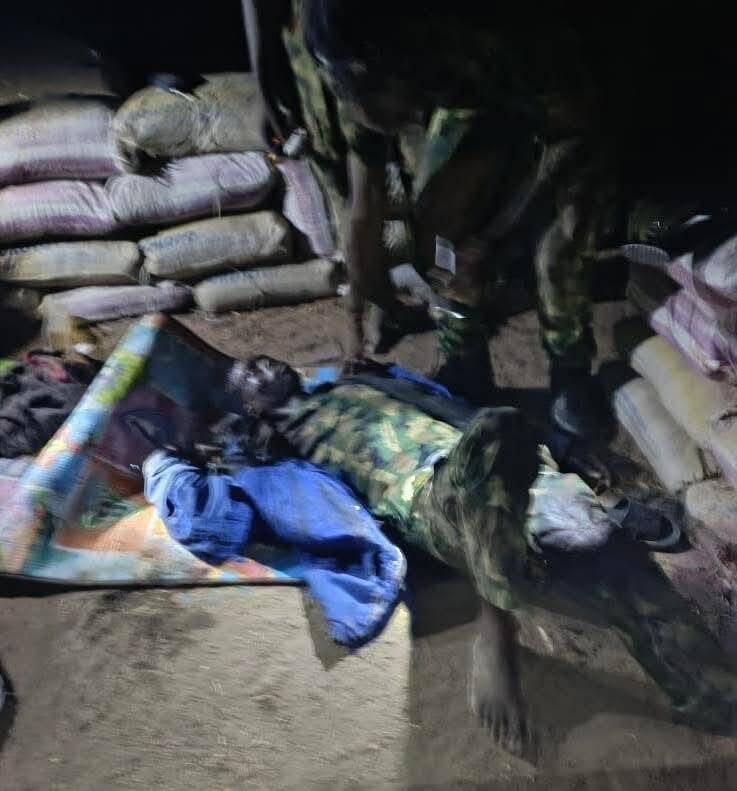
A fresh wave of violence has struck Nigeria’s north-central region, with armed militants launching a deadly midnight assault on Kemanji community in Kaiama Local Government Area of Kwara State, leaving at least four soldiers dead and several residents abducted, according to early reports from local sources and security officials familiar with the incident.
The attack, which occurred in the early hours of Monday, April 20, 2026, underscores a deepening security crisis in an area already reeling from one of the deadliest episodes of violence recorded in Nigeria this year. While full official details of the latest assault are still emerging, the pattern of violence mirrors earlier attacks in the Kaiama axis, where extremist groups and heavily armed bandits have intensified operations in recent months.
Residents described scenes of panic and chaos as gunmen stormed the rural community under cover of darkness, opening fire and overwhelming local defenses. The presence of soldiers in the area suggests the attackers directly targeted a security formation, leading to the confirmed deaths of at least four military personnel. Several villagers were reportedly taken hostage during the raid, though the exact number of abductees remains unclear as search and rescue efforts continue.
The latest incident comes weeks after a series of coordinated attacks in nearby communities within Kaiama, particularly Woro and Nuku, where large numbers of civilians were killed in February. Those earlier assaults marked a turning point in the security landscape of Kwara State, a region not traditionally associated with large-scale insurgency.
In the February attacks, armed militants carried out a prolonged assault lasting several hours, killing more than 160 people, with some estimates placing the toll above 200 as additional bodies were later discovered. Survivors recounted how attackers moved from house to house, executing residents, burning buildings, and abducting dozens, including women and children.
Authorities and analysts have linked those attacks to jihadist factions, including Boko Haram splinter groups and Islamic State-affiliated networks, which are believed to be expanding their operational footprint beyond Nigeria’s northeast into central and western regions.
The Kaiama area, which borders Niger State and lies close to forest corridors, has increasingly become a strategic zone for armed groups seeking new bases. Security experts note that the terrain provides cover for militants while allowing them to launch cross-border raids and evade military pursuit.
In response to the February massacre, President Bola Tinubu ordered a major military deployment to Kwara State under a security initiative aimed at protecting vulnerable communities and dismantling militant networks operating in the region.
Despite these efforts, the latest attack in Kemanji suggests that armed groups retain the capacity to strike, raising concerns about the effectiveness of ongoing counterterrorism measures. Local residents have repeatedly called for a stronger and more sustained security presence, warning that isolated deployments have failed to deter attackers.
Eyewitness accounts from previous incidents indicate that militants often precede their attacks with attempts to impose ideological control on communities. In some cases, villagers were reportedly threatened or warned before violence erupted when those demands were rejected.
The brutality of such attacks has drawn widespread condemnation within Nigeria, with government officials describing the violence as barbaric and vowing to bring those responsible to justice. Humanitarian organizations have also highlighted the devastating impact on civilians, including mass displacement, loss of livelihoods, and deep psychological trauma.
The earlier February attacks also exposed gaps in intelligence and response, with reports suggesting that warnings had been issued prior to the violence but were not adequately acted upon. In the aftermath, emergency services struggled to reach affected communities due to their remote location, delaying medical assistance and evacuation efforts.
Monday’s attack appears to follow a similar pattern of surprise and speed, with militants striking at night when communities are most vulnerable. The killing of soldiers in the latest incident signals a direct confrontation with security forces, indicating a possible escalation in tactics.
Security analysts warn that the spread of militant activity into Kwara reflects a broader shift in Nigeria’s security dynamics, as pressure on insurgents in the northeast pushes them into new regions. The convergence of jihadist groups, bandit networks, and local grievances has created a complex and volatile environment that is increasingly difficult to contain.
For residents of Kaiama and surrounding communities, the recurrence of violence has deepened fear and uncertainty. Many families displaced by earlier attacks have yet to return home, while others continue to live under constant threat of renewed assaults.
As authorities intensify efforts to track down those responsible for the Kemanji raid, questions remain about how to prevent further incursions and restore confidence in the region’s security architecture. The Nigerian military has not yet issued a comprehensive statement on the latest incident, but officials are expected to provide updates as investigations progress.
The unfolding situation in Kwara highlights the urgent need for coordinated security, intelligence, and community engagement strategies to address the evolving threat. Without sustained intervention, analysts warn, the region risks becoming a new center of militant activity in Nigeria.
For now, the people of Kemanji mourn their dead and search for missing loved ones, as the country confronts yet another grim reminder of its ongoing battle against violence and insecurity.
📩 Stone Reporters News | 🌍 stonereportersnews.com
✉️ info@stonereportersnews.com | 📘 Facebook: Stone Reporters News | 🐦 X (Twitter): @StoneReportNew | 📸 Instagram: @stonereportersnews
Add comment
Comments