

Reported by: Oahimire Omone Precious | Edited by: Oravbiere Osayomore Promise.
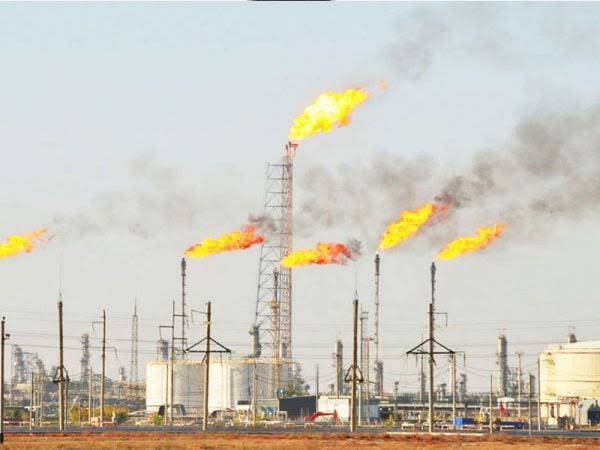
Oil and gas companies operating in Nigeria paid an estimated $646 million in gas flaring penalties in 2025, the highest level in five years, as emissions surged and longstanding regulatory efforts continued to fall short. The figure represents a sharp increase from previous years and underscores persistent gaps in the country’s long-running campaign to curb the wasteful and environmentally damaging practice of burning off natural gas during oil extraction. According to data corroborated by the National Oil Spill Detection and Response Agency (NOSDRA), the penalties accounted for about 58.7 percent of the total value of gas flared, which stood at $1.1 billion during the year. Despite decades of regulatory interventions aimed at reducing emissions and encouraging the commercialisation of associated gas, oil producers flared approximately 323.2 million standard cubic feet (scf) of gas in 2025, highlighting enduring inefficiencies in upstream operations.
Flaring volumes have remained inconsistent over the past five years. Nigeria recorded 349.3 million scf in 2020, declining to 264.6 million scf in 2021 and 230.1 million scf in 2022, before rising again to 278.3 million scf in 2023 and 301.3 million scf in 2024, signalling a troubling reversal of earlier gains. The all-time high penalties payable was $934 million in 2018, when oil companies flared gas valued at $1.6 billion, underscoring that the problem has deep roots in the country’s oil sector. Industry analysts argue that the current penalty regime has not been strong enough to drive behavioural change among operators. “Fines for flaring should be increased to make reinjection more attractive,” said Jide Pratt, country manager at TradeGrid, noting that weak penalties and the high cost of gas infrastructure continue to incentivise flaring.
Under current Nigerian rules, producers pumping 10,000 barrels per day or more are charged $2.00 per 1,000 scf flared, while smaller operators pay $0.50. However, critics say these fines are too low to deter flaring, especially when compared to the market value of natural gas. A report by Accountability Lab Nigeria noted that the current fine of $2 per 1,000 scf is insufficient to discourage the practice, and called for penalties to be increased to match the market price of gas. Concerns are also mounting over the pace of progress under the government’s “Decade of Gas” initiative. “Are we truly prepared for significant gas uptake and utilisation, especially with about 40 percent of the timeline already elapsed and limited progress in flare reduction?” said Oyinkepreye Orodu, a sub-surface and energy researcher.
Recent disclosures by the Nigerian Upstream Petroleum Regulatory Commission (NUPRC) show that N289.306 billion in gas flare penalties were remitted to the Federal Government between January and November 2025. This represents about 3.07 percent of the N9.411 trillion total revenue collected from oil and gas operators over the same period, indicating that while penalties are rising, they remain a relatively small component of overall sector earnings. Historical data pointed to a sharp increase in collections in recent years. The Commission’s Annual Financial and Operational Performance Report shows that N602.2 billion was generated from gas flare penalties between 2022 and 2024. Collections rose from N70.4 billion in 2022 to N140.5 billion in 2023, before surging to N391.3 billion in 2024, highlighting both improved enforcement and sustained high flaring levels. Despite this upward trend in penalty revenues, analysts warned that without stronger economic incentives and expanded gas infrastructure, Nigeria may struggle to achieve meaningful reductions in flaring in the near term.
The environmental cost of gas flaring remains severe. NOSDRA reported that between January and May 2025 alone, gas flaring contributed 8.2 million tonnes of carbon dioxide into the atmosphere and had a power generation potential of 15,400 gigawatt hours (GWh). The offending companies were liable for penalties payment of $308.1 million during that five-month period. In 2024, Nigeria flared gas worth $1.05 billion, emitting an estimated 16 million tonnes of CO2, according to government data, despite pledges to end routine flaring. Recent satellite and ground data for 2025 reveal a troubling rise in methane emissions across the country’s oil-producing regions, signaling that current mitigation efforts are falling short. Persistent infrastructure deficiencies continue to hamper gas development and utilisation. The report noted that the country’s gas sector still suffers from inadequate infrastructure and poor interconnectivity across the value chain.
Companies that have paid gas flaring penalties include major international and indigenous operators such as Shell, Chevron, Mobil, Agip, Seplat, and the Nigerian Petroleum Development Company, among others. Despite ongoing enforcement, industry watchers note that some firms find it cheaper to pay fines than to invest in the costly infrastructure needed to capture and utilise associated gas. The federal government has committed to eliminating routine gas flaring by 2030 and reducing methane emissions by 60 percent by 2031, but execution has been uneven. As Africa’s largest oil producer continues to grapple with this decades-old problem, the record $646 million in penalties serves as both a revenue stream for the government and a stark reminder of the urgent need for more effective regulation, stronger enforcement, and meaningful investment in gas capture technology.
📩 Stone Reporters News | 🌍 stonereportersnews.com
✉️ info@stonereportersnews.com | 📘 Facebook: Stone Reporters News | 🐦 X (Twitter): @StoneReportNew | 📸 Instagram: @stonereportersnews
Add comment
Comments