

Reported by: Ijeoma G | Edited by: Oravbiere Osayomore Promise.
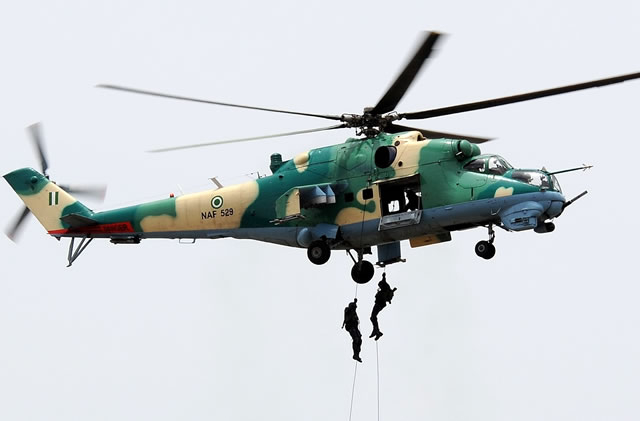
At approximately 9:30 p.m. on Wednesday, May 20, 2026, a suspected Nigerian military airstrike slammed into Kawon Urege village in Rafi Local Government Area of Niger State. Minutes earlier, a group of local vigilantes had returned to the village after confronting cattle-rustling bandits who have terrorised the region for years. They were gathered refuelling their motorcycles, preparing to rest after a dangerous patrol, when the bombs fell. At least nine people died on the spot. Among the victims were members of the Kawo Ushama vigilante group, local men who had taken up arms to defend their community because the state had failed to protect them. Instead, they were killed by the very military that was supposed to be their ally.
The airstrike has sent shockwaves through the community of Kawon Urege and its surrounding villages, which have long been battlegrounds in Nigeria's grinding war against banditry. According to accounts shared on Thursday morning, May 21, by security and conflict monitors on social media platform X, the vigilantes had been on a fighting patrol against a group of terrorists operating within the area when the incident occurred. A security expert who uses the online handle Bakatsine wrote on his verified X page: "Last night, tragedy struck Kawon Urege village in Rafi LGA of Niger State when a Nigerian military airstrike reportedly killed at least nine people, including local vigilantes." Another post alleged that the vigilantes had just returned from an operation against cattle-rustling bandits when they were mistakenly targeted. "Yet another security tragedy has been reported in Niger State after some members of the Kawo Ushama vigilante group were allegedly hit during an Air Force operation in the Kagara axis last night," Bakatsine stated. "How many more innocent lives must be lost before there is proper intelligence coordination and accountability in these operations?" he queried.
The victims' exact affiliation remains uncertain, but local sources say they were part of an informal community defence network that has operated in Rafi LGA for years. In the absence of adequate state security, vigilante groups across northern Nigeria have become the first—and often the only—line of defence against bandits who raid villages, rustle cattle, and kidnap for ransom. These groups work in precarious coordination with military forces, sharing intelligence and sometimes fighting alongside soldiers. But such coordination is often ad hoc, poorly communicated, and fraught with risk. In Kawon Urege, that lack of coordination appears to have had catastrophic consequences. The vigilantes had returned from a successful operation and were celebrating their survival in the village, gathered to refuel their motorcycles after the patrol when the airstrike occurred.
Pictures shared alongside the reports showed some victims receiving treatment on hospital beds, some of whom appeared severely injured. The exact number of wounded remains unclear, but the death toll of nine is likely to rise as more details emerge. Meanwhile, SaharaReporters' efforts to reach the Director of Public Relations and Information of the Nigerian Air Force, Air Commodore Ehimen Ejodame, were unsuccessful as he did not respond to several phone calls or a text message seeking his reaction to the incident. The Defence Headquarters has not issued any official statement on the Kawon Urege strike, leaving the community to grieve in silence and uncertainty.
The Kawon Urege strike fits a grim pattern that has defined Nigeria's military campaign against banditry in the North-West and North-Central regions. Since 2017, the Nigerian military has killed over 500 civilians in airstrikes, according to SBM Intelligence, a Lagos-based research firm that gathered reports and data from affected villages. In January 2025, at least 16 vigilantes were killed in a similar strike in Zamfara's Zurmi district. In September 2024, an airstrike in Kaduna State claimed 24 lives, all allegedly mistaken for bandits. In December 2022, more than 100 civilians were killed while pursuing bandits in Mutunji village. The recurring pattern is unmistakable: military aircraft, acting on intelligence of bandit movements, launch strikes on targets that turn out to be civilians, vigilantes, or local hunters. In most cases, the military denies responsibility, blames the victims for being in the wrong place, or insists that the strikes were accurate and the casualties were legitimate targets.
Human rights organisations have repeatedly called for improved intelligence gathering, transparent investigations, and compensation for victims of erroneous military strikes. Amnesty International, in particular, has documented multiple incidents where Nigerian military airstrikes have killed civilians, including the April 2026 strike on Jilli Market near the Borno–Yobe border, which reportedly left about 50 civilians dead, and the May 2026 strike on Tumfa Market in Zamfara, where at least 100 civilians were allegedly killed. In each case, the military denied the allegations or insisted that the targets were bandits or terrorists. The Defence Headquarters has developed a standard response: the strikes were precise, intelligence was credible, and any claims of civilian casualties are unverified or driven by "adversarial sources."
But in Kawon Urege, the victims were not anonymous civilians caught in the crossfire. They were men who had been fighting the same enemies the military was pursuing. They were partners in the campaign against banditry, not adversaries. If the military cannot distinguish between its allies and its enemies, then the entire counter-banditry strategy is dangerously flawed. This is the bitter irony at the heart of the Kawon Urege tragedy: the men who died were killed not by the bandits they had gone out to confront, but by the bombs of the very military that had been sent to help them.
Rafi Local Government Area, where Kawon Urege is located, has long been one of the most volatile regions in Niger State. The Kagara axis, where the airstrike occurred, has seen repeated bandit attacks, including the infamous 2021 abduction of students and staff from Government Science College Kagara. In recent months, bandits have taken over most parts of Rafi LGA, with locals reporting that at least 50 farmers have been killed by bandits in various communities. The bandits raid communities, kill residents, loot homes, and rustle cattle with impunity. In response, residents have formed or strengthened vigilante groups, but these groups operate with little support from the state and are often caught between bandits and military operations.
The Kawon Urege airstrike has sparked renewed grief and outrage among Nigerians on social media, with many questioning the military's intelligence-gathering capabilities and its commitment to protecting civilians. The hashtag #NigerAirstrike trended on X throughout Thursday morning, as users shared photos of the injured and expressed condolences to the families of the victims. Some called for a full-scale investigation and the prosecution of those responsible. Others argued that the military's reliance on airstrikes, rather than precision ground operations, was itself the problem, as airstrikes cannot distinguish between bandits and civilians in complex, populated environments. The Military's response to the incident, if any, will be crucial in shaping public perception. A denial of civilian casualties, or a claim that the victims were bandits, would likely inflame tensions and deepen distrust between communities and security forces. An admission of error, accompanied by a transparent investigation and compensation for the victims' families, could help mend fences and improve coordination for future operations. But the military has rarely taken such steps. In 2024, it took a rare measure to prosecute two of its personnel over an airstrike that killed over 80 civilians in Kaduna state, but such accountability remains the exception, not the rule.
As the sun set on Thursday, May 21, 2026, the people of Kawon Urege buried their dead. Nine men who had risked their lives to protect their community now lay in shallow graves, killed not by bandits but by a bomb that should never have fallen on their village. Their families now demand answers: Who gave the order? What intelligence led to the strike? Why were the vigilantes not identified as friendly forces? And most importantly, how many more innocent lives must be lost before Nigeria's military learns to distinguish between its enemies and its allies?
📩 Stone Reporters News | 🌍 stonereportersnews.com
✉️ info@stonereportersnews.com | 📘 Facebook: Stone Reporters News | 🐦 X (Twitter): @StoneReportNew | 📸 Instagram: @stonereportersnews
Add comment
Comments