

Reported by: Oahimire Omone Precious | Edited by: Oravbiere Osayomore Promise.
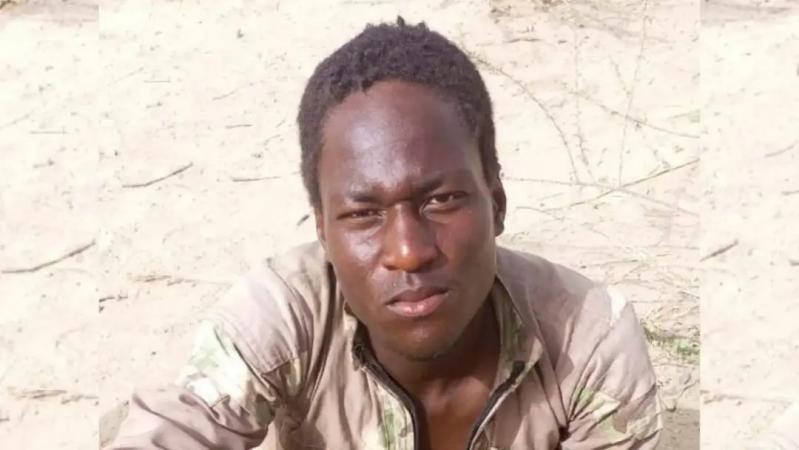
Troops of the 149 Battalion under Operation HADIN KAI, in conjunction with operatives of the Civilian Joint Task Force (CJTF), have arrested a 15-year-old suspected terrorist in Gubio town, Borno State. The suspect, identified as Umar Zacharria, was apprehended at approximately 1:20 p.m. on May 14, 2026, during a joint security operation aimed at tracking and intercepting suspected insurgents in the area, according to security analyst and counter-insurgency expert Zagazola Makama. Preliminary investigations revealed that Zacharria hails from Jere Local Government Area and allegedly confessed to being among a terrorist group involved in attacking and harassing motorists along the Kareto general area, a notorious hotspot for ambushes and abductions on the fringes of the Lake Chad basin.
The arrest took place as troops of Sector 3 intensified patrols under Operation DESERT SANITY/VIGILANT SIEGE, a sustained offensive against terrorist networks in the North-East. Security sources quoted by Zagazola Makama, whose findings were corroborated by a statement from the Media Information Officer of the Joint Task Force North East, Lieutenant Colonel Sani Uba, confirmed that Zacharria was currently in military custody undergoing further investigation to determine the full extent of his involvement and possible links to other members of the group. The operation also led to the discovery and safe detonation of an improvised explosive device planted along a route behind an internally displaced persons camp near a military location in Ladari, which officials believe was intended to target reinforcement teams and military vehicles. Troops conducting strangulation operations along the Ladari riverbanks simultaneously uncovered an abandoned cache of weapons, including one Browning pistol, one locally fabricated pistol, 26 rounds of 9mm ammunition, and seven cartridges.
The collaboration between the Nigerian Army and the Civilian Joint Task Force has been a cornerstone of counter-insurgency efforts in Borno State since the CJTF emerged in 2009 as a vigilante group formed by local youths determined to resist Boko Haram’s brutal occupation of their communities. Over the years, the CJTF has grown into a formidable force, with thousands of members conducting round-the-clock patrols, manning checkpoints, and providing critical intelligence that has led to the capture or neutralization of countless insurgents. However, the group has also faced criticism over allegations of human rights abuses, including extrajudicial killings and torture, though many locals continue to regard them as unsung heroes who have paid a heavy price in the fight against terror, with over 1,700 CJTF operatives reported killed in action.
Zacharria’s arrest highlights a disturbing and persistent trend: the systematic recruitment and exploitation of children by Boko Haram and the Islamic State West Africa Province (ISWAP). The United Nations Office on Drugs and Crime (UNODC) has revealed that at least 1,385 children were recruited by Boko Haram between 2017 and 2019 alone, while UNICEF reported that 1,120 children were forced into non-state armed groups as soldiers or sex slaves in 2024. A 15-year-old who had been hardened to the sight of death and destruction after five years of combat with ISWAP told Africa Defense Forum that he had fought against both the Nigerian Army and rival Boko Haram factions, a grim testament to how children are transformed into weapons of war.
The problem is not confined to the North-East. Security experts warn that weak governance, widespread poverty, and food insecurity across northern Nigeria are fueling the recruitment of children into armed groups, as criminal networks and jihadists exploit vulnerable youth with promises of food, protection, and a sense of purpose. A criminologist, Dr. Suleiman Ishaq Muhammad of the University of Dutse, told Daily Post that children are often assigned strategic roles within these groups because they attract less suspicion. “When a child is carrying a weapon, people hardly suspect it. A child as young as 10 can help move guns, cartridges, or even explosives from one place to another without being questioned,” he said. He warned that armed groups indoctrinate children, expose them to violence, and make them grow within the system, creating a cycle of violence that may persist for generations if not urgently addressed.
The military has made the disruption of such recruitment networks a priority. In January 2026, security operatives foiled an attempt to recruit more than 40 underage children, mostly boys aged between 15 and 18, who were being transported from Maiduguri to Adamawa State for terrorist training. Three suspected ISWAP agents were arrested in connection with the plot. In April 2026, troops arrested another 15-year-old suspect, Tijjani, who allegedly admitted involvement in the deadly attack on the 29 Task Force Brigade in Benisheik, which resulted in the death of Brigadier General Oseni Braimah and three other soldiers. That teenager, like Zacharria, had been radicalized and deployed as a combatant despite his age.
In a related development that underscores the complex support networks sustaining the insurgency, troops of the 196 Amphibious Battalion arrested a 50-year-old woman, Mrs. Kellu Alhaji Abba, on May 20, 2026, for allegedly acting as a logistics collaborator and supplying critical provisions to her son, a suspected ISWAP terrorist operating in Borno State. Abba was intercepted at a checkpoint in the Kukawa Local Government Area while attempting to smuggle supplies into the bush for her son, Modu Mustapha, identified as a notorious terrorist operative within the Dumba general area. Items recovered from her included four ready-to-use, high-nutrient supplementary food packs, two female hijabs frequently used by insurgents for disguise or suicide operations, and one wristwatch. The case highlights how family networks and maternal loyalty are being exploited to sustain terrorist logistics in a region where the distinction between civilian and collaborator is increasingly blurred.
Operation HADIN KAI, the military’s flagship counter-insurgency campaign in the North-East, continues to record significant successes. Between March 31 and April 4, 2026, troops neutralized scores of Boko Haram and ISWAP fighters, arrested key logistics suppliers and informants, and dismantled IED networks across Borno and Yobe states. A major offensive in the Konduga-Kawuri axis led to the neutralization of two IED-planting terrorists when the device they were handling detonated prematurely. In Yobe State, troops intercepted a vehicle conveying terrorist elements, two of whom were found with gunshot wounds linked to earlier engagements. The military high command has consistently commended the troops for their resilience, vigilance, and professionalism, urging them to sustain the operational momentum in the security and economic interest of the region.
Despite these tactical gains, the arrest of a 15-year-old child soldier in Gubio serves as a sobering reminder that the war against insurgency cannot be won by bullets alone. The deep-seated socio-economic drivers of extremism—poverty, lack of education, family disintegration, and state neglect—remain largely unaddressed, particularly in the rural communities that border the Lake Chad basin. Governor Babagana Zulum has promised that children affected by conflict will not be allowed to be used or recruited as child soldiers, pledging through the Ministries of Justice and Women’s Affairs and Social Development to ensure that children’s rights are protected and that they receive education, justice, and welfare. The UNODC has also launched youth-led initiatives, including Youth Peace Champions, to empower young people as advocates for peace and child protection in the region.
As Umar Zacharria remains in military custody, the questions that haunt military and civilian authorities alike are these: Was he a willing combatant or a coerced victim? Can a 15-year-old who has been indoctrinated into a culture of violence be rehabilitated and reintegrated into society? And how many more like him are still out there, children armed with AK-47s, waiting to be told that there is another way?
📩 Stone Reporters News | 🌍 stonereportersnews.com
✉️ info@stonereportersnews.com | 📘 Facebook: Stone Reporters News | 🐦 X (Twitter): @StoneReportNew | 📸 Instagram: @stonereportersnews
Add comment
Comments