

Reported by: Oahimire Omone Precious | Edited by: Oravbiere Osayomore Promise.
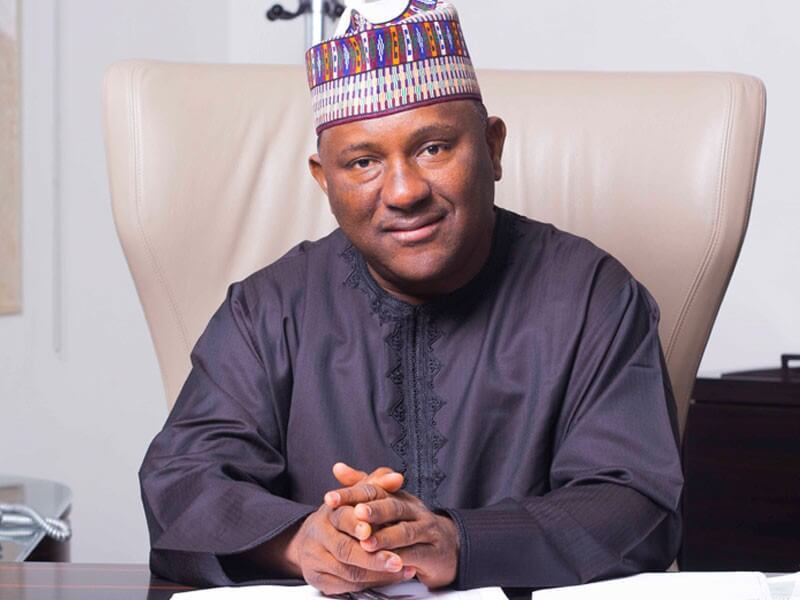
Abdul Samad Rabiu, the Nigerian industrialist and founder of BUA Group, has surged to become the third richest person in Africa after a remarkable jump in his net worth over the past year. According to the latest Forbes ranking of Africa’s richest individuals, Rabiu’s wealth grew by about 120 percent—an increase of roughly $6.1 billion—bringing his total estimated net worth to about $11.2 billion, up from approximately $5.1 billion in April 2025. This dramatic rise propelled him from sixth place on the continent’s rich list to third, reflecting significant value gains in his business interests.
Financial analysts attributed Rabiu’s massive wealth increase largely to the exceptional performance of BUA Cement, the major publicly traded cement producer in which he holds a substantial ownership stake of about 98 percent. In the past year, the share price of BUA Cement saw a surge of around 135 percent, significantly outpacing broader market gains, and played a central role in driving up Rabiu’s valuation. Additionally, he owns approximately 95 percent of BUA Foods, another publicly traded company in the food production sector, further strengthening his industrial portfolio.
The growth in Rabiu’s wealth occurred as part of an overall expansion in the fortunes of African billionaires. In the 2026 Forbes Africa Billionaires ranking, the combined net worth of the continent’s 23 billionaires grew to about $126.7 billion—an increase of roughly 21 percent from 2025—driven by strong equity markets, improved investor confidence, and stabilizing regional currencies across key African economies.
While Rabiu experienced the largest percentage gain among his peers, Nigeria’s richest industrialist, Aliko Dangote, remained the wealthiest African on the list with an estimated net worth of about $28.5 billion. Dangote’s wealth increased by around $4.6 billion over the past year, with significant contributions from Dangote Cement’s performance and record profits achieved by the company. South African luxury goods magnate Johann Rupert secured second place with approximately $16.1 billion in net worth.
The latest ranking also highlighted that BUA Group’s success in cement production is central to Rabiu’s financial ascent. Cement remains a key sector for infrastructure development across Nigeria and parts of West Africa, and BUA Cement’s expanding production capacity and strong market positioning have helped fuel investor optimism. Industry observers say that rapid urbanization, government infrastructure projects, and increased construction activity in the region have contributed to higher demand for cement, benefiting companies like BUA Cement.
Rabiu’s rise to the third spot on the continent follows a period of volatility in his estimated net worth over recent years. After earlier climbs in his fortune—from around $4.9 billion in 2021 to $8.2 billion in 2023—his valuation dipped to about $5.2 billion in 2024 before this latest surge, demonstrating how shifting market conditions can impact billionaire rankings.
In addition to cement and sugar production—core segments of BUA Group’s business—Rabiu’s broader industrial interests include real estate and logistics, including port operations, which collectively contribute to the diversified nature of his wealth. With BUA Cement and BUA Foods publicly traded on the Nigerian Exchange, changes in market valuations for these companies directly impact Rabiu’s net worth as reflected in Forbes’ annual ranking.
Beyond personal wealth, Rabiu’s business activities have broader economic implications. BUA Group’s investments in cement and food processing have helped expand domestic production capacity, reduce reliance on imports in some segments, and support job creation across multiple regions. Analysts say that such industrial growth aligns with wider efforts to deepen local value chains and strengthen manufacturing bases in Africa.
Nigeria maintained a strong presence on the 2026 Africa billionaires list, with four of the continent’s wealthiest individuals hailing from the country: Dangote, Rabiu, telecommunications and oil magnate Mike Adenuga with an estimated $6.5 billion, and investor Femi Otedola with about $1.3 billion. South Africa and Egypt also featured prominently, with multiple billionaires ranked among the top.
Although the list did not include any women this year, the prominence of self-made entrepreneurs underscores the role of industrial growth and market performance in shaping wealth creation in Africa. Fourteen of the 23 billionaires on the list are self-made, highlighting the impact of business ventures in traditional sectors such as manufacturing, commodities, and telecommunications.
Rabiu’s ascent reflects broader trends in Africa’s economic landscape, where strategic investments in infrastructure-related industries have yielded significant financial returns. His prominence on the wealth list also underscores growing investor appetite for African equities, particularly in sectors tied to long-term development dynamics.
As Rabiu consolidates his position among Africa’s wealthiest individuals, business watchers will be tracking the future trajectory of BUA Group’s operations and market performance. Continued success in expanding production capacity, improving profitability, and accessing broader markets could further influence his ranking in coming years, even as global economic conditions evolve.
📩 Stone Reporters News | 🌍 stonereportersnews.com
✉️ info@stonereportersnews.com | 📘 Facebook: Stone Reporters | 🐦 X (Twitter): @StoneReportNew | 📸 Instagram: @stonereportersnews
Add comment
Comments