

Reported by: Oahimire Omone Precious | Edited by: Carmen Diego
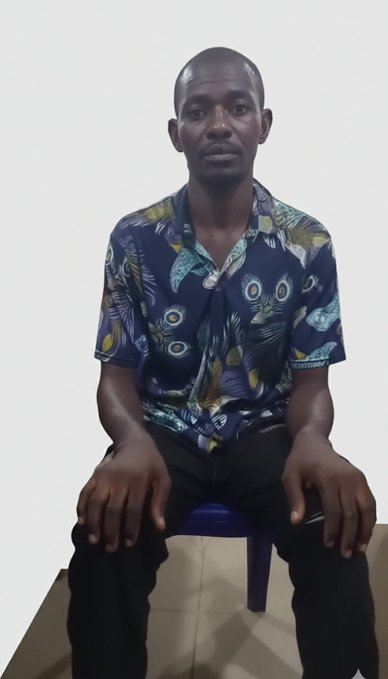
Operatives of Nigeria’s Department of State Services have arrested a sixth suspect linked to the June 5, 2022 attack on St. Francis Catholic Church Owo, a massacre that shocked the nation and drew international condemnation. Security sources confirmed that the suspect, identified as Sani Yusuf, was apprehended in Edo State after nearly four years of evading arrest, marking a significant development in one of Nigeria’s most gruesome terror cases in recent history.
The Owo church attack occurred during a Sunday Pentecost service when gunmen stormed the crowded sanctuary, detonated explosives, and opened fire on worshippers. More than 40 people were killed, including children, while scores sustained injuries. Survivors recounted scenes of chaos and bloodshed as congregants scrambled for safety. The attack triggered widespread outrage across Nigeria and beyond, prompting heightened security operations and renewed scrutiny of extremist networks operating within the country.
According to security officials familiar with the investigation, Yusuf had been under surveillance for an extended period. His arrest was carried out in Iguosa community along the Powerline axis of Ovia North East Local Government Area in Edo State. Intelligence tracking reportedly revealed that following the Owo massacre, he initially fled to Kano State before relocating to Edo in an effort to blend into a quieter environment and avoid detection.
Authorities allege that Yusuf is a senior commander of the Islamic State West Africa Province, commonly known as ISWAP, an extremist faction that emerged from a split within Boko Haram and has been responsible for numerous attacks across Nigeria’s North East and parts of the Middle Belt. ISWAP has primarily operated around the Lake Chad basin but has increasingly demonstrated the capacity to strike beyond its traditional strongholds.
Investigators say Yusuf has confessed to playing a role in planning and executing the Owo church attack. Beyond that, he is also alleged to have admitted involvement in other high-profile incidents attributed to ISWAP. Among them is the July 2022 assault on a military installation in Suleja, Niger State, where armed militants targeted a barracks facility in a brazen attack that underscored the group’s operational reach.
Security sources further disclosed that Yusuf acknowledged participation in the Zuma Rock checkpoint attack, which resulted in the deaths of five soldiers. The checkpoint is located near Zuma Rock, a prominent landmark along the Abuja–Kaduna highway that has been vulnerable to banditry and militant activity. In addition, Yusuf allegedly admitted involvement in kidnapping operations in Kaduna State and surrounding areas, activities that have become a lucrative funding mechanism for armed groups.
Five other suspects connected to the Owo church massacre are currently being prosecuted. They include Idris Omeiza, Al Qasim Idris, Jamiu Abdulmalik, Abdulhaleem Idris, and Momoh Otuho Abubakar. Prosecutors have charged them with terrorism-related offences, including conspiracy, murder, and unlawful possession of firearms and explosives. Court proceedings have been ongoing amid tight security, reflecting the sensitivity and gravity of the case.
The DSS has not issued a detailed public statement outlining the operational specifics of Yusuf’s arrest. However, officials describe the development as a major milestone in the broader counterterrorism campaign. Security analysts note that apprehending high-level operatives often yields valuable intelligence, potentially exposing recruitment networks, logistics channels, and financing routes that sustain insurgent operations.
The Owo attack marked a turning point in public perception of security in southern Nigeria. While extremist violence had been concentrated largely in the North East for over a decade, the assault on a church in Ondo State raised concerns about the geographic expansion of militant threats. It also prompted intensified collaboration between intelligence agencies and military units to prevent further attacks in urban and semi-urban centres.
In the aftermath of the massacre, federal authorities attributed responsibility to ISWAP, stating that preliminary investigations pointed to the group’s involvement. Subsequent arrests reinforced that assessment. Security experts argue that ISWAP’s strategy includes targeting symbolic and soft civilian sites to generate widespread fear, attract global attention, and undermine confidence in state institutions.
The DSS, Nigeria’s principal domestic intelligence service, has played a central role in tracking extremist operatives beyond conventional conflict zones. Over the past several years, it has conducted operations leading to the arrest of multiple individuals linked to terrorist networks. In 2024, the agency apprehended another senior ISWAP figure, Abu Ikirimah, whom Yusuf reportedly served under. That arrest was described at the time as a significant disruption to the group’s command structure.
Community leaders in Owo have cautiously welcomed news of the latest arrest. While many families continue to mourn loved ones lost in the attack, some view the development as progress toward accountability. Legal experts note that successful prosecution will depend on the strength of evidence, adherence to due process, and cooperation among investigative agencies.
Nigeria continues to grapple with a complex security landscape that includes insurgency in the North East, banditry in the North West, separatist agitation in the South East, and sporadic extremist attacks in other regions. The arrest of Yusuf does not signal the end of ISWAP’s activities, analysts caution, but it represents a targeted strike against its operational leadership.
As judicial proceedings advance against the accused individuals, attention is likely to focus on how effectively the justice system addresses terrorism cases and balances transparency with national security considerations. For the families of victims, the pursuit of justice remains both deeply personal and symbolic, reflecting a broader national struggle against violent extremism.
The DSS has reiterated its commitment to dismantling terror networks and safeguarding civilian populations. Whether Yusuf’s arrest yields further breakthroughs in intelligence or prosecutions remains to be seen, but authorities characterize it as a decisive step in holding perpetrators accountable for one of Nigeria’s darkest days in recent memory.
📩 Stone Reporters News | 🌍 stonereportersnews.com
✉️ info@stonereportersnews.com | 📘 Facebook: Stone Reporters | 🐦 X (Twitter): @StoneReportNew | 📸 Instagram: @stonereportersnews
Add comment
Comments