

Reported By Mary Udezue | Edited by: Gabriel Osa
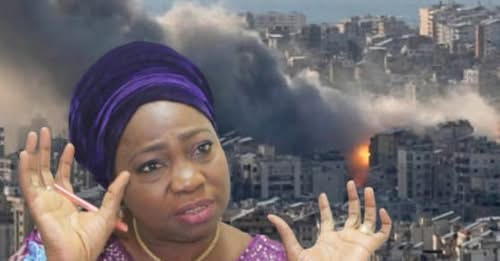
The Nigerians in Diaspora Commission (NiDCOM) has confirmed that, as of early March 2026, it has not received any formal distress calls from Nigerian nationals residing in the Islamic Republic of Iran, even as hostilities between Tehran and the United States–Israel alliance continue to escalate sharply. The confirmation from NiDCOM comes amid one of the most serious confrontations in the Middle East in recent history, prompting global concern, flight disruptions, diplomatic advisories, and economic repercussions. Stone Reporters note that while there are no distress calls to date, the broader context reflects a complex emergency that could yet have profound implications for Nigerians abroad and those seeking to travel.
In a statement released through its media office, NiDCOM emphasised that although Nigerians may be present in Iran, no individual or family has officially contacted the commission for evacuation assistance or safety support. The commission clarified that this absence of requests does not equate to normalcy on the ground but reflects the current lack of direct communication requests from affected citizens. Federal agencies in Abuja have maintained open lines of communication, urging Nigerian nationals in the region to engage with diplomatic missions if they require help or face challenges.
The background to this standoff stems from a dramatic escalation of military actions that began in the final days of February 2026. On 28 February, the United States and Israel launched a coordinated military offensive against key targets within Iran. This combined operation, reported by international observers as unprecedented in scale, triggered a wave of reprisals from Tehran, involving ballistic missile and drone strikes across multiple Gulf states and at least one reported downing of US aircraft. The confrontation has rapidly broadened beyond a bilateral clash, drawing in regional actors and prompting international diplomatic responses.
Nigeria’s Federal Government has responded to this upheaval by issuing a series of strong advisories to its citizens living in or travelling through Iran and neighbouring Gulf states. A security advisory issued by the Ministry of Foreign Affairs urged Nigerians in the Middle East to remain vigilant, restrict non-essential movement, and comply strictly with local safety directives until the volatile situation stabilises. Nigerian embassies in Tehran and key Gulf capitals have been placed on high alert, prepared to provide consular support where possible. The advisory also highlighted the importance of staying informed through official channels and avoiding reliance on unverified social media reports during the crisis.
The broader dangers posed by the conflict have manifested most visibly in the region’s airspace. Within hours of the military strikes, several countries including Iran, Israel, Iraq, Qatar, Kuwait, Bahrain and the United Arab Emirates closed their airspace, groundings that have persisted and disrupted international flights. Major carriers serving routes to and from Africa, Asia and Europe, including Qatar Airways, Emirates and Turkish Airlines, have cancelled flights, leaving scores of passengers stranded. Nigerian travellers attempting to transit through Gulf aviation hubs have reported suspended services and long delays, illustrating the palpable impact of the conflict on civilian movement and global connectivity.
Economically, the conflict has sent shockwaves through global energy markets. Iran’s strikes on critical energy infrastructure in the Gulf, including facilities in Qatar and Saudi Arabia, have forced the temporary shutdown of major liquefied natural gas (LNG) production and oil refining operations. These disruptions have contributed to a sudden surge in global oil and gas prices, stoking inflationary pressures worldwide and particularly affecting energy-dependent economies. In Nigeria, a major oil producer, analysts warn that higher global crude prices could fuel domestic inflation and complicate fiscal planning for government and business sectors alike.
The conflict has also elicited a range of responses from global and regional actors. The United States government issued a global security alert to its citizens in Nigeria and around the world, urging heightened caution as hostilities persist. Calls for de-escalation have been echoed by several nations and international bodies, with diplomatic efforts intensifying to prevent the confrontation from expanding into a wider regional war. Nigeria’s Ministry of Foreign Affairs formally called for restraint and a return to peaceful dialogue, underscoring the severe threat the conflict poses to regional stability and international peace.
Within Nigeria, the situation has sparked public reactions and concern. Members of the Islamic Movement in Nigeria (IMN) staged protests in parts of the country in solidarity with civilians believed to be affected by the strikes on Iran, reflecting the depth of emotion and transnational ties among some communities. Security agencies at home have also reportedly heightened surveillance and preparedness measures to guard against possible domestic fallout from the international crisis.
Despite the absence of formal distress calls from Nigerians in Iran to government authorities, experts caution that this should not be taken as a definitive indicator of safety. Communication challenges, travel restrictions, and the closure of embassies or consulates in conflict zones can impede the ability of expatriates to reach out for help. Comparisons with evacuation operations carried out by other nations during similar crises underscore the logistical and security obstacles involved. For example, India’s “Operation Sindhu” successfully evacuated thousands of its citizens from Iran during earlier phases of conflict, highlighting how coordinated state-led efforts can be instrumental when lives are at risk.
Regional and international diplomatic efforts are also underway. Countries such as Pakistan have warned at the United Nations Security Council that the conflict risks destabilising entire regions and derailing fragile diplomatic engagements. Many nations are closely monitoring the situation of their expatriates in affected zones, offering advisories and preparing potential evacuation contingencies should conditions deteriorate further.
As the conflict persists, travel corridors remain disrupted, energy markets volatile, and diplomatic channels strained. For Nigerians in Iran and neighbouring Gulf states, the absence of distress calls to NiDCOM may simply reflect the immediate challenges in communication and mobility rather than a comprehensive picture of conditions on the ground. Federal authorities continue to monitor developments closely, emphasising situational awareness and regular contact with official channels as essential safety measures. In the coming days, both the trajectory of the Middle East conflict and the wellbeing of foreign nationals caught in its impact zones will be closely watched by governments and international organisations alike.
📩 Stone Reporters News | 🌍 stonereportersnews.com
✉️ info@stonereportersnews.com | 📘 Facebook: Stone Reporters | 🐦 X (Twitter): @StoneReportNew | 📸 Instagram: @stonereportersnews
Add comment
Comments