

Reported by: Ijeoma G | Edited by: Gabriel Osa
In a landmark judgement this week, the Federal High Court in Lagos delivered a combined total of 40 years’ imprisonment to two men convicted of producing, distributing and selling counterfeit alcoholic beverages in violation of Nigerian food and drug safety laws. The ruling reflects an intensifying enforcement posture by Nigerian authorities against illicit productions that endanger public health and defraud consumers.
The convicts, Otuorimuno Nelson Aziakpono, aged 58, and Ikegwuonu Davidson Ikechukwu, aged 28, were each found guilty on eight counts encompassing the production, possession, distribution and sale of adulterated and unregistered alcoholic beverages. Prosecutors led by the National Agency for Food and Drug Administration and Control (NAFDAC) established that the defendants operated an illegal production network within Lagos State that misled consumers by packaging counterfeit beverages to mimic popular global brands.
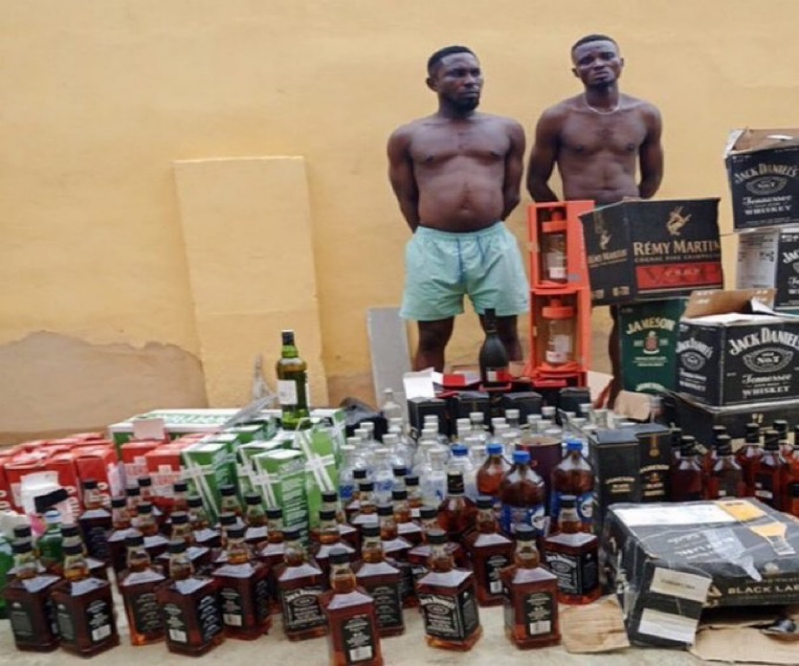
According to NAFDAC’s account, the investigation was triggered by intelligence that led to an enforcement operation on December 3, 2025, at locations on Kojo Street in Ijanikin and Vespa Market in Lagos. During the raids, regulatory officers uncovered large quantities of counterfeit and unregistered alcoholic products, including fake versions of well-known labels such as Hennessy, Jameson Irish Whiskey, William Lawson’s and Gordon’s Gin. Thorough laboratory assessments confirmed that the seized beverages were unwholesome, hazardous and misleadingly packaged, posing significant health risks to consumers.
The prosecution presented evidence showing that the operation involved bulk quantities intended for widespread distribution. Investigators described a manufacturing and packaging setup designed to fill bottles with adulterated liquids, substitute illegitimate content for genuine products and circulate these dangerous drinks through markets, bars and retail points across parts of Lagos. The case underscored how counterfeit beverages exploit consumer trust in established brands while circumventing regulatory safeguards.
In court proceedings, defence lawyers attempted to challenge the agency’s characterization of the offences, asserting that there was insufficient evidence to link their clients to the full breadth of criminal activity alleged. They argued that the defendants were wrongly implicated in what they described as mere commercial distribution of products. The Federal High Court, however, was convinced by the weight of testimony from regulatory officials, forensic findings and documentation presented by NAFDAC. The judge ruled that the actions of Aziakpono and Ikechukwu constituted deliberate and sustained contraventions of multiple statutes governing food, drug and beverage safety in Nigeria.
In sentencing the defendants, the court emphasised the seriousness of adulterating consumable goods and the potential for such products to cause widespread illness, permanent injury or even death. The term of imprisonment — amounting to 40 years combined — reflects the court’s interpretation of the offences as not merely economic crimes but as public health hazards that warrant deterrent penalties. Some legal analysts describe the sanctions as among the sternest in recent years for food and beverage counterfeiting in Nigeria.
The National Agency for Food and Drug Administration and Control has welcomed the outcome, framing the judgement as a strong message to would-be counterfeiters and traffickers that regulatory breaches with health implications will attract severe legal consequences. NAFDAC’s leadership reiterated its commitment to ongoing surveillance of supply chains, enforcement of safety standards and cooperation with law enforcement to detect and dismantle illicit production hubs nationwide. The agency also called on the public to remain vigilant and report suspicious products or establishments to regulatory authorities.
The judgement arrives against a backdrop of broader regulatory efforts in Nigeria to clamp down on substandard and harmful consumer goods. In recent years, NAFDAC has dismantled numerous illegal manufacturing sites, seized counterfeit products worth hundreds of millions of naira and pursued criminal prosecutions across food, beverage, pharmaceutical and cosmetic sectors. Analysts note that counterfeit alcoholic beverages, in particular, have been linked to incidents of poisoning, acute health emergencies and strain on medical services, reinforcing the urgency of sustained enforcement.
Consumer advocates and industry stakeholders have expressed cautious approval of the court’s ruling, acknowledging that enforcement and legal accountability are crucial to protecting public health and sustaining confidence in regulated markets. At the same time, some industry representatives argue that complementary measures — including education on product authenticity, tighter controls on supply chains and enhanced coordination with manufacturing brands — are essential to prevent the recurrence of such illicit operations.
Despite the substantial prison terms, authorities have indicated that investigations into potentially wider networks connected to the defendants remain ongoing. NAFDAC officials suggest that identifying accomplices, distribution intermediaries and any facilitation mechanisms could lead to further arrests and prosecutions. Public warnings have also been issued urging consumers to check for official regulatory approvals when purchasing alcoholic products and to avoid unidentified or suspiciously packaged beverages.
For Lagos residents and the broader Nigerian public, the court’s decision marks a visible escalation of the legal response to counterfeit consumer goods, particularly those that directly affect health and safety. While the 40-year sentence is designed in part to deter similar offences, the case highlights the complex interplay between regulation, enforcement capacity and consumer behaviour in confronting sophisticated counterfeiting operations.
📩 Stone Reporters News | 🌍 stonereportersnews.com
✉️ info@stonereportersnews.com | 📘 Facebook: Stone Reporters | 🐦 X (Twitter): @StoneReportNew | 📸 Instagram: @stonereportersnews
Add comment
Comments