

Reported by: Ijeoma G | Edited by: Gabriel Osa
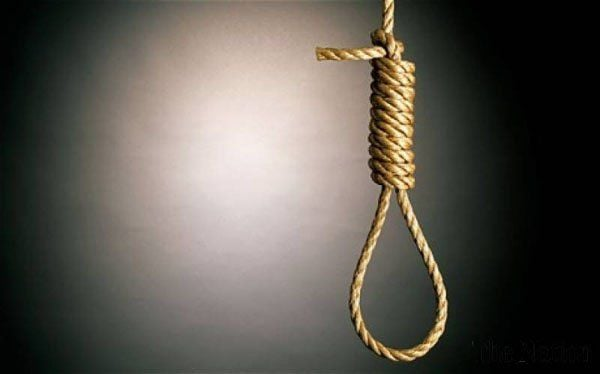
Two men have been sentenced to death by hanging by a Kano State High Court for the murder of a newly wedded groom, in a case that has drawn significant public attention and highlighted ongoing concerns about violent crime and the application of capital punishment under Nigerian law.
The court on Tuesday convicted Aliyu Hussaini and Amir Zakariyya, both residents of Sheka Sabuwar Abuja Quarters and Unguwar Malam Quarters in Kumbotso Local Government Area of Kano State, for their roles in the fatal stabbing of 25-year-old Yazid Haruna during an armed robbery in mid-2025. The presiding judge, Justice Amina Adamu-Aliyu, handed down the sentence after finding the defendants guilty beyond reasonable doubt on charges including conspiracy, armed robbery and culpable homicide.
According to the prosecution, led by counsel Lamido Abba-Sorondinki, the attack occurred in the early hours of June 11, 2025, at approximately 2:47 a.m. The defendants, armed with long knives and a machete, allegedly entered the residence of the late Haruna in Sheka Sabuwar Abuja Quarters. Haruna, who had recently married, was robbed of two mobile phones and ₦19,500 in cash before being stabbed repeatedly in the stomach, chest and head, resulting in fatal injuries. Three prosecution witnesses testified during the trial, and medical reports were presented as key evidence.
Both defendants denied the allegations throughout the proceedings. The prosecution argued that their actions contravened several provisions of the Kano State Penal Code, specifically Sections 97(1), 298(c) and 221(a), which cover criminal conspiracy, armed robbery and culpable homicide. Defense counsel Haruna Saleh-Zakariyya presented the convicts in court to testify and appealed for leniency, but the judge determined the evidence against them was conclusive. (Helm)
In delivering judgment, Justice Adamu-Aliyu described the actions of Hussaini and Zakariyya as inhuman and indicative of a rising trend in violent robberies involving mobile phones and cash in the state. She sentenced each defendant to one year’s imprisonment for conspiracy, life imprisonment for armed robbery, and the ultimate penalty of death by hanging for culpable homicide.
The sentence for culpable homicide, which carries the death penalty under Kano State’s Penal Code, reflects the court’s view of the severity of the offence and its impact on public safety. Kano’s penal code provisions, rooted in statutory law applicable in northern Nigeria, still provide for capital punishment in certain categories of intentional killing committed in the course of other serious crimes like armed robbery.
Legal experts note that while death sentences are handed down in Nigeria, actual executions are rare and require formal approval from state authorities before being carried out; convicts typically have the right to appeal to higher courts, including the Court of Appeal and the Supreme Court. The application of capital punishment in Nigeria remains a subject of debate among legal practitioners, human rights advocates and policy analysts, especially given contemporary international trends toward abolition.
This case is not the first time Hussaini and Zakariyya have faced the ultimate punishment. Records show that on October 20, 2025, the same duo was previously sentenced to death by a Kano State High Court for the murder of a university lecturer during a separate robbery incident in Sheka Sabuwar Abuja Quarters. In that earlier case, the court found them guilty of similar offences and handed down the death penalty alongside prison terms for related counts.
The recent conviction has stirred reactions among Kano residents and observers. Families and local community leaders have expressed mixed sentiments, with some welcoming the ruling as an affirmation of justice for victims of violent crime, while others raise concerns about the broader social and judicial issues surrounding capital punishment and criminal rehabilitation. Analysts emphasize the importance of thorough and fair trials, adherence to due process, and the need for systemic measures to address underlying causes of violent crime in urban and peri-urban areas.
Authorities have not yet released detailed statements regarding whether the convicts have initiated appeals, which could extend the legal process before any execution order is considered. Under Nigerian law, defendants sentenced to death retain the right to challenge their convictions and sentences in higher courts.
As the case continues to unfold within the judicial system, it highlights ongoing challenges in balancing public demand for accountability in violent crimes with evolving debates over the ethics and implementation of capital punishment in Nigeria.
📩 Stone Reporters News | 🌍 stonereportersnews.com
✉️ info@stonereportersnews.com | 📘 Facebook: Stone Reporters | 🐦 X (Twitter): @StoneReportNew | 📸 Instagram: @stonereportersnews
Add comment
Comments