

Reported by: Oahimire Omone Precious | Edited by: Gabriel Osa
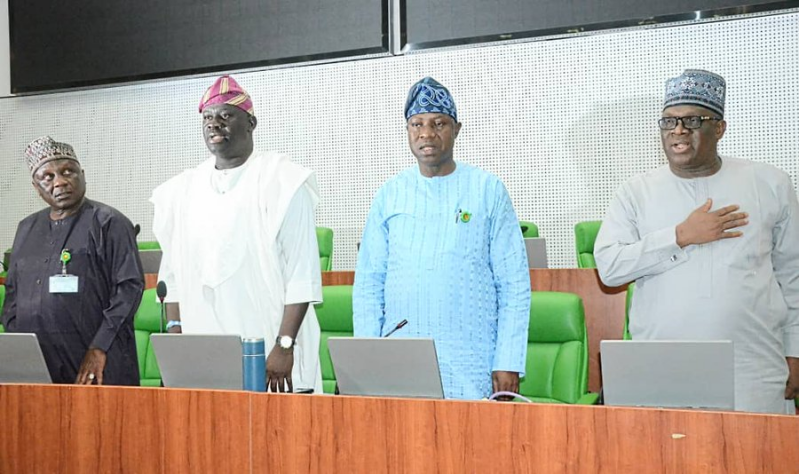
Nigeria’s Federal Ministry of Justice has formally opposed a proposed Human Rights Defenders Protection Bill, asserting that existing laws are sufficient to safeguard civil society actors and fundamental freedoms. The position, conveyed at a public hearing in Abuja on Wednesday before the House of Representatives of Nigeria Committee on Human Rights, has ignited a sharp policy debate between government officials and civil society advocates. The ministry’s stance was delivered by Lateef Fagbemi through Reuben Imarha, who represented the Attorney-General of the Federation at the session.
The hearing considered three major legislative proposals: the Human Rights Defenders Protection Bill; a bill to repeal the National Human Rights Commission Act and enact a new National Human Rights Commission Bill, 2025; and the reform of existing human rights governance instruments. The protection bill, often referenced by its draft designation (HB.1867), seeks to formally recognise and protect individuals and organisations who promote and defend constitutionally and internationally recognised rights. The proposed legislation targets protection for civil society actors, journalists, lawyers, community leaders, whistle-blowers, faith-based groups and other citizens, ensuring they can operate without intimidation, harassment or unlawful interference. It also envisages the establishment of a mechanism within the National Human Rights Commission to monitor threats against defenders and publish periodic reports on their safety and working conditions.
At the hearing, Fagbemi argued that Nigeria already has adequate constitutional and statutory protections for fundamental rights, including freedom of expression, association and peaceful assembly, which collectively cover the protection of human rights defenders. He warned that enacting a fresh statute dedicated solely to protecting human rights defenders could lead to duplication of legislation, institutional overlap and confusion in enforcement mandates among government agencies and quasi-governmental bodies. According to him, the “real gap” is not in legal provisions but in enforcement capacity and implementation of existing laws. He urged the National Assembly to focus on strengthening institutions and resourcing established frameworks rather than creating new layers of legislation.
Fagbemi also expressed reservations about clauses in the other bill to reform the National Human Rights Commission’s law, though he indicated conditional support for the overall legislative attempt to modernise the commission’s mandate. He flagged concerns regarding a requirement for business owners to obtain annual human rights compliance certificates, warning that the provision could undermine government efforts to improve ease of doing business in Nigeria. He similarly questioned clauses that would empower the commission to borrow funds independently or require contributions from multinationals and large corporations, describing such proposals as amounting to a quasi-tax unless harmonised with broader federal tax reforms.
Civil society organisations and human rights advocates at the hearing challenged the ministry’s position, arguing that the Human Rights Defenders Protection Bill would provide critical legal avenues for accountability, transparency and protection of civic participation in Nigeria’s democratic processes. Jude Ohanele, Programme Director at a leading advocacy group Development Dynamics, described the proposed legislation as a “landmark initiative” that would signal Nigeria’s commitment to democratic governance, protect defenders from reprisals and promote investor confidence through clearer rule-of-law assurances. He urged lawmakers to accelerate consideration and passage of the bill. The Executive Secretary of the National Human Rights Commission emphasised the urgency of funding the Human Rights Fund — established in 2010 but never operational — to underpin effective enforcement of human rights litigation and guarantee timely enforcement of commission decisions through the Federal High Court.
Supporters of the bill argued that while Nigeria’s constitution guarantees broad civil liberties, those protections do not translate into operational safety for activists and defenders who face threats in the course of their work. They pointed out that international best practices recommend specific legal frameworks to ensure human rights defenders can operate safely and without undue interference, a perspective endorsed by some development partners attending the hearing.
The public hearing illuminated a clear split between the federal government’s legal position and advocacy groups. Legal experts note that while the Attorney-General’s office views existing laws as sufficient, enforcement shortcomings often cited by civil society highlight systemic challenges within Nigeria’s human rights protection architecture. Proponents of the bill argue that statutory recognition and bespoke protection mechanisms would strengthen institutional response and reduce reliance on case-by-case judicial remedies alone.
The House Committee on Human Rights has not yet concluded its deliberations on the bill. Lawmakers indicated they will review submissions from stakeholders before making recommendations to the full legislative body. Observers suggest that the outcome of the debate could influence Nigeria’s broader approach to civic space, democratic participation and compliance with international human rights norms.
Civil society representatives at the hearing reiterated that any legislation aimed at protecting defenders would enhance Nigeria’s international reputation, build public trust, and clarify enforcement obligations across government institutions. They emphasised that strengthening the National Human Rights Commission’s mandate and funding mechanisms should be complementary, rather than mutually exclusive, to establishing specific protections for human rights defenders.
📩 Stone Reporters News | 🌍 stonereportersnews.com
✉️ info@stonereportersnews.com | 📘 Facebook: Stone Reporters | 🐦 X (Twitter): @StoneReportNew | 📸 Instagram: @stonereportersnews
Add comment
Comments