

Reported by: Ijeoma G | Edited by: Gabriel Osa
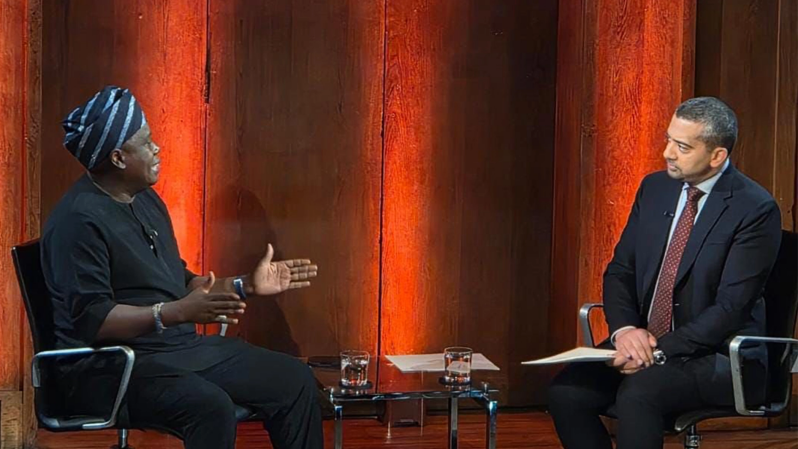
A political controversy erupted in Nigeria after Daniel Bwala, Special Adviser to President Bola Tinubu on Media and Policy Communication, defended his appearance on Al Jazeera’s global affairs programme Head to Head, insisting he had no regrets despite intense criticism from commentators and opposition figures. The interview, which aired during a televised debate examining the performance of Tinubu’s administration, quickly became a trending topic across Nigerian social media and political circles, with clips circulating widely and triggering heated reactions.
The programme, hosted by journalist Mehdi Hasan, centred on the theme “Nigeria: Renewed Hope or Hopelessness?”—a reference to the Tinubu administration’s flagship policy agenda. During the exchange, Hasan repeatedly confronted Bwala with previous statements he had made about Tinubu when he served as a prominent supporter of the opposition Peoples Democratic Party and worked within the presidential campaign of former Vice President Atiku Abubakar. In several instances, the host quoted past remarks in which Bwala had allegedly accused Tinubu of corruption, described him as unfit to lead Nigeria, and questioned aspects of his political history.
The confrontation became one of the defining moments of the interview. As the host read out the quotes and referenced archived clips, Bwala disputed the accuracy of some of the claims, insisting that certain statements attributed to him were either taken out of context or were outright fabrications. Hasan countered by presenting video evidence of some of the earlier comments, a moment that sparked immediate reactions online and led to renewed scrutiny of Bwala’s political evolution from outspoken critic to presidential spokesperson.
Following the broadcast, the presidential aide issued a statement addressing the criticism that had followed the interview. He said the backlash was largely driven by political opponents and their sympathisers who, he argued, were eager to exploit the situation for partisan advantage. According to Bwala, the reaction was predictable and would not distract him from his role as a defender of the government’s policies and agenda.
Bwala maintained that his primary responsibility was to articulate and defend the positions of the Tinubu administration, regardless of the platform or the intensity of the questioning. He said he remained ready to appear before any interviewer around the world to defend the government and its programmes, emphasising that the job of a presidential spokesperson inevitably involves confronting difficult questions in public forums.
He also suggested that the structure of the interview itself contributed to the controversy. According to Bwala, the producers of Head to Head had initially approached him several months earlier with a proposal to discuss issues such as Nigeria’s security challenges, economic reforms, and corruption concerns under the Tinubu administration. He claimed that during months of communication with the programme’s producers, there had been no indication that his own political past would become a central focus of the discussion.
Bwala argued that if the producers had intended to interrogate his past remarks, professional standards would have required them to notify him in advance so he could prepare appropriate responses. While acknowledging that the programme had the editorial freedom to shape its questions, he criticised what he described as a lack of transparency in how the interview was framed.
In addition to defending his performance, Bwala accused the programme’s host of relying on questionable information during the discussion. He alleged that some of the quotes attributed to him were inaccurate and claimed that certain materials used by the interviewer amounted to “fake news.” He characterised the questioning style as resembling opposition research tactics rather than neutral journalistic inquiry.
Despite the criticism, Bwala said he welcomed the opportunity to engage with international media outlets and insisted that confronting tough questions was part of democratic accountability. He stressed that defending the policies of the administration was not about seeking praise or avoiding criticism, but about presenting the government’s perspective to both domestic and international audiences.
The controversy surrounding the interview also highlighted the broader issue of political realignment in Nigeria’s political landscape. Bwala’s critics have frequently pointed to his transition from opposition figure to government spokesperson as evidence of inconsistency. During the Al Jazeera exchange, Hasan used several of Bwala’s earlier statements to illustrate this shift, suggesting that the aide had previously taken a dramatically different stance toward the current president.
In response, Bwala argued that political realignments are not unusual and that individuals often change positions as circumstances evolve. He noted that similar dynamics exist in other countries, pointing to examples in international politics where former critics of political leaders later joined their administrations. According to him, the role of an opposition figure is fundamentally different from that of a government spokesperson, and positions taken in those contexts should be understood accordingly.
Public reaction to the interview has been sharply divided. Some viewers criticised Bwala’s responses, saying he struggled to reconcile his past comments with his current role in the administration. Others defended him, arguing that the host’s approach was confrontational and designed to provoke viral moments rather than facilitate a balanced policy discussion.
The debate has also reignited broader conversations about political messaging and media engagement by government officials in Nigeria. Analysts note that appearances on global media platforms often carry heightened scrutiny because they expose domestic political narratives to an international audience. In such settings, inconsistencies or unresolved controversies can quickly become focal points.
For the Tinubu administration, the episode underscores the challenges of managing communications in an era where political statements are permanently archived online and easily retrieved. Past remarks by public figures can resurface during interviews or debates, complicating efforts to present a consistent narrative.
Nevertheless, Bwala has insisted that the controversy will not deter him from participating in future interviews or defending the administration’s record. He reaffirmed that he remains committed to promoting the government’s policies and responding to criticism, regardless of the forum in which the questions are raised.
The exchange between Bwala and Hasan, now widely circulated across digital platforms, continues to fuel political discussion in Nigeria. While opinions remain divided about the interview’s outcome, the episode illustrates the increasingly complex relationship between political communication, media scrutiny, and the evolving dynamics of public accountability in the country’s democratic environment.
📩 Stone Reporters News | 🌍 stonereportersnews.com
✉️ info@stonereportersnews.com | 📘 Facebook: Stone Reporters | 🐦 X (Twitter): @StoneReportNew | 📸 Instagram: @stonereportersnews
Add comment
Comments