

Reported by: L. Imafidon | Edited by: Gabriel Osa
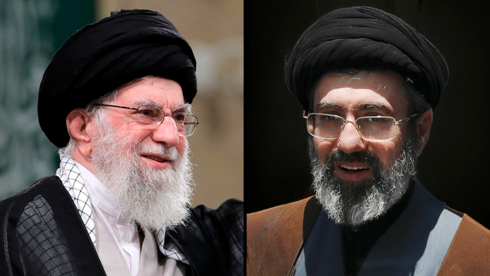
Iran has appointed Mojtaba Khamenei, the son of the late Supreme Leader Ayatollah Ali Khamenei, as the new Supreme Leader of the Islamic Republic following a decisive vote by the powerful Assembly of Experts, a move that has immediately intensified geopolitical tensions across the Middle East and drawn sharp warnings from Israel about potential targeted action against Iran’s leadership.
The appointment comes during one of the most volatile moments in Iran’s modern history. The leadership transition followed the reported killing of Ali Khamenei during a wave of United States–Israeli military strikes that targeted Iranian leadership and military infrastructure earlier in 2026, an event that triggered a wider regional conflict and pushed the Middle East toward a deeper confrontation between Iran and its adversaries.
Iran’s Assembly of Experts, the clerical body responsible for choosing the country’s supreme leader, moved quickly to prevent a leadership vacuum by selecting Mojtaba Khamenei as successor. The new leader now assumes control over the Islamic Republic’s political, military and religious authority at a time when the country is already engaged in intense military escalation and diplomatic confrontation with Israel and the United States.
The supreme leader in Iran occupies the most powerful position in the country’s political system. The office oversees the armed forces, intelligence agencies, the judiciary and major policy decisions, giving the holder ultimate authority over the direction of the Islamic Republic.
Mojtaba Khamenei has long been considered one of the most influential figures within Iran’s power structure despite holding no elected office. For years he operated behind the scenes as a close adviser to his father and developed strong ties to the Islamic Revolutionary Guard Corps, the powerful military and political institution that plays a central role in Iran’s security and regional strategy.
His rise to the top post is widely seen as a continuation of the hardline ideological direction that has defined Iran’s leadership for decades. Analysts believe the appointment signals the regime’s determination to maintain political continuity and consolidate power within existing institutions during a period of war and internal uncertainty.
However, the succession has also generated controversy both inside and outside Iran. Critics argue that the appointment of the late leader’s son risks creating the appearance of hereditary rule, something the Islamic Republic historically rejected after overthrowing Iran’s monarchy in 1979. Observers within the Shiite clerical establishment have also expressed concern about the precedent of a father-to-son transition in a system that was designed to avoid dynastic leadership.
The leadership change has drawn particularly strong reactions from Israel, which has openly threatened to target Iran’s next supreme leader as tensions between the two countries continue to escalate.
Israeli Defence Minister Israel Katz previously warned that any leader chosen by the Iranian regime to continue its policies toward Israel would be considered “a target for elimination.” The warning emphasized that Israeli forces would not hesitate to pursue individuals responsible for guiding Iran’s military strategy or supporting groups hostile to Israel.
Israel’s military also issued messages in Farsi on social media warning that it would continue pursuing any successor to the Iranian leadership and even individuals involved in the selection process. The statement warned participants in the leadership transition that they could also be targeted.
These statements reflect the increasingly direct nature of the confrontation between the two regional rivals. Israel views Iran as its most significant strategic threat, citing Tehran’s missile programs, nuclear ambitions and support for armed groups across the Middle East.
For Iran, the leadership transition occurs in the midst of a broader regional war that has already resulted in significant casualties and destruction. Military strikes and retaliatory attacks between Iran and its adversaries have expanded across multiple fronts, including strikes on infrastructure and military installations.
Reports indicate that the conflict has already caused the deaths of thousands of people, including civilians, while damaging critical infrastructure and disrupting regional energy markets.
The appointment of Mojtaba Khamenei also carries major implications for Iran’s domestic politics. Because the new leader has never held elected office or built an independent political base through public institutions, much of his authority is expected to depend heavily on the backing of the Revolutionary Guard and other security institutions that dominate the country’s power structure.
Observers say this could further strengthen the role of security institutions in shaping Iran’s internal governance and foreign policy decisions.
International reactions to the appointment have also been sharp. United States President Donald Trump publicly criticized the idea of Mojtaba Khamenei becoming Iran’s leader, saying Washington would prefer a figure capable of reducing tensions with the West and bringing stability to the region.
The appointment nonetheless appears to reflect the Iranian leadership’s priority of maintaining ideological continuity during a period of conflict rather than pursuing compromise with external rivals.
Within Iran, state-aligned institutions have framed the leadership transition as a necessary step to preserve stability during wartime. Officials have emphasized that the swift appointment of a new supreme leader prevents a power vacuum that could destabilize the country while it faces military pressure from foreign adversaries.
For many analysts, however, the transition marks the beginning of a new and uncertain chapter for Iran and the wider Middle East. The emergence of Mojtaba Khamenei as supreme leader could reshape internal power dynamics within Iran while also influencing the trajectory of its ongoing confrontation with Israel and Western powers.
As the region watches closely, the leadership change underscores how deeply intertwined Iran’s domestic political structure has become with broader geopolitical tensions, making the future direction of the Islamic Republic a matter of global strategic concern.
📩 Stone Reporters News | 🌍 stonereportersnews.com
✉️ info@stonereportersnews.com | 📘 Facebook: Stone Reporters | 🐦 X (Twitter): @StoneReportNew | 📸 Instagram: @stonereportersnews
Add comment
Comments