

Reported by: L. Imafidon | Edited by: Gabriel Osa
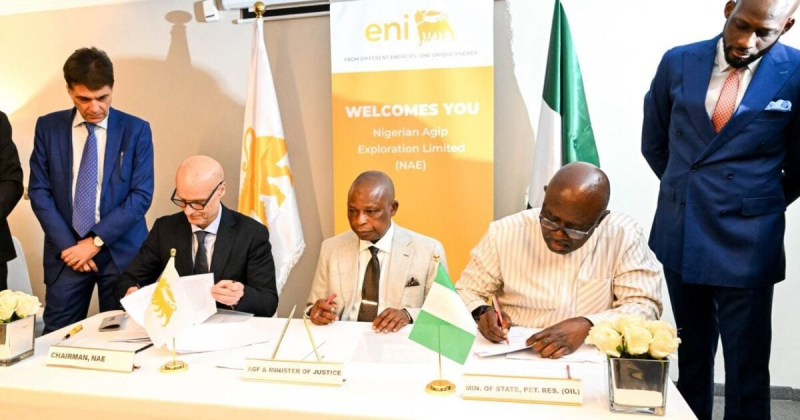
Nigeria has formally resolved the long-running dispute over Oil Prospecting Licence 245, widely known as OPL 245, bringing closure to one of the most controversial and protracted legal battles in the history of the global oil industry and potentially unlocking billions of dollars in investment for the country’s energy sector.
The breakthrough was announced after the Federal Government, under President Bola Ahmed Tinubu, reached a settlement with international energy companies and other parties involved in the dispute. The agreement effectively ends decades of litigation and arbitration surrounding the oil block and clears the path for development of one of Nigeria’s most valuable offshore petroleum assets.
Officials described the settlement as a turning point for Nigeria’s oil and gas industry. The Attorney-General of the Federation and Minister of Justice, Lateef Fagbemi, said the agreement was achieved through the political will of the current administration, which directed that all disputes surrounding the oil block be resolved amicably in the interest of the country.
The resolution brings to an end years of legal battles involving the Nigerian government, oil companies and private stakeholders over rights to develop the oil block, which is located offshore in deep waters of the Niger Delta and is believed to contain billions of barrels of crude oil reserves.
OPL 245 is widely regarded as one of the most lucrative undeveloped oil fields in Africa. Estimates suggest the field holds around nine billion barrels of crude oil and significant quantities of natural gas, making it a major strategic asset for Nigeria’s economy.
Despite its enormous potential, the field remained undeveloped for decades due to overlapping ownership claims, corruption allegations and legal disputes spanning several countries.
The controversy dates back to 1998 during the military government of General Sani Abacha when the oil block was awarded to Malabu Oil and Gas. The company was later linked to Dan Etete, the petroleum minister at the time, who was found to have secretly held a stake in the firm that received the license.
Following the return to civilian rule, the administration of President Olusegun Obasanjo revoked Malabu’s license in 2001 and reassigned the block to oil giant Shell. That decision triggered years of disputes between Malabu, Shell and the Nigerian government, with each party claiming legitimate rights to the oil field.
Attempts to resolve the dispute continued for years until 2011, when a controversial three-way agreement was brokered involving the Nigerian government, Shell and the Italian oil company Eni. Under the deal, Shell and Eni agreed to pay about $1.3 billion for rights to the block. The funds were deposited into a government escrow account and later transferred to Malabu as compensation for relinquishing its claim.
However, the transaction soon became the subject of international corruption investigations after prosecutors alleged that much of the money intended for the Nigerian state had been diverted to politically connected individuals and intermediaries.
The allegations sparked legal proceedings across several jurisdictions including Italy, the United Kingdom, the Netherlands and Nigeria. Investigations focused on whether the companies involved had knowingly facilitated corrupt payments through the transaction.
Italian prosecutors brought criminal charges against executives of both Shell and Eni, accusing them of involvement in bribery linked to the deal. After a lengthy trial in Milan that attracted global attention, the companies and their executives were acquitted in 2021 due to insufficient evidence. Subsequent appeals also failed, effectively ending the criminal cases in Europe.
Nigeria also pursued civil litigation against financial institutions and companies involved in the deal, seeking compensation and accountability. The legal battles stretched over more than a decade and became one of the most complex corruption cases ever associated with the international oil industry.
While the litigation dragged on, the OPL 245 oil block remained idle, preventing Nigeria from developing a potentially major source of revenue.
The new settlement negotiated by the Tinubu administration seeks to finally unlock the economic potential of the asset. As part of the agreement, the block is expected to be restructured and developed by energy companies under revised terms that are intended to provide clarity and attract investment.
Reports indicate that the oilfield may be divided into multiple blocks to facilitate development projects involving international partners and Nigeria’s national oil company.
Government officials believe the resolution could lead to significant increases in oil production once development begins. Analysts estimate that the project could eventually add roughly 150,000 barrels of oil per day to Nigeria’s output, a boost that could strengthen national revenue and improve the country’s fiscal outlook.
The settlement has also been presented by government officials as an important signal to international investors that Nigeria is committed to improving transparency and stability in its oil sector.
Stone Reporters note that the OPL 245 saga became symbolic of governance challenges in Nigeria’s petroleum industry, where disputes over licensing, regulatory oversight and corruption allegations have often complicated investment in the sector.
For many observers, the resolution represents not only the end of a complex legal saga but also a potential reset for Nigeria’s upstream oil industry. With the dispute now settled, the country could finally begin development of a resource that has remained dormant for nearly three decades despite its enormous economic potential.
The success of the agreement will ultimately depend on how quickly development projects begin and whether the new framework ensures transparent management of the oil block’s resources.
For Nigeria, whose economy remains heavily dependent on oil revenue, the resolution of the OPL 245 dispute could mark a critical step toward unlocking long-delayed energy investment and strengthening confidence in the country’s regulatory environment.
📩 Stone Reporters News | 🌍 stonereportersnews.com
✉️ info@stonereportersnews.com | 📘 Facebook: Stone Reporters | 🐦 X (Twitter): @StoneReportNew | 📸 Instagram: @stonereportersnews
Add comment
Comments