

Reported by: Ijeoma G | Edited by: Oravbiere Osayomore Promise.
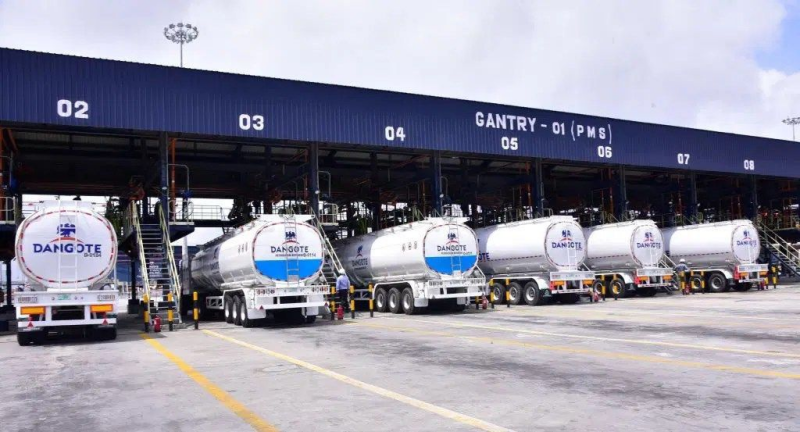
Nigeria’s downstream petroleum sector entered a period of renewed uncertainty after the Dangote Petroleum Refinery temporarily suspended petrol loading operations, a development that triggered speculation across the country’s fuel market and signaled the likelihood of a fresh increase in petrol prices. The suspension, which began in the early hours of March 6, halted truck-out operations at the refinery’s gantry facility in the Lekki Free Trade Zone in Lagos, where petroleum marketers typically load fuel for distribution nationwide.
Industry sources confirmed that loading activities stopped at about 2:00 a.m., leaving tanker drivers, depot operators, and bulk marketers waiting for further directives from the refinery. The pause in operations immediately raised concerns among market participants who interpreted the move as a prelude to another adjustment in the refinery’s ex-depot petrol price.
The Dangote refinery had already increased its petrol gantry price earlier in the week, raising the ex-depot rate from ₦774 per litre to ₦874 per litre, a move that followed rising global crude oil prices and increasing freight costs affecting refining operations.
However, the market reaction intensified when the refinery announced a second price adjustment only days later, pushing the gantry price further to ₦995 per litre. The latest change represents a total increase of ₦221 per litre within a span of just four days, marking one of the sharpest fuel price adjustments in Nigeria’s recent energy market history.
Energy analysts say the temporary suspension of petrol loading was not unusual in the downstream petroleum sector. According to industry observers, such pauses often occur when refineries are preparing to review pricing structures or adjust supply logistics in response to sudden changes in global energy markets.
The immediate trigger for the price adjustment appears to be the rapid surge in international crude oil prices. Escalating geopolitical tensions in the Middle East have pushed Brent crude above $80 per barrel, significantly increasing the cost of crude feedstock used by refineries around the world.
Global shipping costs and insurance premiums for transporting petroleum cargo have also risen sharply, further increasing the cost of refined fuel production and distribution. These factors have collectively forced refiners, including the Dangote facility, to review their pricing frameworks in order to reflect current market realities.
Officials at the refinery have indicated that petrol prices cannot be determined arbitrarily but must align with international market dynamics, including crude acquisition costs, exchange rates, shipping expenses, and operational expenditures. The refinery has argued that its pricing model reflects the actual cost of production rather than government-controlled subsidies, which Nigeria removed in 2023 as part of broader economic reforms.
The Dangote refinery occupies a dominant position in Nigeria’s petroleum market due to its massive refining capacity of about 650,000 barrels per day, making it the largest single-train refinery in the world. The facility was built to reduce Nigeria’s longstanding reliance on imported petroleum products and is capable of supplying the country’s entire domestic demand for petrol while exporting surplus refined products.
Despite that capacity, the refinery’s pricing decisions have become a central factor in determining petrol prices across Nigeria. When the refinery raises its gantry price, petroleum marketers often pass the increase down the distribution chain, eventually leading to higher pump prices at filling stations nationwide.
Industry projections indicate that the latest gantry price adjustment could push retail petrol prices above ₦1,050 per litre in several parts of the country, depending on transportation costs, distribution margins, and regional supply logistics.
Fuel marketers have expressed concern that repeated price adjustments within a short period could disrupt supply planning and create uncertainty in the downstream sector. Some depot operators reportedly delayed purchasing fuel while waiting for clarity on the refinery’s pricing direction, fearing losses if prices changed again shortly after lifting products.
Transport operators and small businesses across Nigeria are also watching developments closely, as fuel costs remain one of the most critical drivers of inflation in the country. Petrol is widely used not only for vehicles but also for electricity generation in homes, offices, and small enterprises that rely on petrol-powered generators due to unstable power supply.
Economists warn that any sustained increase in petrol prices could trigger a ripple effect across the broader economy. Higher fuel costs typically translate into increased transportation fares, higher logistics expenses for manufacturers and traders, and rising prices for food and consumer goods.
In recent days, several filling stations across major Nigerian cities have already adjusted their pump prices upward following the refinery’s earlier increase. Retail petrol prices have reportedly risen by more than 10 percent in some locations, reflecting the growing pressure on the fuel supply chain.
The timing of the development has also drawn attention to global energy market instability. Ongoing geopolitical tensions, including conflicts affecting oil-producing regions in the Middle East, have contributed to supply disruptions and heightened volatility in international crude markets.
Analysts say Nigeria’s fuel market is now closely tied to global oil price movements due to the deregulation of the downstream sector. With subsidies removed and private refineries playing a larger role in supply, domestic petrol prices increasingly reflect international market conditions rather than government-controlled price caps.
For millions of Nigerian motorists and businesses already grappling with rising living costs, the suspension of petrol loading at the Dangote refinery and the subsequent price adjustment have intensified concerns about further increases in fuel prices in the coming weeks.
While loading operations have gradually resumed after the price review, the episode highlights the growing influence of the Dangote refinery in shaping Nigeria’s petroleum market and underscores the country’s vulnerability to global energy market fluctuations.
As the downstream sector adjusts to the new price regime, both consumers and policymakers are expected to closely monitor fuel supply trends, market reactions, and potential economic impacts across Africa’s largest economy.
📩 Stone Reporters News | 🌍 stonereportersnews.com
✉️ info@stonereportersnews.com | 📘 Facebook: Stone Reporters | 🐦 X (Twitter): @StoneReportNew | 📸 Instagram: @stonereportersnews
Add comment
Comments