

Reported by: Ijeoma G | Edited by: Oravbiere Osayomore Promise.
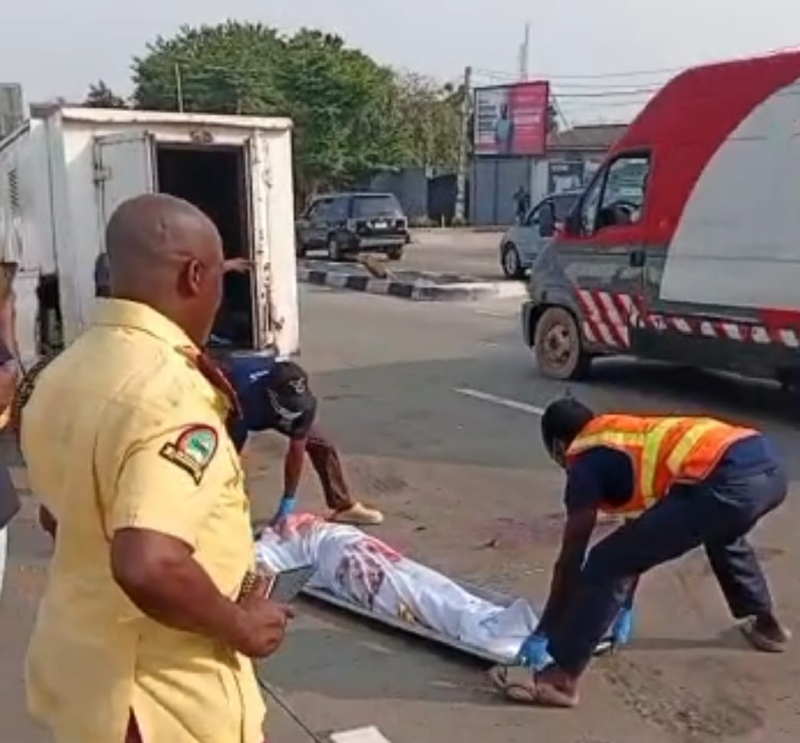
LAGOS, Nigeria — A devastating road accident on one of Lagos State’s busiest highways has claimed the life of a woman and left six others seriously injured in a violent early‑morning collision that highlights ongoing concerns about road safety across the megacity.
The crash occurred over the weekend at New Castle Bus Stop, inward Gbagada along the Oworonsoki‑Apapa Expressway, a major transport artery that links Lagos Island with the mainland and the city’s busiest ports. According to detailed statements from the Lagos State Traffic Management Authority (LASTMA), the incident involved a commercial Volkswagen bus and an articulated truck that was approaching the scene when the collision unfolded.
Investigators and traffic officials say the commercial bus, which was carrying passengers at the time, veered off course and violently collided with a roadside culvert. The force of that initial impact was so great that one female passenger — whose name is yet to be released — was ejected onto the busy expressway. Before emergency responders could secure the area, an oncoming articulated truck was unable to avoid the fallen woman and struck her on the roadway, crushing her instantly and resulting in her death.
Six other occupants of the bus, including its driver, were also seriously injured in the incident. Hospital sources have confirmed that many of the injured sustained multiple fractures and traumatic injuries. They were quickly evacuated to a nearby medical facility by personnel from the Lagos State Ambulance Service for lifesaving treatment.
The driver of the articulated truck reportedly fled the scene immediately after the collision, sparking a manhunt by police and traffic enforcement units. Officials from the Pedro Police Division were deployed to secure the crash site, prevent on‑lookers from causing secondary incidents, and assist with early investigative work.
LASTMA spokesperson Adebayo Taofiq described the sequence of events in a public statement, urging motorists and commercial vehicle operators to adhere strictly to vehicle maintenance standards, especially the braking systems of heavy‑duty vehicles. “The impact forcefully ejected a female passenger onto the expressway,” Mr. Taofiq said, emphasising that routine maintenance and adherence to road safety protocols could help prevent many such tragedies.
In the immediate aftermath, LASTMA officials temporarily cordoned off the expressway to allow for emergency response operations, evacuation of accident victims, and clearance of debris. Traffic was diverted and managed to reduce congestion as rescue teams worked to stabilise the scene and remove the wreckage.
General Manager of LASTMA Olalekan Bakare‑Oki publicly expressed condolences to the family of the deceased woman and his agency’s commitment to public road safety awareness campaigns aimed at reducing preventable road fatalities. He reiterated the need for commercial transport operators to ensure that their vehicles are in proper mechanical condition before embarking on journeys.
This incident forms part of a troubling pattern of road traffic accidents involving heavy commercial vehicles and trucks in Lagos and surrounding regions. Separate reports in recent months have highlighted similarly catastrophic collisions on major expressways, including incidents where container trucks toppled over other vehicles, causing fatalities, severe injuries, and public outcry.
In one such case, a 40‑foot container truck overturned on Ijora Causeway and crushed a commercial tricycle, killing a serving police officer and a female passenger, and injuring two others. Officials attributed that crash to loss of control by the truck driver. Another earlier accident saw a truck container fall onto a minibus on Old Ipaja Road, killing the bus driver and resulting in rescue operations to save injured passengers.
Road safety experts say the frequency of such crashes underscores systemic challenges including poor vehicle maintenance, overloaded heavy trucks, inadequate enforcement of traffic regulations, speeding, and unpredictable road conditions. Many vehicles involved in these accidents have been found to operate with faulty brakes, worn tyres, or inadequate safety systems, making avoidance of secondary collisions particularly difficult.
Compounding these issues are broader infrastructural factors. Lagos roads are heavily congested, and many highways linking the metropolis with neighbouring states see high volumes of freight and commuter traffic. Emergency response times are critical in high‑impact collisions, but traffic congestion can impede rapid access.
The Lagos State and Federal authorities have repeatedly highlighted plans to improve transport infrastructure, enforce stricter vehicle safety compliance checks, and increase road user education. However, many safety advocates argue that deeper reforms are needed, including mandatory pre‑trip inspections for heavy commercial vehicles, better regulation of driver hours to prevent fatigue, and harsher penalties for fleeing accident scenes.
In the meantime, Lagos residents and commuters remain sharply aware of the risks posed by heavy traffic and poorly maintained vehicles. This latest tragedy has reignited calls from civil society and public safety groups for immediate action to protect lives and reduce the human toll of road accidents in Nigeria’s largest city.
📩 Stone Reporters News | 🌍 stonereportersnews.com
✉️ info@stonereportersnews.com | 📘 Facebook: Stone Reporters | 🐦 X (Twitter): @StoneReportNew | 📸 Instagram: @stonereportersnews
Add comment
Comments