

Reported by: Ijeoma G | Edited by: Oravbiere Osayomore Promise.
Nigeria’s fuel market has been thrust into renewed uncertainty after operations at the Dangote Petroleum Refinery in Lekki, Lagos, were abruptly altered last weekend, sending shockwaves through an already strained downstream petroleum sector. The indefinite suspension of petrol (Premium Motor Spirit, PMS) loading at the refinery has sparked intense speculation that petrol prices — already above ₦1,000 per litre in many regions — could escalate sharply, with some market analysts warning that prices could soon reach ₦1,400 per litre or more.
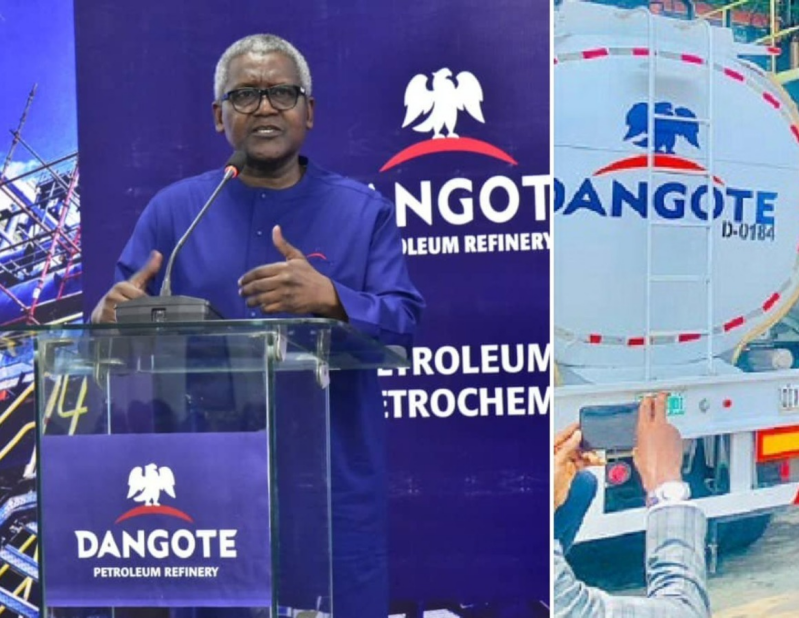
The sudden halt in petrol loading began on Sunday, March 8, 2026, when tanker drivers queued at the Dangote facility were reportedly ordered to leave the gantry area as all petrol loading operations were paused without a clear timetable for resumption. While the refinery has not issued a formal public statement explaining the decision, industry observers and oil marketers are interpreting the move as a precursor to another significant increase in the ex-depot price of petrol, a critical benchmark that directly influences retail pump prices nationwide.
Repeated Suspensions and Price Adjustments
This is not the first time Dangote Refinery has temporarily stopped petrol loading before adjusting prices. Analysts note a recent pattern: on March 6, loading was halted in the early hours before the refinery raised its ex-gantry price by ₦121 per litre, lifting it to ₦995 per litre. Earlier in the week, on March 2, the refinery increased its gantry price from about ₦774 to around ₦874 per litre. These quick succession adjustments reflect a broader struggle within the sector to cope with rising production costs, largely tied to global crude oil price volatility.
The current suspension is seen as a strong signal that another upward price revision could be imminent. Fuel marketers and depot operators have already reacted by lifting petrol at higher prices, with some depot sales reported close to ₦1,000 per litre or above, even before transportation and logistics costs are factored in.
International Crude Price Pressures
The recent market movement coincides with continued volatility in the international oil market, particularly crude prices benchmarked by Brent that have been rising amid geopolitical tensions involving key oil-producing regions in the Middle East, including complex dynamics between the United States, Israel, and Iran. Higher crude prices increase the cost of refining inputs and freight, laying added pressure on domestic fuel pricing despite Nigeria’s substantial new refining capacity from Dangote.
Energy analysts warn that such international pressures are diminishing the buffer that domestic refining was expected to provide against imported fuel costs. While the Dangote refinery has the capacity to produce tens of millions of litres of petrol daily, access to affordable crude feedstock remains a challenge. Frequent fluctuations in global crude benchmarks, combined with limited local supply commitments from upstream producers, have forced the refinery to source a portion of its crude internationally at higher costs, which are then reflected in the final price of finished products.
Market Reaction and Warnings
The Independent Petroleum Marketers Association of Nigeria (IPMAN) has publicly appealed to the federal government to intervene by supplying crude oil to the Dangote Refinery at reduced or more favourable terms. IPMAN’s leadership argues that this would help moderate ex-depot prices and enable marketers to offer petrol at more affordable rates to consumers. Their plea comes amid growing concerns that the rapid increases at the refinery level are being passed down to the retail market, with prices already exceeding ₦1,050 per litre in many cities and certain states reporting rates as high as ₦1,190 per litre.
IPMAN’s president has attributed the surge to global market volatility and rising crude oil import costs, stressing that without government support or strategic supply interventions, price stability will remain elusive. Marketers are reportedly holding back on lifting products while awaiting clarity on new refinery pricing, heightening fears of supply bottlenecks and sharper price spikes.
Broader Economic Impacts
Nigeria’s petrol pricing movements have wide-ranging implications. Fuel remains a central input cost for virtually all sectors, from public and private transportation to agriculture, logistics, and small businesses. Sharp upward swings in the cost of petrol can ripple through the economy, accelerating inflationary pressures already felt due to other macroeconomic challenges. Higher transportation costs typically lead to increased prices for food and daily goods, squeezing household budgets and adding to the economic burden on ordinary Nigerians.
Transport unions have warned that if petrol prices approach the projected ₦1,400 per litre, operators will be forced to adjust fares for commuters, further raising the cost of living. Small-scale businesses, which often operate on thin margins, are bracing for higher operating costs that could reduce profit margins or even threaten viability.
Regulatory and Industry Perspectives
Some industry analysts have urged a review of regulatory frameworks governing pricing and market transparency. While Nigeria has made a shift toward deregulated fuel pricing, the dominance of a single large refinery in a still-fragmented supply chain exposes the market to significant risks when operations are disrupted or when crude supply costs surge.
There are calls for stronger coordination between upstream producers, government agencies, and major refiners to stabilize feedstock deliveries and manage pricing expectations. Additionally, concerns have been raised about the need for clearer communication from the refinery about loading suspensions and pricing decisions to avoid market confusion and speculative hoarding.
📩 Stone Reporters News | 🌍 stonereportersnews.com
✉️ info@stonereportersnews.com | 📘 Facebook: Stone Reporters | 🐦 X (Twitter): @StoneReportNew | 📸 Instagram: @stonereportersnews
Add comment
Comments