

Reported by: L. Imafidon | Edited by: Carmen Diego
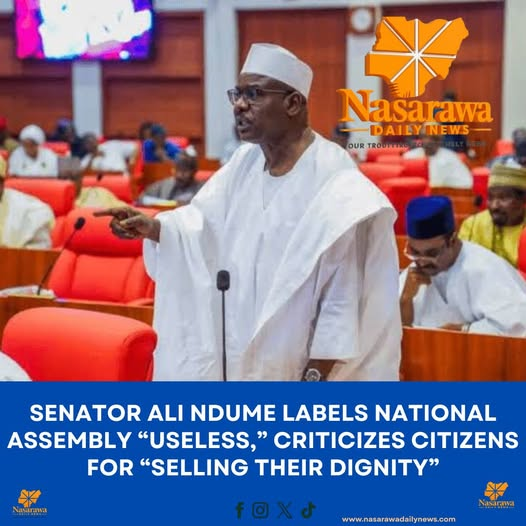
A fresh controversy has emerged in Nigeria’s political landscape after Senator Ali Ndume, who represents Borno South Senatorial District, openly criticised the country’s National Assembly, describing the legislature as “useless” and accusing ordinary citizens of enabling poor governance through vote-selling. The remarks have ignited widespread debate about the credibility of Nigeria’s legislative system and the broader challenges facing the country’s democratic institutions.
Ndume, an experienced lawmaker who has spent years in Nigeria’s parliament, made the controversial comments during discussions about governance, political accountability and the relationship between elected officials and the electorate. The senator argued that the National Assembly has increasingly failed to deliver meaningful impact for Nigerians, suggesting that its presence often makes little difference to the daily realities faced by citizens.
The senator’s remarks drew attention because they came from a serving member of the same institution he criticised. Ndume has been a prominent figure in Nigeria’s legislature for more than two decades, previously serving as Senate Majority Leader and later as Chief Whip before being removed from that role in 2024 following disagreements with the leadership of the ruling party.
During his comments, Ndume suggested that Nigeria’s legislature has gradually lost its effectiveness as a check on executive power. In a functioning democracy, the National Assembly is expected to serve as an independent arm of government responsible for lawmaking, oversight of public institutions and scrutiny of executive actions. However, the senator argued that the institution has not always exercised those responsibilities with the level of independence and rigor required.
He indicated that many legislative processes have become largely procedural, with limited influence on policy outcomes. According to him, debates and resolutions in the National Assembly often fail to translate into practical solutions for the economic and security problems affecting Nigerians.
Ndume also directed criticism toward the electorate, arguing that the political behaviour of voters contributes significantly to the problems within Nigeria’s democratic system. He accused some citizens of accepting financial inducements from politicians during elections, a practice widely described as vote-buying.
According to the senator, when voters accept money or gifts in exchange for political support, they weaken their ability to hold leaders accountable after elections. He suggested that the practice effectively allows politicians to secure power without genuine public scrutiny, thereby weakening democratic accountability.
Vote-buying has long been recognised as one of the major challenges facing Nigeria’s electoral process. Election observers, civil society organisations and anti-corruption advocates have repeatedly warned that the practice undermines democratic legitimacy and allows political elites to manipulate electoral outcomes.
Ndume’s comments quickly triggered mixed reactions across Nigeria’s political environment. Some observers interpreted his remarks as an unusually candid acknowledgement of systemic weaknesses within the country’s governance structure. Others criticised the senator, arguing that lawmakers themselves should take responsibility for the perceived failures of the legislature.
Critics noted that the National Assembly possesses extensive constitutional powers that could be used to strengthen oversight of government institutions. These include the authority to investigate corruption allegations, scrutinise public spending and hold executive officials accountable through hearings and legislative inquiries.
Nigeria’s National Assembly consists of two chambers: the Senate and the House of Representatives. Together they form the central legislative body responsible for passing laws, approving the national budget and providing oversight of the executive branch.
Despite these responsibilities, the institution has frequently faced public criticism. Many Nigerians have accused lawmakers of prioritising political interests and personal benefits over legislative productivity. High salaries and allowances for lawmakers have also been a recurring source of public anger, especially during periods of economic hardship.
Political analysts say Ndume’s comments reflect deeper frustrations within Nigeria’s political elite regarding the performance of democratic institutions. Some experts argue that strong party discipline and political loyalty often limit the independence of lawmakers, making it difficult for them to challenge executive policies effectively.
Others point to structural problems within the political system, including the influence of money in elections and the dominance of political parties in candidate selection processes. These factors, analysts say, can reduce the incentive for lawmakers to prioritise policy reform over political survival.
The senator’s remarks also come at a time when Nigeria is grappling with major national challenges, including persistent insecurity, rising inflation and widespread economic hardship. These conditions have intensified public scrutiny of government institutions and increased demands for political accountability.
Stone Reporters note that Ndume’s comments illustrate a growing tension within Nigeria’s political establishment over how democratic institutions should function and who bears responsibility for their performance. The debate triggered by his remarks highlights a broader national conversation about the role of both leaders and citizens in strengthening democratic governance.
Supporters of the senator argue that acknowledging systemic weaknesses is necessary if meaningful reforms are to occur. Critics, however, insist that lawmakers who publicly condemn the legislature must also demonstrate commitment to improving its effectiveness from within.
As reactions continue to unfold across political circles and public discourse, Ndume’s remarks have once again placed Nigeria’s legislative system under scrutiny, raising questions about accountability, political culture and the future of democratic governance in Africa’s most populous nation.
📩 Stone Reporters News | 🌍 stonereportersnews.com
✉️ info@stonereportersnews.com | 📘 Facebook: Stone Reporters | 🐦 X (Twitter): @StoneReportNew | 📸 Instagram: @stonereportersnews
Add comment
Comments