

Reported by: Oahimire Omone Precious | Edited by: Oravbiere Osayomore Promise.
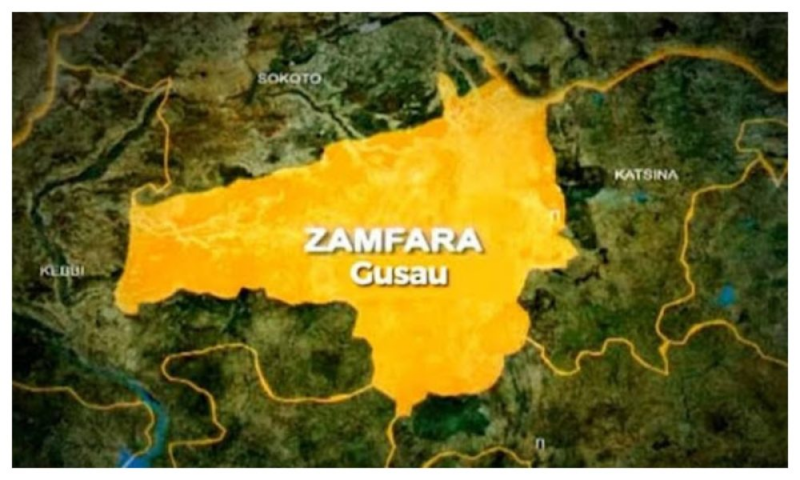
GUSAU, Nigeria — The Zamfara State Government has officially confirmed four new cases of poliomyelitis in the state, triggering an accelerated public health response aimed at curbing the spread of the disease. Health authorities said the latest cases, detected in the Gummi and Tsafe local government areas, represent a resurgence of circulating vaccine‑derived poliovirus type 2 (cVDPV2) in a region that has endured persistent immunisation challenges and complex health emergencies.
The confirmation of these cases — three from Gummi and one from Tsafe — comes as part of regular surveillance coordinated by the Zamfara State Emergency Operations Centre (EOC), in collaboration with the National Primary Health Care Development Agency (NPHCDA), UNICEF, and global partners. While Zamfara had not reported any new polio cases in 2025 prior to this cluster, health officials stressed that the virus remains a serious threat where immunisation gaps persist.
In response, the government has launched an intensified immunisation campaign targeting an estimated 1.4 million children aged one to five years across all 14 local government areas of the state. The campaign, which began in early March, adopts a house‑to‑house vaccination strategy to ensure that eligible children are reached directly in their communities, including hard‑to‑reach and high‑risk settlements.
Teams comprising nearly 2,000 vaccination workers have been deployed, administering the Oral Polio Vaccine (OPV) door‑to‑door and in public spaces such as markets, places of worship, and community centres. To boost participation and address vaccine hesitancy, officials are providing small incentives such as noodles and other food items to caregivers who bring their children forward for vaccination.
At a media briefing in the state capital, Dr. Murtala Salaudeen, Incident Manager of the Zamfara State EOC, underscored the safety and effectiveness of the polio vaccine. “The vaccines are safe and have no harmful effects,” he said, stressing that immunisation remains the most powerful tool to shield children from the irreversible paralysis caused by poliovirus. He noted that 16 cases were recorded in Zamfara in 2024, with none reported in 2025 until the recent identifications.
International support has been central to the state’s response, with UNICEF reaffirming its commitment to child survival programmes across Zamfara. Malam Isah Ibrahim, UNICEF’s Social Policy Specialist for the Sokoto office, urged community leaders, parents, and stakeholders to support the vaccination drive, highlighting that widespread cooperation is key to success.
A Broader Public Health Context
The re‑emergence of polio in Zamfara must be understood within the larger national and regional context of vaccine‑derived poliovirus circulation. Nigeria, once one of the last countries to harbour wild poliovirus, had celebrated the containment of wild strains after years of concerted eradication efforts. However, outbreaks of circulating vaccine‑derived poliovirus type 2 — a mutant form that can arise in communities with low vaccination coverage — continue to pose risks, particularly in the northwest.
National surveillance data reveals that northwestern states, including Zamfara, Sokoto, Kebbi, and Katsina, account for a significant proportion of Nigeria’s cVDPV2 cases, often driven by coverage gaps in routine immunisation and mobility across borders that complicates containment.
Efforts to address these challenges have included specialised inter‑state vaccination drives, such as a targeted campaign conducted in late 2025 across key border zones. These campaigns achieved substantial reach, vaccinating children who had previously missed all immunisation contacts and strengthening surveillance for acute flaccid paralysis, a key indicator of poliovirus circulation.
Despite such interventions, Nigeria continues to record sporadic polio cases. Recent epidemiological bulletins indicate that four polio cases in Zamfara and neighbouring regions have contributed to the country’s total for the year, alongside cases elsewhere. These figures illustrate the ongoing need for robust vaccination and monitoring systems to prevent further transmission.
Community Engagement and Routine Immunisation
Zamfara’s health authorities and civil society partners are also emphasising routine immunisation advocacy to complement supplemental immunisation activities. In late 2025, the First Lady of Zamfara State, Hajiya Huriyya Dauda Lawal, flagged off a statewide campaign focusing on routine vaccination at primary health centres, highlighting the importance of regular immunisation for protecting children from a range of preventable diseases.
This push reflects a recognition that routine vaccination coverage remains uneven across many communities. Nationwide surveys have previously shown that a significant number of Nigerian children miss essential vaccines entirely or remain underimmunised — a situation particularly acute in the northwest region. These gaps have broader implications not only for polio but also for other diseases such as measles, which has seen extensive outbreaks across multiple states. Public health authorities continually stress routine immunisation as the foundation of disease prevention.
📩 Stone Reporters News | 🌍 stonereportersnews.com
✉️ info@stonereportersnews.com | 📘 Facebook: Stone Reporters | 🐦 X (Twitter): @StoneReportNew | 📸 Instagram: @stonereportersnews
Add comment
Comments