

Reported By Mary Udezue | Edited by: Oravbiere Osayomore Promise.
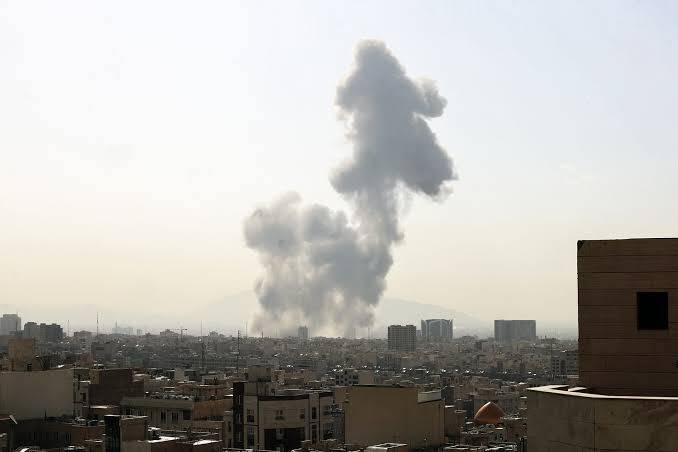
Tensions in the Middle East have surged into one of the most serious crises in years as Iran carries out sustained aerial attacks targeting the United Arab Emirates and other nearby nations, raising fears that the conflict could spread and draw in more countries. These developments mark a dramatic escalation in hostilities that have captured global attention.
On March 11, 2026, two unmanned aerial vehicles of Iranian origin fell near Dubai International Airport, injuring four people. Among those wounded were foreign nationals of Ghanaian, Bangladeshi and Indian nationality, with their injuries ranging from minor to moderate. Airport officials said that despite the incident, flights continued to operate, reflecting a determination to keep critical infrastructure functioning even amid rising tensions.
The attacks near the airport are part of a broader campaign of drone and missile strikes launched by Iran that began in late February 2026. These operations followed coordinated military actions by the United States and Israel against Iranian military targets. Iran’s response has involved the use of hundreds of drones, ballistic missiles and cruise missiles aimed at several Gulf countries, including the United Arab Emirates, Saudi Arabia, Kuwait, Qatar, Bahrain and Oman.
In the United Arab Emirates alone, authorities reported that more than a thousand hostile aerial threats were detected over recent days. Most of these were intercepted by advanced defensive systems before they could reach major population centres, yet debris from interceptions and falling fragments has caused injuries and localised damage. Officials confirmed that at least six civilians have died and over a hundred have been injured in the UAE since the attacks began. Many of those affected were working or travelling, including foreign workers who comprise a significant portion of the country’s population.
Elsewhere in the Gulf region, attacks attributed to Iran have damaged ports, oil installations and commercial vessels. In Oman, drones struck shipping facilities and oil tankers, resulting in injuries among maritime personnel and damage to cargo. In Bahrain, the government reported the interception of numerous incoming missiles and drones, along with injuries and harm to infrastructure.
The conflict’s impact on civil aviation has been deep and far‑reaching. Airlines operating in and out of the Gulf have been forced to reroute flights, cancel schedules and modify routes around restricted or dangerous airspace. Tens of thousands of flights have been affected, leaving passengers stranded and disrupting international travel and cargo logistics. These disruptions have compounded challenges for global supply chains, particularly in sectors that rely on quick air transport.
Commercial shipping has also been disrupted, especially in the Strait of Hormuz, a strategic waterway through which a significant share of the world’s oil exports pass. Threats to vessel safety have prompted rerouting and increased insurance costs, contributing to higher energy prices worldwide. Market volatility has been driven not only by physical risk but also by investor concerns over the potential for further escalation.
The human cost of the conflict extends beyond direct physical injuries. The psychological effects of repeated aerial alerts, air defence interceptions and the uncertainty of everyday life in conflict‑affected regions have weighed heavily on residents. Reports from Dubai and other Gulf cities describe heightened stress and concern among families and expatriate communities who live and work in major urban centres.
Governments in the region have reinforced their commitment to defending sovereign territory while seeking to manage public anxiety. The UAE’s Ministry of Defence repeatedly emphasised that its systems have intercepted the majority of hostile drones and missiles, protecting critical infrastructure and civilian populations. At the same time, authorities have had to deal with the aftermath of intercepted threats, which include damage from falling debris in populated areas.
Diplomatic relations have frayed under the strain of the conflict. The United Arab Emirates recalled its ambassador from Tehran and took the step of closing its embassy in Iran, highlighting a deepening rift between the two countries. UAE officials have also called for stronger international support to hold Iran accountable and prevent future attacks.
Other regional governments, while publicly supportive of defensive measures, have privately expressed frustration at how events have unfolded. Leaders in Gulf capitals said they were not fully consulted prior to the initial U.S. and allied strikes on Iran that triggered Tehran’s extensive counter‑offensive. Many have urged broader coordination among allied nations to address both the immediate security crisis and the larger geopolitical tensions at play.
International bodies and foreign governments have issued statements calling for de‑escalation and the protection of civilians. At the United Nations, diplomats reiterated the need for restraint and dialogue, even as military operations continue. Several countries have condemned the attacks while also encouraging diplomatic channels to prevent further deterioration of the situation.
Energy markets, already volatile from ongoing geopolitical risks, reacted sharply to news of the attacks. Oil and gas prices climbed as traders factored in the possibility of production slowdowns and transit disruptions in the Gulf, a region critical to global energy supply. Analysts warned that extended instability could have long‑term effects on energy security and international economic stability.
The conflict has highlighted divisions among regional and global powers. While some nations have thrown their full support behind Gulf states’ right to self‑defence, debate persists over how best to counter the underlying causes of the confrontation without triggering a wider war. Middle Eastern leaders and international diplomats continue to push for negotiations, even as they prepare for renewed threats.
In addition to government responses, communities and organisations in affected countries have mobilised humanitarian and support services to assist those displaced or injured by the crisis. Emergency services have remained on high alert, prepared for further incidents, while efforts are underway to reassure residents and maintain essential services.
As the situation evolves, the risk of wider regional conflict remains a major concern for world leaders. The involvement of powerful military actors, deep‑seated historical grievances, and complex alliances have created a volatile mix that could reshape the Middle East’s security landscape for years to come.
At the core of these developments are the people whose lives have been disrupted by the conflict—civilians in major cities, workers far from home, families coping with uncertainty, and entire communities adjusting to the realities of living under the spectre of war.
The coming days will be pivotal in determining whether diplomatic efforts can cool tensions and prevent further escalation, or whether the crisis will deepen and extend into neighboring regions. For now, the Middle East remains on edge, with its fate tied to the actions of foreign capitals, military planners, and negotiators working to steer the situation away from larger calamity.
📩 Stone Reporters News
✉️ info@stonereportersnews.com
📘 Facebook: Stone Reporters
🐦 X (Twitter): @StoneReportNew
📸 Instagram: @stonereportersnews
Add comment
Comments