

Reported by: Ijeoma G | Edited by: Oravbiere Osayomore Promise.
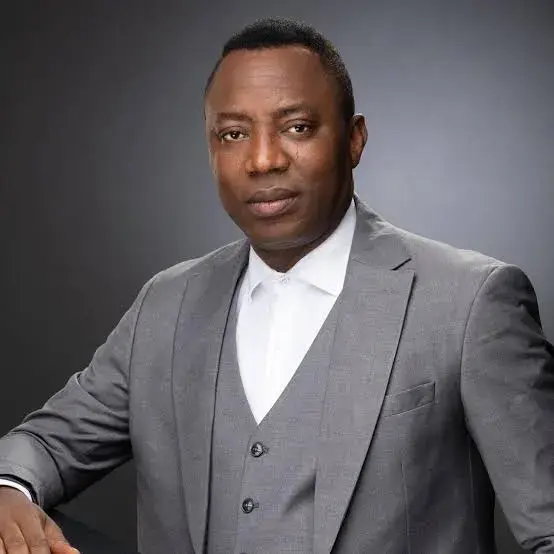
The Federal High Court in Abuja has issued a strong admonition to politician and online publisher Omoyele Sowore that it may revoke his bail and issue a bench warrant for his arrest after he failed to appear at a scheduled hearing in his ongoing trial on cybercrime‑related charges. The warning, delivered on Thursday by Justice Mohammed Umar, underscores mounting judicial impatience with repeated absences in a politically charged case that has captured national attention and raised fundamental questions about freedom of expression, defamation law, and the limits of online commentary in Nigeria’s democratic framework.
At the heart of the dispute is a cyberstalking and cybercrime charge brought against Sowore by the Department of State Services (DSS), alleging that he made false and defamatory statements about President Bola Tinubu in posts published on his social media accounts, including X (formerly Twitter) and Facebook. Prosecutors argue that the posts — which referred to the President in terms they claim were derogatory and potentially destabilising — violate the provisions of Nigeria’s cybercrime law and amount to unlawful publication of harmful content. Sowore has consistently denied wrongdoing, maintained his right to free speech, and declared his intention to defend himself vigorously in court.
The tension in the courtroom escalated after Sowore was absent from the latest hearing, a fact highlighted by the prosecution led by Senior Advocate Akinlolu Kehinde, SAN. Kehinde informed Justice Umar that Sowore and his legal team of about 30 lawyers were served with the hearing notice but chose not to appear, without providing any explanation for their absence. In response, the prosecution sought, among other remedies, revocation of bail and the issuance of a bench warrant to ensure the defendant’s presence at trial.
Justice Umar acknowledged that Sowore had previously attended earlier hearings and that adjournments in the case had at times been sought by both the prosecution and defence. However, the judge warned that failure to appear at the next hearing could lead to the immediate revocation of his bail and the issuance of an arrest warrant for his forceful production in court. The case has been adjourned to March 16, 2026, for continuation of the trial, and the judge ordered that fresh hearing notices be served on the defence.
This latest development is the most serious judicial escalation in a litigation timeline that has been marked by procedural disputes and conflicting legal interpretations since the case was moved forward in January 2026. In that earlier hearing, the Federal Government formally re‑arraigned Sowore on a revised two‑count charge related to alleged cyberstalking and cybercrime — removing social media companies previously named as co‑defendants and naming Sowore as the sole accused. Sowore pleaded not guilty to the amended charges.
Over the past several weeks, the court has also rejected multiple documents tendered by Sowore’s defence team — including printouts of media reports and social media content — on the basis that they were not properly connected to witness testimony and therefore inadmissible at that stage of the proceedings. The judge expressed concern about certain procedural irregularities, including an allegation that part of the court proceedings had been live‑streamed without proper authority, and suggested that this conduct could constitute contempt of court, signaling the strictness with which the ongoing trial is being managed.
Beyond the immediate courtroom drama, the case has unfolded against a backdrop of Sowore’s long and contentious relationship with Nigeria’s security apparatus. In September 2025, he was arraigned by the DSS on a multi‑count charge linked to an alleged defamatory post about President Tinubu that prosecutors said violated the Cybercrimes Prohibition and Prevention Act. Sowore rejected calls to remove the post from his social media accounts and described the prosecution as politically motivated.
Earlier in October 2025, Sowore and several other activists were granted bail by a magistrate court in connection with unlawful assembly charges arising from pro‑IPOB protests. That bail order became controversial when police reportedly rearrested Sowore moments after the bail was granted, sparking widespread condemnation from civil society organisations and human rights defenders. Critics said that unlawful re‑arrest following judicial bail undermined the rule of law and constituted intimidation of political actors and activists.
Apart from the legal complexities of the current cybercrime case, Sowore’s broader engagement in public activism has made him a polarising figure in Nigeria’s political landscape. He gained prominence as a human rights activist, journalist, and former presidential candidate of the African Action Congress (AAC). Sowore’s supporters see him as a defender of free speech and a critic of government excess, while detractors argue that his provocative commentary sometimes crosses legal boundaries.
The policy implications of this case are significant. Legal experts and civil liberties advocates have voiced concern over the broad application of cybercrime and cyberstalking statutes, warning that prosecuting individuals for expressing critical opinions about political leaders could chill free speech and restrict democratic discourse. Conversely, government officials argue that all citizens, including the politically active and outspoken, must respect legal boundaries and cannot publish false information that could harm national stability or public order.
The court’s warning to potentially revoke Sowore’s bail adds a heightened sense of urgency to the proceedings and places the activist at a critical juncture: his future presence in the trial depends on whether he complies with the court’s directive to appear in person at the next hearing. A failure to do so could see him detained pending further trial, fundamentally shifting the dynamics of a case already defined by legal contestation, political symbolism, and deep civil liberties concerns.
As the March 16 hearing approaches, it will remain a focal point for legal analysts, political commentators, civil rights organisations, and the general public — both in Nigeria and internationally — who are closely watching the intersection of law, politics, technology, and freedom of expression in one of Africa’s largest democracies.
📩 Stone Reporters News | 🌍 stonereportersnews.com
✉️ info@stonereportersnews.com | 📘 Facebook: Stone Reporters | 🐦 X (Twitter): @StoneReportNew | 📸 Instagram: @stonereportersnews
Add comment
Comments