

Reported by: Oahimire Omone Precious | Edited by: Jevaun Rhashan
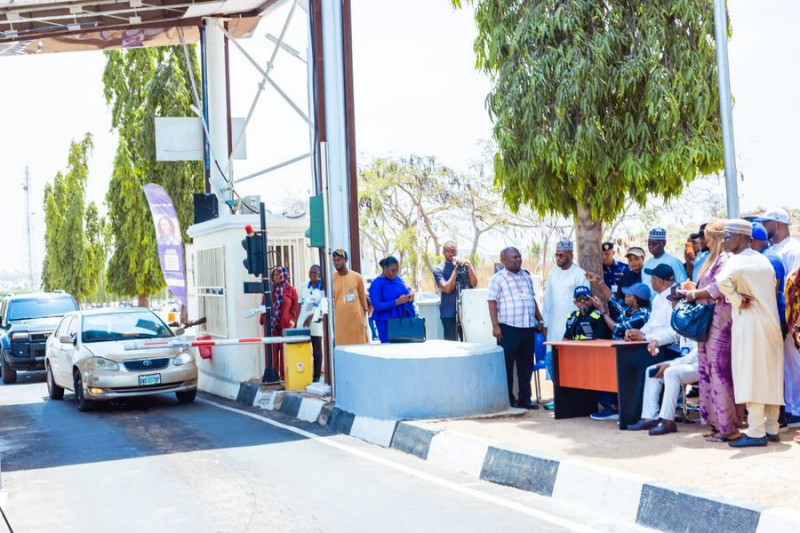
Abuja – Nigeria’s Minister of Aviation and Aerospace Development, Festus Keyamo, has announced an irreversible shift away from preferential treatment at airport access points and a firm commitment to a fully cashless revenue collection system, marking a significant policy shift in the management of federal airport operations. The announcement came during a site assessment of the hybrid payment system at the Nnamdi Azikiwe International Airport tollgate in the nation’s capital, where the minister articulated a broad plan for reforming revenue collection and rooting out entrenched practices that he said have undermined government income and operational efficiency.
Keyamo’s comments, delivered on Friday, March 13, frame a period of transition in Nigeria’s airports, as authorities shift from traditional cash-based toll collection — and long-standing informal exemptions — toward an automated, electronic model designed to reduce revenue leakages and modernise a critical component of national infrastructure.
The minister was unequivocal in his remarks on preferential access, particularly longstanding exemptions for “VIPs” — a term locally applied to high-ranking government officials, influential business figures and other individuals who might have previously bypassed toll payments on the basis of status, position or connection.
“We must not do VIP here again because half of our revenue goes to VIP,” Keyamo said, pointing to the impact that informal practices and exemptions have had on airport revenues. “Everybody is a big man in Abuja, that’s the problem. There’s hardly anybody you see in Abuja who doesn’t have FG [Federal Government] printed on their business card,” he added, capturing the minister’s concern that informal privileges have distorted the economic and operational integrity of airport toll collection. Senior aides, special assistants and other officials were referenced as examples of those who might previously have exercised unofficial exemptions.
The revocation of such privileges is tied directly to the broader policy goal of transitioning to a cashless system across all federal revenue points at airports — part of a federal directive that explicitly bars federal agencies from collecting physical cash at such facilities. Keyamo noted that the hybrid model currently in place, which allows both electronic and limited cash transactions, is temporary and intended only as a bridge to full automation. He stated that the hybrid system itself was introduced following delays and operational challenges that led President Bola Tinubu to suspend the initial strict cashless implementation earlier in March. The hybrid mechanism is designed to balance revenue generation with user convenience while authorities complete the transition.
Keyamo confirmed that President Tinubu has given him a firm deadline to complete the cashless transition, framing his personal commitment to the process by pledging to hold subordinates accountable if the rollout falters. “There is no going back on the cashless system,” he said, emphasising that resistance by stakeholders accustomed to the cash-based model will not reverse the broader policy push. “The moment Mr. President pushes me, I will also push those under me. Before Mr. President sacks me, I will sack other people too.”
The minister explained that while initial implementation was managed by the Federal Airports Authority of Nigeria (FAAN), he has assumed direct supervisory responsibility to ensure that objectives are met according to federal guidelines. This reflects concerns about revenue leakages and corruption historically associated with cash handling at airport access points and other toll collections, a problem Keyamo says the new system aims to eradicate.
To support the behavioural shift among airport users, Keyamo also directed FAAN to consider pricing incentives that make electronic payments more attractive than cash alternatives during the hybrid period. In practical terms, this means incentivising the purchase of cashless access cards and other automated payment tools that channel revenue directly into the Federation Account via the Treasury Single Account, Nigeria’s centralised revenue pool.
In addition to barring VIP exemptions and moving revenue collection online, discussions are reportedly underway with concessionaires to automate and modernise tollgate systems further. The goal is to integrate advanced digital infrastructure that limits opportunities for human interference and ensures real-time tracking and verification of payments. “We are discussing with concessionaires who will come and make it fully automated and electronic because the current system breeds corruption,” Keyamo remarked.
This push for digitisation is part of a wider effort across Nigerian government agencies to improve transparency and accountability in revenue administration. Such reforms follow longstanding calls from fiscal reform advocates and international partners, who have highlighted significant revenue losses within federal agencies due to inefficient systems and informal practices.
Keyamo’s announcement comes amid broader debates about economic policy direction under the Tinubu administration, which has pursued an agenda of fiscal reform, subsidy removals, currency redesigns and efforts to strengthen internally generated revenues. The airport toll collection reforms align with this pattern, reflecting a broader strategy to harness technology as part of anti-corruption and revenue optimisation frameworks. It also underscores the administration’s willingness to confront established behaviours and institutional inertia in pursuit of systemic change.
At Nnamdi Azikiwe International Airport and other major terminals where the hybrid model is being piloted, authorities stress the importance of public sensitisation and user education to ensure a smooth transition. Airport officials have highlighted early successes in traffic flow and payment adoption, while also acknowledging that continued efforts are needed to familiarise users with the new system.
Public reaction to the reforms has been mixed, with some users expressing support for modernisation and transparency, while others have raised concerns about access, convenience and the learning curve associated with digital payment methods. Addressing these concerns will be a critical component of the rollout strategy as authorities aim to build confidence in the new system’s efficiency and reliability.
The policy shift also signals broader implications for governance norms in Nigeria, challenging entrenched patronage practices and reinforcing the principle that government services and infrastructure should operate on the basis of equity and accountability. As the cashless transition progresses, all users — regardless of status — will be required to engage with automated payment platforms in order to access airport facilities.
By foregrounding revenue integrity and systemic fairness, the aviation ministry’s stance marks a notable departure from historical practices, one that aims to align Nigeria’s airport operations with global standards of financial control and digital infrastructure. The success of this transition will depend not only on technology adoption, but also on sustained political will, effective implementation and public cooperation as the country pursues more transparent and efficient governance models.
📩 Stone Reporters News | 🌍 stonereportersnews.com
✉️ info@stonereportersnews.com | 📘 Facebook: Stone Reporters | 🐦 X (Twitter): @StoneReportNew | 📸 Instagram: @stonereportersnews
Add comment
Comments