

Reported by: Oahimire Omone Precious | Edited by: Oravbiere Osayomore Promise.
In a case that has dominated national headlines and sparked intense public debate, the family of the late Nigerian singer Ilerioluwa Oladimeji Aloba, popularly known as Mohbad, has taken fresh legal steps in a high-stakes paternity dispute involving his only child, Liam. The long-running conflict — which intertwines family law, forensic science, celebrity legacy, and public accountability — has now entered a crucial new phase, with the family’s legal team challenging the capacity of selected forensic laboratories to carry out the post-mortem DNA testing ordered by a Lagos State court.
The legal action centres on a February 24, 2026 court directive issued by a magistrate court in Ikorodu, Lagos State, which ordered that DNA tests be conducted to determine whether little Liam is biologically related to his late father. The directive followed a prolonged dispute initiated by Joseph Aloba, Mohbad’s father and Liam’s grandfather, who has consistently maintained that the child’s paternity must be resolved conclusively before key family and estate matters can proceed.
Under the court’s order, DNA analysis was to be carried out by three independent laboratories agreed upon by the legal representatives of both parties and supervised under judicial oversight. The facilities initially listed included the DNA Diagnostics Centre in Fairfield, Ohio, United States — nominated by the applicant; Alpha Biolabs in Warrington, United Kingdom — nominated by the respondent; and Advanced Histopathology Laboratory Ltd. in London, United Kingdom — selected by the court’s supervising welfare officer.
In a formal affidavit filed with the court, the legal team acting for the family raised concerns that two of those three facilities may not have the technical capability to perform the specific type of post-mortem DNA testing required, particularly involving tissue extraction from embalmed remains — a process far more complex and demanding than standard paternity DNA tests. Lawyers for the applicant reported that preliminary inquiries revealed that both Alpha Biolabs and Advanced Histopathology Laboratory Ltd. indicated they do not routinely conduct DNA analysis on preserved or embalmed human tissue, which in this case is necessary because the biological samples must come directly from the late singer’s remains rather than from relatives.
According to the family’s lead counsel, Barrister Oladayo Ogungbe, this limitation could compromise the integrity of the scientific findings and therefore the legal outcome, undermining the credibility of the paternity determination if the laboratories lack the specialised forensic genetics capability to reliably extract and analyse degraded DNA. Ogungbe emphasised that the intent was not to seek unqualified facilities, but to fulfil the court’s directive in a manner that is transparent, scientifically rigorous, and legally defensible.
In response to these revelations, an affidavit of facts detailing the laboratories’ limitations was formally brought before the court, prompting legal debate over whether alternative facilities with the necessary expertise should be identified, or whether the terms of the testing process should be adjusted to ensure both scientific validity and judicial fairness.
The broader context of this legal battle is deeply rooted in the circumstances surrounding Mohbad’s sudden death in September 2023 at the age of 27, which itself sparked widespread public outcry, social movements, protests across multiple Nigerian states and abroad, and detailed investigations by police and civil society groups.
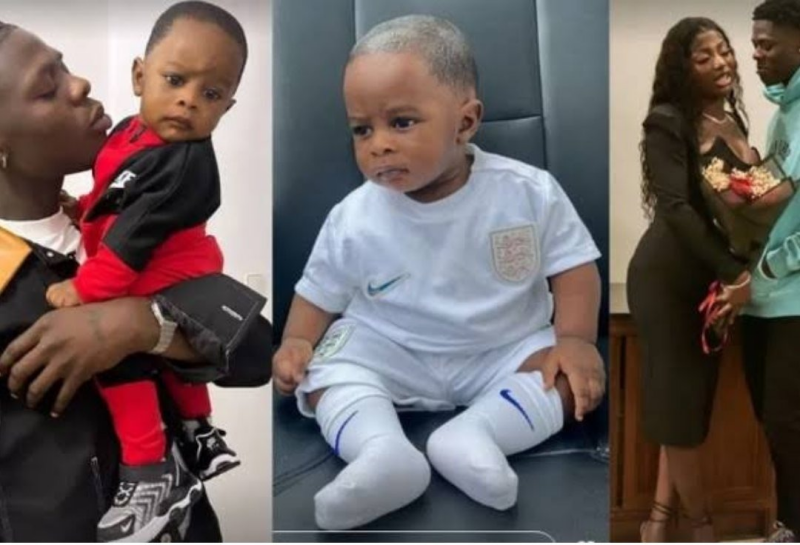
In the months and years that followed, questions emerged not only about the circumstances of his death — including conflicting views between family members, public figures, and fans — but also about unresolved matters surrounding his personal life, particularly his relationship with his partner, Wunmi, and the parentage of their son, Liam, who was born in April 2023, only months before Mohbad’s passing.
A separate legal case ensued in 2025 when the Ikorodu High Court ordered that three separate DNA tests be conducted abroad to conclusively determine the child’s paternity. The arrangement was intended to address earlier procedural complications and ensure that the testing process was conducted in a manner that would be robust, transparent, and resistant to claims of bias or manipulation. Each party was tasked with nominating one facility, while the court was to select the third, with all testing carried out using tissue samples — not just samples from living relatives — to eliminate ambiguity and ensure scientific accuracy.
This multi-lab approach was also designed to minimise the risk of inconsistent results: should one test contradict another, it would immediately signal issues that require further scrutiny — an important safeguard given the legal and personal stakes involved.
The DNA dispute has also intersected with broader family tensions. In late 2025, support groups consisting of fans and public figures both within Nigeria and in the diaspora publicly criticised court plans to supervise the DNA process, arguing that Joseph Aloba, as the party to the application, should have full oversight over how the test is conducted, and that state interference would be inappropriate.
The singer’s widow, Wunmi, has expressed frustration in court filings and public statements, accusing her father-in-law of shifting legal tactics and causing delays by seeking to impose testing locations and protocols outside of what she views as fair and legally mandated procedure. In December 2025, reports emerged that Wunmi claimed Aloba had attempted to influence the process by requesting tests be conducted in hospitals of his own choosing, a move that was reportedly struck down by the court and replaced with a directive specifying neutral medical facilities selected through judicial oversight.
The widow also emphasised her willingness to comply with DNA testing provided the process adheres to lawful procedures and ensures fairness for all parties, reflecting how the dispute has evolved beyond scientific questions into broader issues of legal rights, parental authority, and public scrutiny.
Experts and observers have noted that post-mortem DNA analysis, especially from embalmed tissue, presents significant scientific challenges. Embalming alters biological material, making DNA extraction more difficult and requiring advanced forensic genetics techniques and specialised laboratories equipped to handle degraded samples. Only a limited number of international facilities routinely perform this level of forensic analysis, highlighting why the choice of appropriate laboratories has become a central and contentious issue in the case.
The family’s insistence on internationally accredited DNA tests — including the rejection of procedures relying on samples from relatives — underscores their concern for scientific certainty and legal clarity, particularly given the implications for inheritance rights, legal recognition of the child, and eventual resolution of the singer’s estate.
Meanwhile, the public and legal communities continue to watch closely. The outcome of this case will likely have ramifications not only for the individuals involved but also for broader discussions about forensic science application in Nigerian courts, the intersection of high-profile celebrity cases with family law, and public trust in the judicial process when advanced scientific evidence is at stake.
As the legal battle unfolds, it continues to command attention from Nigeria’s entertainment sector, legal community, and the general public, illustrating the complex interplay of celebrity, science, and justice in a case with profound personal and societal implications. At its core, the resolution of the paternity question holds significant importance for the legal status, inheritance rights, and future wellbeing of young Liam, as well as public confidence in how the justice system navigates intricate scientific challenges.
📩 Stone Reporters News | 🌍 stonereportersnews.com
✉️ info@stonereportersnews.com | 📘 Facebook: Stone Reporters | 🐦 X (Twitter): @StoneReportNew | 📸 Instagram: @stonereportersnews
Add comment
Comments