

Reported by: Ijeoma G | Edited by: Pierre Antoine
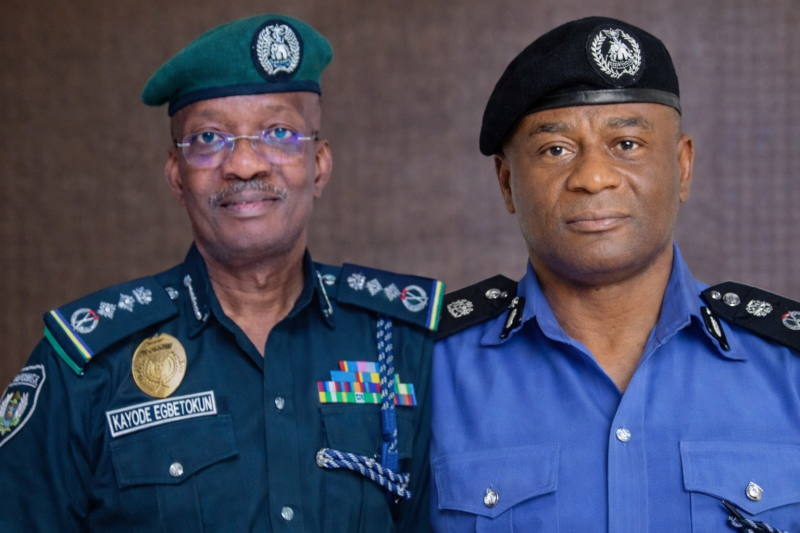
Inspector-General of Police Olatunji Rilwan Disu has ordered a fresh promotion examination for a set of senior officers who were reportedly declared unsuccessful in earlier promotion cycles during the tenure of former police chief Kayode Egbetokun, reopening a controversy that has stirred deep unease inside the Nigeria Police Force over merit, transparency and internal trust. Reports circulating on Wednesday, March 18, said the affected officers had complained that they were sidelined despite meeting promotion requirements, and that the new examination had been fixed for March 24.
The development has become significant not only because it touches rank progression inside one of Nigeria’s most important security institutions, but because it also reactivates wider allegations that promotions under the previous leadership were influenced by money and patronage rather than performance and seniority. Those allegations have been publicly framed in parts of the media as a “cash-for-rank” system, though the most serious claims remain contested and have not been established by any public judicial finding. What is clear is that Disu’s intervention suggests the current leadership considers the grievances serious enough to warrant corrective action instead of leaving the earlier results untouched.
The controversy sits against a broader backdrop of unusually intense debate over police promotions in recent months. In December 2025, the Police Service Commission approved the promotion of 774 senior officers after a process it described as involving written examinations and oral interviews. According to contemporaneous reporting, that batch included one officer promoted to Deputy Inspector-General, seven elevated to Assistant Inspector-General, 13 to Commissioner of Police, 30 to Deputy Commissioner, 51 Chief Superintendents promoted to Assistant Commissioner, 542 Superintendents to Chief Superintendent, 119 Deputy Superintendents to Superintendent and 12 Assistant Superintendents to Deputy Superintendent.
That formal explanation was later followed by even broader official claims from the police hierarchy. In February 2026, the Nigeria Police Force said 74,352 officers had been promoted nationwide since January 2025 across senior and junior cadres, while Egbetokun publicly rejected accusations that the process had been compromised. He insisted there was “no promotion scandal” and said the system rewarded diligence, professionalism and proven capacity. The force presented the promotions as part of an internal reform drive aimed at improving morale and operational effectiveness.
Yet the denials did not stop fresh allegations from emerging. On March 8, the Police Service Commission formally rejected a report alleging that some senior officers paid ₦5 million each to secure promotion from Chief Superintendent of Police to Assistant Commissioner of Police. The commission described that claim as unfounded, said due process had been followed, and argued that the Inspector-General’s role in promotions was limited to recommendations based on vacancy and performance while final approval belonged to the commission itself. It also said it was considering legal action over the publication of the bribery allegation.
That rebuttal is central to understanding the current dispute. On one side are officers and insiders alleging that deserving candidates were blocked or outmaneuvered during previous promotion exercises. On the other side are the commission and former leadership figures insisting the process remained rules-based and that corruption claims were exaggerated or false. Disu’s order for a resit does not by itself prove the bribery allegations, but it does indicate that confidence in the original examination outcome has been weakened enough for the new police leadership to reopen the matter rather than simply defend inherited decisions.
The timing matters. Disu only recently took over the force after President Bola Tinubu appointed him acting Inspector-General on February 25, 2026, following Egbetokun’s resignation. The Nigeria Police Council then ratified his appointment on March 2. Channels Television reported that Disu assumed office with a public commitment to accountable, modern and professional policing. That promise now faces an early institutional test, because promotion disputes cut to the heart of morale, discipline and legitimacy inside the force. Officers who believe advancement can be purchased are less likely to trust command decisions, while those who were promoted under contested circumstances may now find their own standing questioned by colleagues.
There is also a practical dimension. Promotion in the police is not merely ceremonial. It affects postings, authority, salary, pension trajectory and command opportunities. A disputed promotion cycle can therefore distort the operational chain of command and create bitterness that lingers for years. If officers who were marked unsuccessful in December 2025 and March 2026 are now being recalled for another examination, the implication is that the earlier process may have produced outcomes the current leadership believes require review. That alone is a notable break from the more defensive posture seen under the previous administration.
Still, important details remain unclear. No full official public statement from Force Headquarters had, at the time of reporting, laid out the total number of officers affected, the ranks involved in every case, the exact irregularities identified, or whether any internal disciplinary process had been opened against officials who handled the earlier examinations. There is also no public indication yet that previously promoted officers will lose rank, or that the outcome of the resit will automatically lead to backdated promotions. Those unanswered questions mean the story is still developing, and some of its most consequential implications remain unresolved.
What can already be said is that Disu has moved quickly into one of the most politically sensitive corners of police administration. His choice to permit a fresh exam will be read by many officers as an attempt to restore procedural fairness. It will also be read by critics of the former order as tacit acknowledgment that the complaints were too substantial to ignore. Whether this becomes a one-off correction or the beginning of a much broader audit of police promotions under Egbetokun will depend on what follows after March 24.
For the Nigeria Police Force, the issue is larger than one examination. It is about whether rank can still convincingly be tied to competence in an institution that depends on hierarchy to function. If the resit is conducted transparently and its results are accepted as credible, Disu may strengthen his reform image early in office. If the process is seen as selective, opaque or politically managed, the distrust now exposed could deepen. Either way, the dispute has already revealed how fragile internal confidence has become around promotions at the top of Nigeria’s policing structure.
📩 Stone Reporters News | 🌍 stonereportersnews.com
✉️ info@stonereportersnews.com | 📘 Facebook: Stone Reporters | 🐦 X (Twitter): @StoneReportNew | 📸 Instagram: @stonereportersnews
Add comment
Comments