

Reported by: Ijeoma G | Edited by: Pierre Antoine
Emerging reports and viral footage have triggered fresh concern across Nigeria after suspected bandit leaders were seen openly celebrating Eid al-Fitr in Faskari Local Government Area of Katsina State, a region long plagued by violent criminal activity. The development has raised serious questions about the presence and operational freedom of armed groups in parts of the North-West.
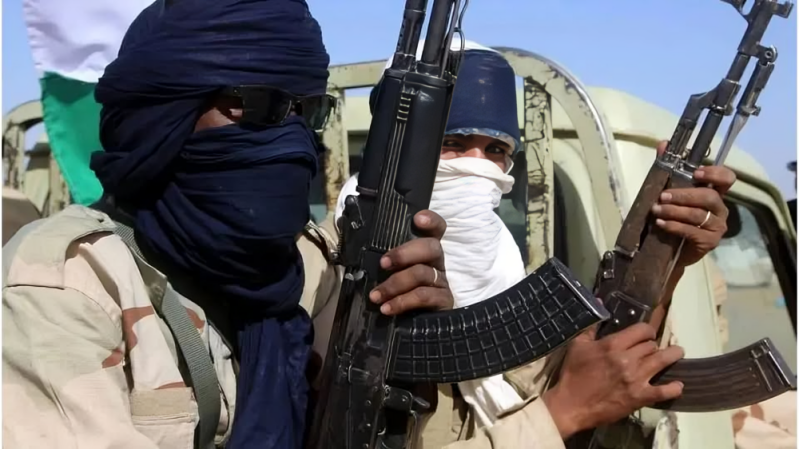
The incident came to public attention on March 20, 2026, when a counter-terrorism analyst known as MobilisingNiger shared a video on social media showing armed men identified as bandit leaders gathered in a community setting to mark the end of Ramadan. Among those reportedly present was a figure identified as Musa Goje, believed to be one of the key actors within local bandit networks.
The footage, which circulated widely within hours, appeared to show a relaxed gathering, with the armed men celebrating openly and interacting with individuals in the area. Particularly striking was the presence of children observed around the group, an image that has intensified concerns about the normalization of armed groups within vulnerable communities.
Stone Reporters note that the significance of this development goes beyond the celebration itself. Security experts say the ability of wanted criminal figures to assemble publicly, without immediate disruption, suggests deeper structural challenges in maintaining state authority in affected regions. In conflict-prone areas such as Katsina, bandit groups have historically operated from forest enclaves, launching attacks on villages before retreating to hideouts. However, the apparent confidence displayed in this instance indicates a shift toward more visible and emboldened activity.
The North-West region of Nigeria, particularly states like Katsina, Zamfara, and Kaduna, has experienced years of persistent insecurity linked to armed bandit groups. These groups are responsible for widespread kidnappings, killings, cattle rustling, and destruction of rural communities. In many cases, their operations are deeply intertwined with local dynamics, including disputes over land, economic hardship, and weak security presence.
Recent incidents underline the severity of the crisis. In Katsina State alone, armed groups have continued to carry out deadly attacks on communities, with dozens killed in coordinated assaults in recent weeks, reflecting an ongoing cycle of violence and retaliation.
What makes the Faskari development particularly concerning is the symbolic nature of the event. Eid al-Fitr is one of the most significant religious celebrations in Islam, typically associated with peace, reflection, and community unity. The appropriation of such a moment by armed groups has been interpreted by analysts as both a display of dominance and an attempt to reinforce influence within local populations.
Stone Reporters note that such displays are not entirely unprecedented. In previous instances, some bandit leaders have been reported to engage with local communities, attend meetings, or even participate in informal peace arrangements. In some cases, these interactions have blurred the lines between criminal groups and segments of the civilian population, complicating counterterrorism efforts.
Security analysts argue that this phenomenon reflects a broader challenge in the Nigerian bandit conflict, where non-state armed actors often exploit gaps in governance and security to establish parallel systems of control. In certain communities, residents—facing limited protection—have been forced to negotiate or coexist with these groups, sometimes under coercion.
The video has also reignited criticism of the effectiveness of current security strategies. Public reaction has been marked by frustration and disbelief, with many Nigerians questioning how individuals linked to violent crimes could operate so openly. The absence of any immediate law enforcement presence in the footage has further fueled concerns about surveillance, intelligence gathering, and rapid response capabilities.
At the time of reporting, there has been no detailed official statement from security agencies specifically addressing the Faskari video or confirming the identities of those involved. However, authorities have consistently maintained that operations against bandit groups are ongoing, with efforts focused on dismantling networks, targeting leadership structures, and restoring stability to affected regions.
Stone Reporters note that the situation also highlights the evolving tactics of armed groups. Beyond violence, these groups increasingly engage in psychological and symbolic actions designed to project power, attract recruits, and normalize their presence. The visibility of such gatherings, especially when shared widely on social media, can serve as a form of propaganda that reinforces their perceived strength.
Experts caution that addressing this challenge requires more than military action alone. While kinetic operations remain essential, long-term solutions must involve intelligence-led policing, community engagement, economic interventions, and efforts to rebuild trust between citizens and the state. Without addressing the underlying drivers of insecurity, including poverty, displacement, and weak governance structures, such incidents may continue to recur.
For residents of Katsina and other affected states, the implications are immediate and deeply personal. The continued presence of armed groups within or near communities not only threatens physical safety but also undermines social stability and economic activity. Farming, trade, and daily life are often disrupted, contributing to cycles of hardship and vulnerability.
As investigations and public scrutiny continue, the Faskari Eid celebration incident stands as a stark illustration of the complexities of Nigeria’s security crisis. It underscores the urgent need for coordinated action, credible intelligence, and sustained commitment to restoring authority in regions where non-state actors have gained ground.
For many Nigerians, the central question remains unresolved: how can individuals linked to violence celebrate openly in communities that have long suffered from their actions? The answer to that question may shape the next phase of Nigeria’s ongoing struggle against banditry and insecurity.
📩 Stone Reporters News | 🌍 stonereportersnews.com
✉️ info@stonereportersnews.com | 📘 Facebook: Stone Reporters | 🐦 X (Twitter): @StoneReportNew | 📸 Instagram: @stonereportersnews
Add comment
Comments