

Reported by: Ijeoma G | Edited by: Gabriel Osa
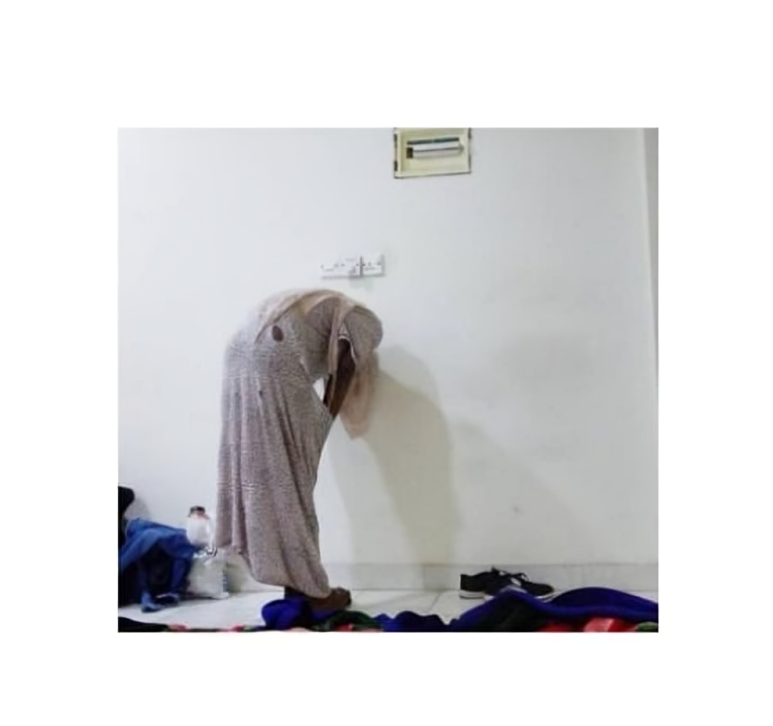
A Nigerian woman identified as Ogundele Oluwakemi Victoria is in critical condition in Iraq following a suspected case of human trafficking that has triggered serious allegations of abuse, starvation, and a possible organ harvesting attempt, raising renewed concerns about the growing exploitation of Nigerian migrants in the Middle East.
Victoria, who hails from Ibadan in Oyo State, reportedly traveled to Iraq under unclear and deceptive circumstances, with family members only becoming aware of her plans shortly before her departure. According to her sister, Titilayo Victoria, the victim disclosed that her travel arrangements were facilitated by an agent who instructed her to keep the process confidential until it was completed, a tactic commonly associated with trafficking networks seeking to avoid early intervention.
Despite attempts by her family to dissuade her, Victoria proceeded with the journey. Shortly after arriving in Iraq, communication between her and her relatives became irregular, but during those limited interactions, she reportedly described severe mistreatment, including physical abuse and deprivation of food. Her sister stated that Victoria eventually urged her to alert media outlets in Nigeria, prompting contact with a local radio station in Ibadan. However, efforts to confront the agent were reportedly dismissed, with the claims described as fabricated.
Stone Reporters note that the situation escalated significantly after Victoria became unreachable for an extended period, heightening fears about her safety. New details later emerged through acquaintances in Iraq, including a Nigerian woman identified as “Lady B,” who provided a more disturbing account of Victoria’s ordeal.
According to this account, Victoria had been subjected to ongoing exploitation by her handlers, including repeated financial demands despite prior payments. She was allegedly forced into domestic labour under harsh conditions and denied basic freedoms, including access to communication devices. The situation reportedly deteriorated further when she was taken to a hospital under suspicious circumstances.
Lady B recounted that a nurse at the facility allegedly warned Victoria that there were intentions to harvest her kidney, prompting her to attempt an escape. She reportedly fled to a police station but was subsequently handed over to an agency, which then transferred her to another household. There, restrictions intensified, with threats allegedly issued against her life if she attempted to use a phone again.
Months later, Victoria was reportedly located in an agency facility in Baghdad in a severely deteriorated condition. Witnesses described her as physically weak, unable to communicate, and exhibiting signs of mental instability. She was said to have been left without adequate medical care for weeks after being returned by her employer due to illness.
Efforts by members of the Nigerian community in Iraq led to her eventual removal from the agency environment. Friends reportedly pooled resources to provide food and basic support, while attempts to reach those responsible for her placement yielded limited cooperation. One of the individuals involved in facilitating her travel, identified as Mr. Kazeem, acknowledged his role but claimed limited knowledge of her current circumstances, stating that he had handed her over to another agent.
His responses to inquiries have drawn criticism, particularly his emphasis on prayer as the primary solution to Victoria’s condition, despite the urgent need for medical intervention and repatriation. He declined to provide details regarding her documentation, financial transactions, or concrete steps being taken to secure her return to Nigeria.
Another Nigerian contact in Iraq, known as Mama Tee, confirmed that efforts were made to assess Victoria’s condition through a medical professional, who reportedly found her to be mentally unstable and in need of urgent care. She also disclosed that the agency previously threatened to abandon Victoria if no one assumed responsibility for her, underscoring the precarious situation faced by trafficked individuals once they become incapacitated.
The case has drawn the attention of Nigeria’s National Agency for the Prohibition of Trafficking in Persons. The agency expressed concern over the incident and indicated that Victoria may have been among those who bypassed interception mechanisms designed to prevent trafficking. Officials have pledged to take action aimed at rescuing her and pursuing those responsible for her exploitation.
Victoria’s situation reflects a broader and deeply entrenched pattern of trafficking involving Nigerian women who are lured abroad with promises of better economic opportunities but end up trapped in exploitative and often dangerous conditions. In several Middle Eastern countries, migrant domestic workers have reported cases of abuse, restricted movement, non-payment of wages, and limited access to legal protection.
Security and human rights analysts warn that trafficking networks continue to evolve, using informal recruitment channels, social pressure, and economic desperation to attract victims. Once abroad, victims often face language barriers, legal constraints, and dependence on employers or agents, making escape and rescue significantly more difficult.
As Victoria remains in critical condition, urgent calls are growing for coordinated intervention involving Nigerian authorities, diplomatic channels, and international partners to ensure her immediate medical treatment and safe return. The case is likely to intensify scrutiny on trafficking routes between Nigeria and the Middle East, as well as the accountability of individuals facilitating such movements.
For many observers, the incident underscores the urgent need for stronger enforcement, public awareness, and cross-border cooperation to combat human trafficking and protect vulnerable individuals seeking opportunities abroad.
📩 Stone Reporters News | 🌍 stonereportersnews.com
✉️ info@stonereportersnews.com | 📘 Facebook: Stone Reporters | 🐦 X (Twitter): @StoneReportNew | 📸 Instagram: @stonereportersnews
Add comment
Comments