

Reported by: Ijeoma G | Edited by: Oravbiere Osayomore Promise.
London — The United Kingdom has embarked on a significant expansion of its immigration detention capacity and accelerated deportation efforts under a broader overhaul of its migration enforcement strategy, including a new bilateral cooperation agreement with Nigeria aimed at removing individuals with no legal right to remain in the UK more swiftly. These policy changes, announced and finalised during a recent state visit by Nigeria’s President to Britain, reflect a pivot by the UK government toward stricter border control, expanded detention infrastructure and deeper international collaboration on migration management.
At the centre of the government’s revamped approach is a marked increase in detention capacity within the UK’s immigration system to support faster removals. The Home Office has confirmed the reopening and enlargement of key Immigration Removal Centres, including the Campsfield House Immigration Removal Centre, which now offers additional bed space for detainees pending deportation. This expansion is a response to persistent administrative backlogs and legal delays that have historically slowed the deportation process, as well as part of a wider plan to enhance enforcement and returns capability.
Previously closed centres have been brought back into operation and refurbished to accommodate a growing number of migrants whose asylum claims have been denied, visa overstayers and foreign national offenders who have completed criminal sentences. The Campsfield House IRC near Oxford, for example, was reopened and now holds detainees who would otherwise remain in the community while awaiting removal proceedings. Some of these facilities are operated by private contractors under Home Office contracts, reflecting the government’s willingness to use outsourced management to meet capacity needs.
Officials in London have framed these measures as essential for restoring control to the UK’s borders and ensuring that laws governing entry and residence are enforced fairly and consistently. They argue that expanding detention capacity and speeding up deportations will deter irregular migration, alleviate pressure on the asylum system and relieve overcrowding in prisons by ensuring convicted foreign offenders are removed more rapidly after serving their sentences.
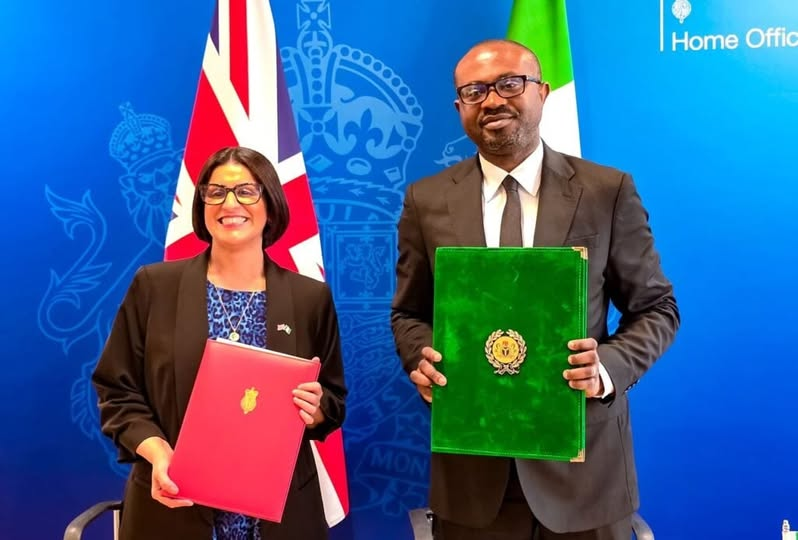
Country‑to‑country cooperation has also become a focal point of the UK’s strategy. In mid‑March, the British government signed a new partnership with Nigeria during President Bola Tinubu’s official state visit. The agreement, negotiated between UK Home Secretary Shabana Mahmood and Nigeria’s Interior Minister Olubunmi Tunji‑Ojo, is designed to streamline the repatriation of Nigerian nationals who do not have the right to remain in the UK, including failed asylum seekers, visa overstayers and convicted offenders.
A key innovation of this cooperation deal is Nigeria’s acceptance of alternative identification documents issued by the UK, known as “UK letters,” which allow nationals without valid passports to be returned without the previous need for emergency travel documents. This is expected to remove a major administrative hurdle that has historically delayed deportations and led to prolonged detention, as immigration officials awaited verification of identity.
Under the terms of the agreement, the coordinated returns process will include multiple layers of identity checks by both UK and Nigerian authorities before removal, and each return must be carried out with dignity and respect for the individual’s fundamental rights. Deportations will be managed through scheduled or chartered flights, with Nigeria receiving advance notification of returnee details. The memorandum is set for an initial five‑year period, with potential renewal options.
The Nigeria‑UK arrangement also opens channels for broader security cooperation targeting irregular migration and organised crime. Joint efforts will focus on dismantling networks involved in visa fraud, sham employment or marriage schemes and falsified financial documentation. A planned information‑sharing “fusion cell” is designed to enhance real-time intelligence exchange between government agencies, technology firms and telecommunications providers in both countries to support law enforcement actions.
Nigeria’s government has emphasised that the agreement strictly concerns the repatriation of Nigerian nationals and does not obligate the country to accept foreign citizens of other nationalities, a clarification issued by the presidency aimed at addressing mischaracterisations in some media coverage. The Nigerian government has stressed that returnees will be subject to multiple identity checks and verification procedures to ensure accuracy, and that treatment during reintegration will uphold human rights and dignity.
The domestic response in the UK to these developments has been mixed. Supporters of strict border enforcement view the expanded detention estate and enhanced deportation mechanisms as necessary tools for upholding the rule of law and protecting public services. Critics, however, including refugee advocacy groups and human rights organisations, have raised concerns about the impacts of detention on individuals and families and questioned whether increasing detention capacity actually leads to more removals or simply detains people for longer periods.
Legal and procedural safeguards remain in place, meaning individuals who face deportation can still pursue appeals within the UK legal system, including human rights and asylum claims. Domestic debates persist over how to balance the government’s goals of efficient removal with commitments to international protection obligations and respect for individual rights. The expansion of detention facilities has further reignited discussion about the appropriate use of detention, particularly for vulnerable individuals such as families, children and those with complex legal situations.
Analysts note that while the new agreement with Nigeria and the expanded detention capacity represent significant shifts in policy and enforcement capability, the overall effect will depend on how swiftly and transparently new processes are operationalised, how diplomatic relations evolve, and how legal challenges within the UK system are managed. For now, London and Abuja have signalled a shared commitment to manage migration collaboratively, reduce delays in returns and tackle irregular migration as part of a long-term bilateral relationship.
📩 Stone Reporters News | 🌍 stonereportersnews.com
✉️ info@stonereportersnews.com | 📘 Facebook: Stone Reporters | 🐦 X (Twitter): @StoneReportNew | 📸 Instagram: @stonereportersnews
Add comment
Comments