

Reported by: Oahimire Omone Precious | Edited by: Oravbiere Osayomore Promise.
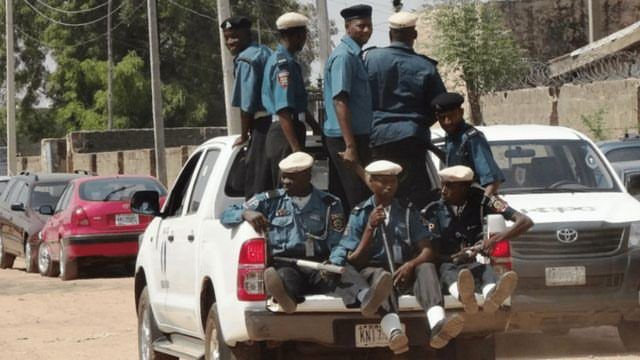
Kano, Nigeria — Over the recent Eid‑el‑Fitr (Sallah) celebrations, the Kano State Hisbah Board detained 583 young men and women in what authorities described as a large‑scale enforcement action against behaviour they deemed contrary to local moral standards and Islamic teachings. The operation, carried out across multiple urban centres in Kano State, forms part of the board’s ongoing efforts to monitor public conduct during major religious festivities and enforce codes of appearance and behaviour under the umbrella of “Operation Fight Against Immorality.”
According to a statement released by the board’s Deputy Commander‑General, Mujahid Aminuddeen, the personnel deployed across the state made arrests on a range of alleged infractions, which included plaiting hair and adopting hairstyles considered “indecent,” wearing trousers above prescribed lengths, inappropriate dress, and mixed seating of male and female passengers on commercial tricycles. The Hisbah, which deployed a reported 9,500 officers during the Sallah period, said the campaign was intended to uphold what it described as community moral standards in line with Islamic principles.
Among those detained, 275 were commercial tricycle operators — commonly referred to locally as “keke riders” — who Hisbah authorities said had plaited their hair or adopted hairstyles deemed inconsistent with expected norms of appearance during the festive period. The statement further noted that 21 tricycle operators were arrested for wearing three‑quarter‑length trousers, a style the board views as inappropriate under its interpretation of modest dress codes.
In addition to the male detainees, 286 young women were reportedly taken into custody for what the board described as “indecent dressing that exposed their bodies in the name of fashion.” Aminuddeen said these arrest figures reflect the scope of the enforcement initiative, which also included detaining 85 tricycle drivers for transporting male and female passengers together in situations considered inappropriate under local religious and cultural expectations.
The board also reported that during its operations it located and recovered 66 missing children, reuniting them with their families. Hisbah officials framed this aspect of the campaign as part of wider community engagement efforts during a period when celebrations and crowd movements peak across the state.
Kano’s Hisbah Corps functions as a religious policing body aimed at enforcing Islamic principles and moral conduct in society. Although sometimes described in popular discourse as “religious police,” the corps formally operates under the authority of a state‑level board and is intended to complement civil law enforcement by monitoring behaviour considered inconsistent with Shari’a values. Established in the early 2000s, the Hisbah Corps has evolved into one of the most active institutions of its kind in northern Nigeria, with thousands of members across urban and rural communities.
The group’s authority and actions have long been subjects of public discussion. Critics and human rights observers note that while Hisbah officials are meant to notify the Nigeria Police Force when violations are observed, in practice they often undertake direct enforcement, detaining individuals in public spaces for what are perceived as social‑morality infractions. Debate continues over the legal basis of these actions, especially given Nigeria’s dual legal framework in which secular law coexists with Shari’a law in some states, including Kano.
Public reaction to the mass detentions has been mixed. Some residents and conservative groups within Kano have supported the operation, viewing strict enforcement during a major religious celebration as a necessary measure to preserve cultural values and moral order. Supporters argue that maintaining decorum during such events reinforces community solidarity and respect for religious traditions.
However, human rights advocates and many members of the youth population have criticised the campaign, arguing that personal appearance, hairstyle choices, and modes of dress fall within spheres of individual expression that should not be subject to police action. Critics contend that arrests for matters such as hairstyles and clothing risk infringing on personal freedoms and raise concerns about how moral standards are being defined and enforced.
Beyond arguments over individual rights, some observers have pointed to long‑standing tensions about the role of Hisbah in social life. These debates touch on broader questions about governance, the interplay between religious norms and civil liberties, and the extent to which community enforcement of morality can or should be embedded within formal public authority. Opponents of aggressive enforcement argue that efforts would be better directed at addressing pressing security challenges facing the region, rather than policing hairstyles or dress.
Historically, the Hisbah Corps in Kano has undertaken a wide range of activities to influence public behaviour, from restrictions on alcohol sales and consumption to directives on clothing and public conduct during Ramadan and other religious periods. Some past initiatives have sparked controversy, especially among younger demographics who view the enforcement tactics as heavy‑handed or intrusive. Yet supporters maintain that the corps plays an important role in shaping societal norms in majority‑Muslim communities and preserving cultural coherence.
As those detained during the Sallah period enter legal or administrative proceedings, attention will likely remain on how the cases unfold and whether the enforcement actions prompt broader discussions about rights, religious values, and the limits of communal regulation in Nigeria’s largest northern state.
📩 Stone Reporters News | 🌍 stonereportersnews.com
✉️ info@stonereportersnews.com | 📘 Facebook: Stone Reporters | 🐦 X (Twitter): @StoneReportNew | 📸 Instagram: @stonereportersnews
Add comment
Comments