

Reported by: Ijeoma G | Edited by: Oravbiere Osayomore Promise.
American and Nigerian political and security landscapes were thrust into sharper focus this week after a senior United States lawmaker issued a firm warning that the United States could take direct measures to address Nigeria’s deepening security crisis if authorities in Abuja do not adopt stronger actions to curb persistent violence. The remarks, delivered in a televised interview and in statements to media outlets, further intensified an ongoing debate over the causes of Nigeria’s insecurity and how the global community should respond.
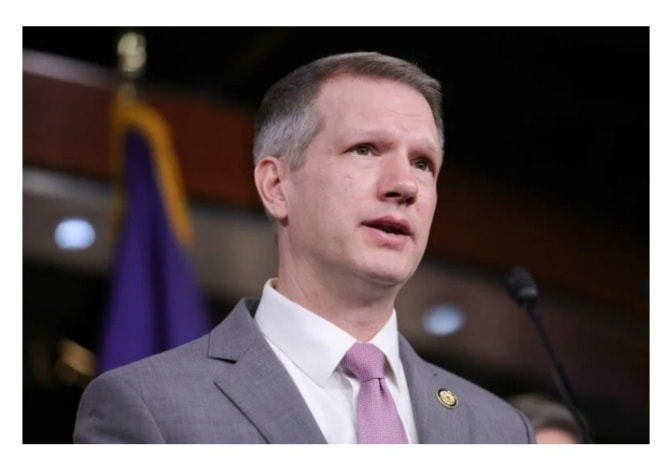
Republican Congressman Riley Moore of West Virginia described a recently submitted report to the White House — drafted at the request of President Donald Trump and House Appropriations Committee Chairman Tom Cole — that outlines specific recommendations for tackling what Moore described as escalating violence against Christian communities across Nigeria. He made it clear that if Nigerian authorities fail to act swiftly and decisively, Washington could intervene more directly to protect vulnerable populations.
Moore said his recent fact‑finding trip to Nigeria revealed troubling scenes that underscored the severity of the situation. He described what he witnessed as a “tragedy and horror” and pointed to deadly incidents in which dozens of civilians were killed, including attacks reported during a Palm Sunday service and an assault at a wedding. According to Moore, such episodes reflect a broader pattern of violence that, in his view, remains largely unchecked.
Although Moore acknowledged that the Nigerian government has made some efforts to address insecurity, he stressed that overall progress has been insufficient. “Something has got to give here,” he said, emphasising that continued deaths of civilians demand urgent action. He warned that if Nigeria does not take the necessary steps, the United States would not remain on the sidelines.
The backdrop to Moore’s remarks is a renewed wave of violence in central Nigeria’s Plateau State. In late March, gunmen attacked the Angwan Rukuba community in Jos North Local Government Area late at night, killing a significant number of civilians and injuring others. The assault triggered the imposition of a 48‑hour curfew and reinforced deployments by Nigeria’s police and armed forces.
Official casualty figures have varied, with initial security reports offering conservative counts, while local residents and independent observers suggested the toll was significantly higher. The attack reignited debate over security management in Plateau and other parts of Nigeria’s Middle Belt, where ethnic, communal, and religious tensions have periodically erupted into violence.
In response to the Angwan Rukuba attack, Nigeria’s Inspector‑General of Police ordered enhanced security deployments, including tactical units and intelligence operatives, and urged communities to cooperate with security agencies to prevent further violence. The Nigeria Governors’ Forum condemned the killings and called for an immediate end to cycles of revenge attacks that perpetuate insecurity.
In the days following the assault, several religious bodies in Plateau State adjusted their Easter Vigil services by scheduling them earlier in the evening out of concern for congregants’ safety, reflecting broader fears among worshippers who have experienced repeated threats on significant holy days.
The situation in Plateau State arrives amid broader diplomatic tensions between Washington and Abuja over how to characterise and respond to Nigeria’s chronic insecurity. In recent months, U.S. lawmakers have held hearings and briefings focused on Nigeria, with some describing the violence against Christian communities as tantamount to genocide, while others have cautioned that the crisis is more complex, involving multiple drivers such as extremist insurgencies, criminal banditry, and farmer‑herder conflicts that affect communities of all faiths.
Earlier congressional action included a bill proposed by Moore and other Republican lawmakers that sought to impose targeted sanctions on individuals and organisations in Nigeria accused of facilitating violence. The proposed legislation aimed to require visa bans and asset freezes as tools to hold alleged perpetrators accountable.
Moore has also engaged in multiple fact‑finding and diplomatic engagements, meeting with Nigerian security officials and civil society leaders to press his concerns about what he called horrific violence. On social media, the lawmaker emphasised U.S. support for communities he characterised as under threat.
However, Moore’s framing of the crisis and public criticism of media reporting have added further complexity to the discourse. He described certain news coverage that questioned the characterisation of the violence as a genocide as biased and lacking essential context, arguing that such reporting minimises the scale and severity of reported attacks on Christian civilians.
The Federal Government of Nigeria has consistently rejected claims that the nation’s security challenges represent a targeted campaign of persecution against Christians. Officials have emphasised that Nigeria’s insecurity is rooted in longstanding communal disputes, economic pressures, and fragmented armed groups, and that violence is not driven solely by religious identity. Abuja has repeatedly stressed its constitutional commitment to protecting freedom of religion and worship for all citizens.
President Bola Tinubu publicly condemned the recent killings in Plateau and Kaduna states and directed security agencies to pursue those responsible, assuring Nigerians that perpetrators would be brought to justice. The government has also sought to engage with U.S. counterparts through diplomatic channels and joint working groups aimed at strengthening security cooperation.
Within Nigeria, political leaders, civil society actors, and religious figures have debated both the violence and the international narrative framing around it. Some have criticised the federal government’s handling of security, calling for more robust and proactive strategies, while others have cautioned against oversimplifying the crisis in ways that could inflame tensions or undermine national sovereignty. The violence has fed ongoing debates about governance, resource allocation, and community protection strategies in volatile regions of the country.
Moore’s warnings and the attention they have drawn in Washington reflect broader international concerns about human rights, religious freedom, and the stability of Africa’s most populous nation. The warnings have also sharpened focus on how bilateral relations between the United States and Nigeria could evolve, particularly if external pressure persists for more stringent accountability measures and security reforms.
As security conditions continue to fluctuate in Nigeria’s Middle Belt and other regions, the coming months are likely to be pivotal. How Nigeria balances internal security reforms with diplomatic engagement will shape not only its domestic stability but also its relationships with key international partners. Ongoing violence, diplomatic exchanges, and geopolitical tensions will continue to influence the conversation around Nigeria’s security challenges and how the international community supports efforts to address them.
📩 Stone Reporters News | 🌍 stonereportersnews.com
✉️ info@stonereportersnews.com | 📘 Facebook: Stone Reporters | 🐦 X (Twitter): @StoneReportNew | 📸 Instagram: @stonereportersnews
Add comment
Comments