

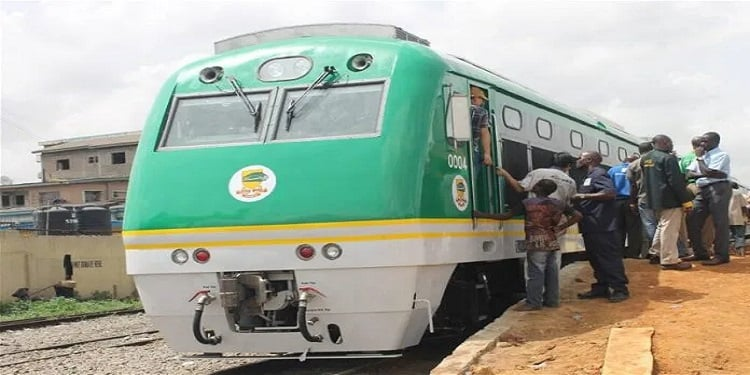
Police Record 20 Railway Vandalism Arrests as Nigeria Steps Up Protection of Rail Infrastructure
The claim that police “nabbed 20 suspected railway vandals” is accurate in substance, but the strongest available reporting shows this was not a single fresh raid. Rather, the Nigerian Railway Corporation said about 20 people were arrested over the course of 2025 for vandalising railway infrastructure across the country. The disclosure was made by the corporation’s Chief Public Relations Officer, Callistus Unyimadu, in remarks about the role of the Railway Police Command in handling cases along rail corridors nationwide.
According to Unyimadu, the figure reflects only cases that were properly reported to the Railway Police Command and documented. He said vandalism incidents fall within the command’s jurisdiction once they occur across the rail network, but added that not every case is followed through in a way that allows the police to keep full records. That qualification matters because it suggests the 20 arrests may represent only the documented portion of a broader problem affecting the rail system.
His comments also indicate that the cases are moving through the justice system rather than ending at arrest. Unyimadu said some suspects are taken to court, charged and prosecuted, while others may later be freed. He further stated that when cases are proven, offenders are convicted and sentenced, citing a recent matter he said was due back in court in April. The corporation used the disclosure to reinforce its position that anyone caught vandalising railway assets will be prosecuted under the law.
What the reporting does not establish is equally important. There is no indication in the strongest source that all 20 suspects were arrested in one operation, in one state, or on one date. There is also no published official list of the suspects’ names, no detailed breakdown of where each arrest occurred, and no comprehensive inventory of materials recovered in all 20 cases. In other words, the headline is based on a cumulative annual figure released by the NRC, not a single dramatic nationwide bust announced by the police on the day of publication.
The NRC’s statement was framed against a pattern of repeated attacks on rail infrastructure. One example cited was a January 2026 operation in Bauchi State, where Nigeria Security and Civil Defence Corps operatives intercepted a truck conveying vandalised railway tracks and arrested five suspects. According to the report, the stolen rail materials had been hidden beneath bags of chicken feed, suggesting a deliberate effort to evade detection and move the materials into illicit markets.
Another example involved an arrest in Lagos in March 2026. A suspect identified as Bashiru Hafeez was arrested at the Mobolaji Johnson Train Station in Ebute-Metta after he was allegedly found with 15 pandrol clips believed to have been removed from a railway line. The report said he was arraigned in court and remanded pending further hearing. That case shows the problem is not confined to remote corridors; it also affects high-profile urban rail facilities.
Related reporting from Kano also illustrates the operational pattern used by security agencies. In March 2026, the NSCDC in Kano announced the arrest of six suspects accused of tampering with railway sleepers in Kiru Local Government Area. The command said the men were caught in the act following intelligence and surveillance operations, and it described railway vandalism as economic sabotage that threatens public safety and national development. While that case is separate from the NRC’s annual total, it fits the same wider enforcement drive against theft and dismantling of rail infrastructure.
The broader significance of these arrests lies in the strategic role rail now plays in Nigeria’s transport and infrastructure plans. Vandalism of tracks, clips, sleepers and other fittings can disrupt passenger movement, delay freight, increase maintenance costs and create direct safety risks. The NRC’s public emphasis on prosecutions appears designed not only to reassure passengers and investors, but also to deter scrap dealers, transporters and intermediaries who may help move or profit from stolen railway materials.
What can be stated with confidence at this stage is that the Nigerian Railway Corporation has publicly confirmed that about 20 people were arrested in 2025 in documented railway vandalism cases, and that at least some recent suspects in separate 2026 incidents have already been apprehended and taken before the courts. What cannot yet be stated from the strongest available reporting is that there was one unified police operation that rounded up 20 suspects at once, or that all of those cases have already resulted in conviction.
So the fuller story behind the headline is less about one spectacular raid and more about a continuing campaign to protect Nigeria’s rail assets. The NRC is signalling that railway vandalism remains persistent, that the police and other security agencies are making arrests where cases are documented, and that prosecutions are underway. The annual figure of 20 arrests is therefore best read as a snapshot of enforcement in a larger, ongoing struggle over the security of the country’s rail network.
📩 Stone Reporters News | 🌍 stonereportersnews.com
✉️ info@stonereportersnews.com | 📘 Facebook: Stone Reporters News | 🐦 X (Twitter): @StoneReportNew | 📸 Instagram: @stonereportersnews
Reported by: Ijeoma G | Edited by: Gabriel Osa
Add comment
Comments