

Reported by: Ijeoma G | Edited by: Gabriel Osa
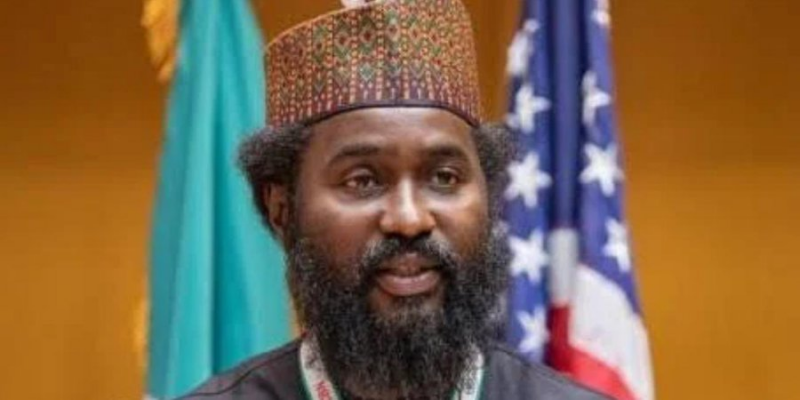
Former federal lawmaker and security consultant Aliyu Ibrahim Gebi has denied allegations that he supplied false intelligence to foreign embassies in Nigeria, pushing back against reports that linked him to a recent diplomatic scare over the country’s security situation. The controversy followed reports that operatives of the State Security Service, also known as the SSS or DSS, took him in for questioning on April 3 and later granted him bail while an investigation continued.
The allegation first entered the public domain through a Premium Times report that said Gebi, a member of Nigeria’s 7th House of Representatives and now a security consultant, was detained over claims that he passed what security sources described as false intelligence to foreign embassies. According to that report, sources familiar with the matter said the information triggered concern in diplomatic circles, with some foreign missions weighing protective measures and some airlines reassessing flights to Nigeria. The report further said Gebi had continued reporting to the SSS after being released on bail and might face charges after the investigation.
The same report tied the alleged intelligence to a broader international reaction that unfolded this week. Reuters separately confirmed that on April 9 the United States expanded its travel warning for Nigeria, authorised the departure of non-emergency embassy staff and family members from Abuja, and suspended visa appointments because of what it described as deteriorating security conditions. Premium Times reported that Nigerian security and diplomatic officials believed Gebi’s alleged report had fed into embassy concern, although the newspaper also stated it could not independently obtain the actual content of the material said to have been circulated.
Gebi, however, has now sharply disputed that narrative. In a follow-up statement reported by Premium Times after he contacted the newspaper directly, he said he was not arrested but merely invited to assist an ongoing investigation and that he cooperated voluntarily, including by granting investigators access to his electronic devices. He argued that his comments and contributions had been twisted into something damaging and insisted he would not work against Nigeria’s interests, its president, or its security institutions.
He also directly challenged the suggestion that he was responsible for influencing foreign missions. In his response, Gebi questioned whether any so-called false intelligence from him could realistically explain a U.S. advisory that covered 23 Nigerian states, pointing instead to the scale of the broader security concerns already acknowledged by Washington. He further argued that the United States already has assets and intelligence capabilities on the ground in Nigeria, suggesting that a single outside briefing should not be overstated as the basis for such a major diplomatic decision.
The political and security sensitivity of the matter is heightened by Gebi’s background. Premium Times reported that he was born in Bauchi State, was elected to the House of Representatives in 2011, chaired the House Committee on Internal Security, later served as a special adviser at the Ministry of Interior between 2015 and 2023, and subsequently worked in a defence-related advisory role on non-kinetic security strategies. That record means the allegation, even before any formal charge has been announced, has attracted unusually high attention because it concerns a figure long associated with Nigeria’s internal security architecture.
The dispute is unfolding against the backdrop of a tense exchange between Abuja and Washington over the security picture in Nigeria. Reuters reported that the U.S. advisory authorised drawdowns from the embassy in Abuja and cited worsening conditions. Premium Times also reported that the Nigerian government formally rejected the American position as unbalanced, urging international partners to reflect what it called the progress being made to improve security. That wider disagreement is important because it shows the Gebi controversy is not taking place in a vacuum; it sits inside an already fraught debate over how Nigeria’s insecurity is described abroad and how foreign governments respond to it.
What remains unclear is the precise evidentiary basis of the allegation against him. Public reporting so far relies largely on unnamed security sources and on Gebi’s own rejoinder. No court filing has yet been made public in the available reporting, and no official SSS statement detailing the accusation, the evidence, or any planned prosecution has been cited by the strongest current sources. Premium Times said only that sources expected possible charges after investigation, while Gebi maintained his role was cooperative and lawful. That leaves the case at a preliminary stage: serious enough to trigger public controversy, but not yet supported in the public domain by documentary proof or formal charges.
The case nonetheless raises broader questions about intelligence handling, diplomatic communications and political accountability in Nigeria. If investigators can substantiate the claim that misleading security information was supplied to foreign missions, the fallout could be significant because such information can affect embassy operations, airline schedules, travel advisories and investor confidence. If, on the other hand, the allegation is not sustained, the episode may deepen concern about how security controversies are weaponised in elite political or bureaucratic struggles. At this stage, the only firmly established facts are that Gebi was questioned by the SSS, that he was later on bail or otherwise free while still reporting to investigators, and that he has publicly and categorically denied supplying false intelligence to embassies.
For now, the story remains a live and unresolved test of credibility on all sides. Security sources, speaking anonymously, have advanced a serious accusation tied to international diplomatic consequences. Gebi has answered with an equally forceful denial, casting himself as a patriot whose words were distorted. Until investigators present verifiable evidence, or the SSS and courts move the matter into a more formal process, the controversy will continue to sit at the intersection of national security, diplomacy and politics, with consequences that extend well beyond one former lawmaker’s personal reputation.
📩 Stone Reporters News | 🌍 stonereportersnews.com
✉️ info@stonereportersnews.com | 📘 Facebook: Stone Reporters News | 🐦 X (Twitter): @StoneReportNew | 📸 Instagram: @stonereportersnews
Add comment
Comments