

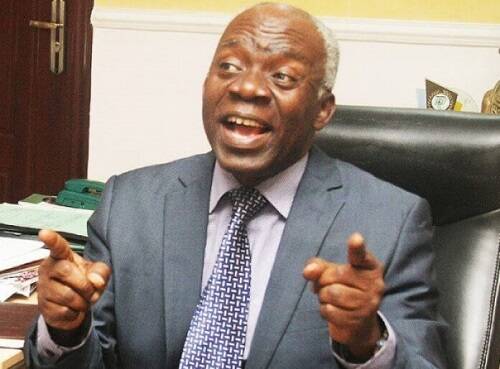
Senior Advocate of Nigeria, Femi Falana (SAN), has stated that state governors in Nigeria do not possess the constitutional or legal authority to grant pardons to convicted or suspected bandits and terrorists. Falana made this known on Tuesday, June 30, 2026, while presenting a paper at the Amnesty International Second Annual General Meeting (AGM) 2026 held in Abuja, where he addressed concerns over the growing trend of negotiations and amnesty deals involving violent criminal groups across parts of the country.
Falana explained that under Nigerian law, terrorists and bandits arrested by security agencies must be prosecuted by the Attorney-General of the Federation (AGF) because terrorism-related offences fall under federal jurisdiction. According to him, only after such offenders have been properly tried, convicted, and sentenced—particularly to long prison terms of at least 20 years—can the President of Nigeria consider exercising the constitutional prerogative of mercy in exceptional circumstances.
He, however, argued that even where the President has such constitutional powers, granting pardon to individuals involved in terrorism or banditry would raise serious moral, legal, and security concerns. Falana noted that many of these criminal groups have committed grave atrocities, including the abduction of schoolchildren, mass killings, sexual violence against women and girls, destruction of communities, and the burning of schools, making any pardon potentially harmful to national security and public safety.
The human rights lawyer also criticised the increasing practice of federal and state officials engaging in direct negotiations with bandits and insurgents. He observed that in recent years, government representatives and intermediaries have reportedly held meetings with armed groups, resulting in the release or rehabilitation of thousands of so-called repentant terrorists and bandits, some of whom were allegedly given financial support or undisclosed cash incentives.
Falana strongly condemned such actions, insisting that members of proscribed groups such as Boko Haram and other terrorist networks should face the full weight of the law instead of receiving leniency from the state. He argued that the Nigerian government risks undermining the rule of law when it appears to reward individuals responsible for terror attacks while victims and affected communities continue to suffer the consequences of violence and displacement.
According to Falana, the Terrorism (Prevention and Prohibition) Act clearly prohibits any form of assistance, collaboration, or deliberate engagement with terrorist organisations outside lawful enforcement procedures. He stressed that the law was enacted to ensure that terrorism is treated as a grave national security threat requiring prosecution, accountability, and deterrence, rather than informal settlement arrangements.
Citing the law further, Falana stressed that even meeting or associating with members of proscribed terrorist organisations could amount to a serious criminal offence. He referred specifically to Section 12 of the Terrorism Act, which criminalises arranging, managing, participating in, or supporting meetings connected to terrorist groups. He noted that anyone convicted under this section is liable to imprisonment for a term of not less than 20 years, demonstrating the seriousness of such offences under Nigerian law.
He concluded by warning that any attempt by state governments to pardon or unofficially forgive terrorists and bandits contradicts both the letter and spirit of existing anti-terrorism laws. Falana maintained that justice for victims, respect for the rule of law, and the protection of national security must remain the priority, stressing that criminal accountability—not political negotiation or unlawful pardon—offers the strongest foundation for lasting peace in Nigeria.
📩 Stone Reporters News | 🌍 stonereportersnews.com
✉️ info@stonereportersnews.com | 📘 Facebook: Stone Reporters News | 🐦 X (Twitter): @StoneReportNew | 📸 Instagram: @stonereportersnews
Add comment
Comments