

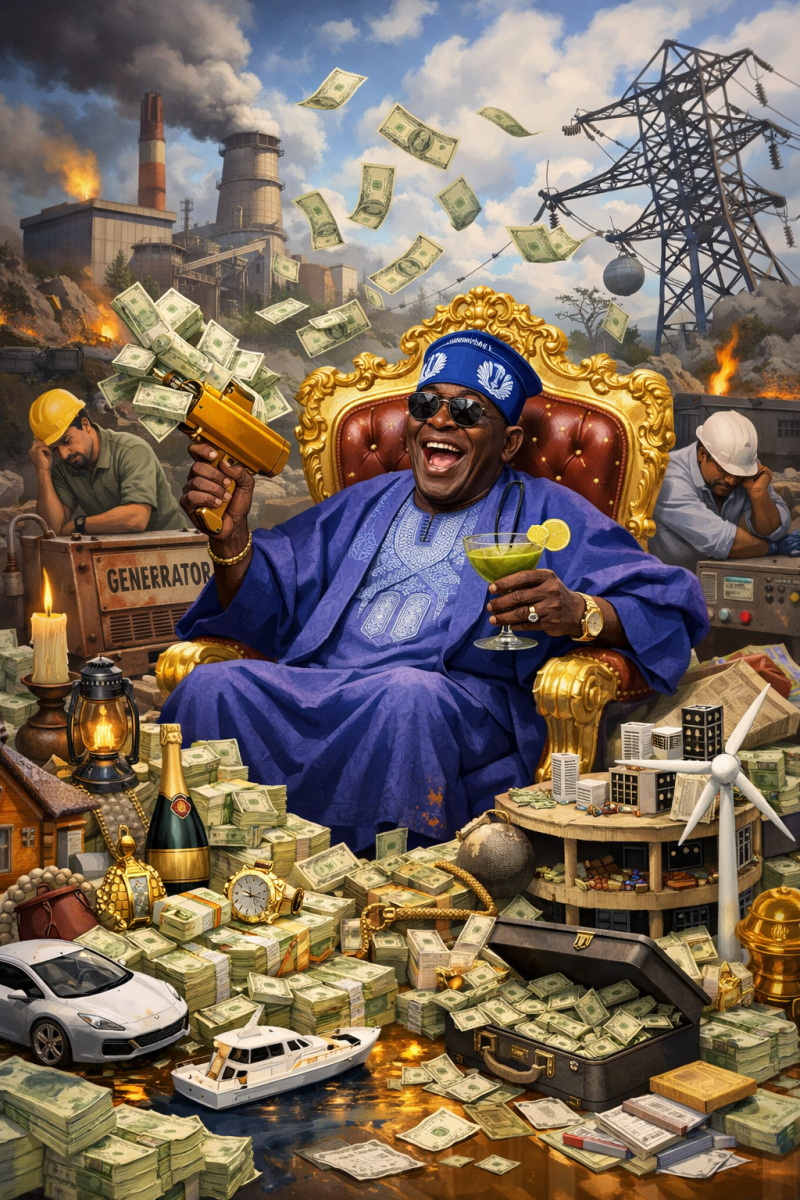
Nigeria’s ₦3.3 Trillion Power Debt Plan Puts Long-Failing Electricity Market Back Under the Microscope
Nigeria’s power sector has come under renewed scrutiny after President Bola Tinubu approved a ₦3.3 trillion payment plan to settle long-standing debts in the electricity market, a move the government says is intended to restore liquidity, stabilise supply and rebuild confidence across a sector that has struggled for more than a decade under the weight of unpaid obligations and weak market discipline. The Presidency said the package covers legacy debts accumulated between February 2015 and March 2025 under the Presidential Power Sector Financial Reforms Programme, and described the figure as a full and final settlement following a verification process.
The announcement did not emerge in a vacuum. It followed weeks of public alarm from power generation companies, which warned that Nigeria’s electricity crisis was worsening because debts across the value chain had become unsustainable. In March, the Association of Power Generation Companies said gas suppliers were threatening to halt supply to thermal plants over an estimated ₦3.3 trillion owed by the generation companies, while the broader amount owed to GenCos by government-backed market structures had risen to about ₦6.5 trillion to ₦6.8 trillion. Industry executives said the shortfall was increasing by roughly ₦200 billion each month because invoices were not being fully settled.
The Presidency’s latest statement suggests the government is trying to separate the verified legacy component from the wider and still-expanding debt picture. According to official details carried by multiple outlets, implementation has already started, with 15 power plants signing settlement agreements worth ₦2.3 trillion. The federal government said it has raised ₦501 billion so far to fund the programme, and that ₦223 billion has already been disbursed, with more payments under way. Officials also indicated that a second phase of the programme is expected later in the quarter.
That funding structure is a major part of the story. In January, the government raised ₦501 billion through what was described as an inaugural power sector bond issued under its debt reduction programme, and officials presented the full subscription as a signal that investors still believe a financial reset in the electricity market is possible. BusinessDay and Nairametrics both reported that the bond was tied directly to the broader reform effort aimed at reducing legacy liabilities and giving the market breathing space after years of illiquidity.
Yet the announcement has also highlighted a central contradiction in Nigeria’s electricity crisis: clearing old debts may help keep power plants running, but it does not by itself solve the reasons those debts accumulated in the first place. Since privatisation, the market has been trapped in a cycle in which generation companies produce electricity but are not fully paid, the Nigerian Bulk Electricity Trading structure does not recover enough downstream, and distribution companies continue to face losses from weak collection, under-metering, theft, poor infrastructure and tariffs that often fail to cover the true cost of service. GenCos have repeatedly argued that they are being forced to carry a system that is structurally unable to pay for the power it consumes.
That structural weakness matters because most of Nigeria’s grid electricity still depends on gas-fired plants. The Association of Power Generation Companies said about 70 percent of power on the grid comes from thermal plants, and that around 70 percent of what thermal plants invoice effectively belongs to gas suppliers. In practical terms, that means when debts pile up, the financial damage does not stop at the power plant gate. It travels backward into the gas supply chain, threatening fuel availability and, ultimately, electricity generation itself. That is why GenCos warned in March that the mounting debt was directly contributing to worsening blackouts.
The government is framing the ₦3.3 trillion approval as a decisive break with that pattern. In the official statement, the Presidency said the settlement would ensure a fair and transparent resolution and help improve electricity supply nationwide. Supportive coverage in BusinessDay, The Guardian and ThisDay cast the move as a major intervention to curb illiquidity, revive investor confidence and avert deeper market paralysis. Some reporting also linked the settlement to broader federal messaging that the administration is trying to restore order to critical sectors through targeted financial restructuring rather than endless ad hoc bailouts.
But the plan has not escaped criticism. The Guardian reported that Peter Obi questioned the approval, reflecting a wider opposition argument that repeated large-scale interventions in the power sector have too often failed to produce durable gains for consumers. That scepticism is rooted in experience. Nigeria has seen several rounds of financial support, payment assurances and emergency market measures over the years, yet households and businesses still endure unreliable supply and heavy dependence on generators. For many observers, the real test is not whether government can clear some arrears, but whether it can stop the debt from rebuilding almost immediately after the current payments are made.
There is also a fiscal question. ₦3.3 trillion is a very large intervention in a country where public finances are already stretched by debt service, infrastructure demands and security pressures. Even though the government is structuring the payments rather than releasing the entire sum at once, the programme still represents a substantial public commitment to support a privatised electricity system that has not achieved the reliability originally promised. That leaves policymakers balancing two difficult realities: the sector may need rescue to avoid deeper collapse, but repeated rescues can also reinforce weak incentives if the underlying commercial failures are not corrected.
For now, the strongest verified picture is this: Tinubu has approved a ₦3.3 trillion settlement for verified legacy debts in the electricity market covering February 2015 to March 2025; 15 power plants have already signed agreements worth ₦2.3 trillion; ₦501 billion has been raised so far, with ₦223 billion disbursed; and the government is presenting the intervention as part of a broader financial reform effort to stabilise the sector. What remains unresolved is whether this package is large enough, fast enough and structurally disciplined enough to change the everyday reality of power supply in Nigeria. The debt plan may buy time, reduce immediate pressure on generators and gas suppliers, and prevent a more abrupt breakdown. But unless market reforms finally tackle under-recovery, payment discipline and distribution inefficiency, Nigeria may simply be paying a huge bill to return to the same crisis in a different form.
📩 Stone Reporters News | 🌍 stonereportersnews.com
✉️ info@stonereportersnews.com | 📘 Facebook: Stone Reporters News | 🐦 X (Twitter): @StoneReportNew | 📸 Instagram: @stonereportersnews
Reported by: L. Imafidon | Edited by: Gabriel Osa
Add comment
Comments