

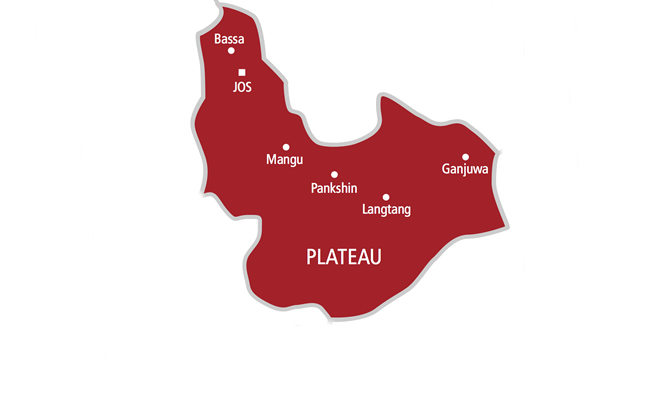
Tears and Anger in Plateau as Eight Relatives Killed in Mbwelle Attack Are Buried Amid Fresh Fears Over Bokkos Violence
Grief, anger and a renewed sense of abandonment swept through Mbwelle village in Bokkos Local Government Area of Plateau State on Friday as eight victims of a late-night gunmen attack, most of them members of the same family, were buried in a mass funeral that drew emotional calls for justice, vigilance and stronger security protection. The burial came less than a day after assailants stormed the community at about 11 p.m. on Thursday and opened fire on residents for nearly an hour, leaving behind one of the most painful single-family losses recorded in the latest wave of attacks in Plateau.
The victims laid to rest were identified in multiple Nigerian reports as Elder Iliya Mangut Dakus, Luck Titus Dakus, Habila Istifanu Dakus, Hassan Istifanus Dakus, Hassan Moses Dakus, Biggie Lucky Dakus, Sunday Gideon Dakus and Innocent Barnabas Makwin. The names appeared consistently across coverage of both the attack and the funeral, underscoring that this was not a vague casualty report but a documented family tragedy that tore through one household and left the surrounding community shaken.
The attack itself was described by residents and community leaders as prolonged, brazen and largely unchallenged while it lasted. Kefas Mallai, chairman of the Community Peace Observers in Bokkos, said the gunmen invaded Mbwelle around 11 p.m., opened fire indiscriminately and operated for hours without visible resistance. He said at least three other people were injured and that some residents were still missing in the aftermath, a detail that helped explain the depth of fear that accompanied the burial. Christopher Luka, a youth leader in Bokkos, gave a similar account, saying the attackers mostly targeted one family, while others were seriously injured and some remained unaccounted for.
At the graveside, the emotional tone was unmistakable. Reverend Ezekiel Dachomo, who conducted the burial ceremony, told mourners he would not stop “calling on heaven” over the repeated killings in Bokkos. He said many of the slain were Christians and linked the latest funeral to a wider pattern of mass burials he has had to conduct for members of different churches in Plateau, including Christ Apostolic Church, Catholic, COCIN, ECWA and Pentecostal congregations. His remarks reflected not just personal sorrow but exhaustion with a cycle of killings that many residents now see as systematic and relentless.
The language from community representatives was equally charged. Luka described the killings as “a sad and devastating assault on the people of Bokkos and Plateau State as a whole,” while Mallai said residents were already considering protests because, in their view, security forces failed to protect the community despite the duration of the attack and the village’s proximity to Bokkos town. He alleged that no effective response came until the gunmen had finished and left, a claim that has sharpened local resentment and deepened mistrust of the security architecture around vulnerable rural settlements.
Bokkos Local Government Chairman Samuel Amalau publicly condemned the violence, describing it as a resurgence of unprovoked attacks in the area and specifically citing Mbwelle in Kwatas Ward. In comments reported by Channels Television, he said the killings were a senseless act of violence against innocent and law-abiding citizens and called them a direct assault on humanity and peaceful coexistence. His intervention gave the attack official local-government recognition, even though a more detailed public police briefing was still missing in the strongest reports available on Friday and early Saturday.
That absence of a fuller immediate police account is one of the notable features of the story. When reporters sought reaction after the attack, efforts to reach Plateau State Police Command spokesperson Alfred Alabo were unsuccessful, while the media officer of the Joint Task Force, Chinonso Oteh, said he would revert but had not done so by the time the reports were filed. This left the earliest authoritative public narrative of the attack to come largely from residents, community peace officials, youth leaders and the local council chairman rather than from security agencies themselves.
The Mbwelle killings also unfolded in a wider Plateau atmosphere already charged by recent bloodshed. Reports tied the attack to a broader pattern of repeated violence in Bokkos, Barkin Ladi, Riyom and Jos South. Premium Times noted that earlier in the week gunmen ambushed travellers returning from mining sites along Bokkos Road and killed another resident in Riyom. Punch similarly linked the latest attack to mounting alarm raised by the Berom Youth Moulders Association over ambushes and killings in nearby local government areas. In other words, Mbwelle was not an isolated shock but part of a broader deterioration in rural security across Plateau’s troubled zones.
At the same time, security operations elsewhere in Plateau continued. Punch reported that troops of Operation Enduring Peace neutralised 10 terrorists in Wase and Kanam local government areas on Thursday and recovered arms and logistics supplies. That development was significant because it showed the state was not without active security operations. Yet for many mourners in Mbwelle, those operations offered little immediate comfort, since their central complaint was that when their own community came under sustained gunfire, no effective protective response arrived in time.
There is one further point requiring caution. Some non-mainstream or advocacy-linked reporting circulated much higher casualty figures from Mbwelle. But the strongest verified Nigerian reporting available at the time of writing consistently confirmed eight dead in the attack that led directly to Friday’s burial, with injuries and some persons still missing. The most solidly documented part of the story, therefore, is not a shifting headline number but the burial itself: eight named victims, mostly from one family, interred amid grief and fury in a community that says it has become too accustomed to mourning.
What happened in Mbwelle is likely to deepen the debate over whether Plateau’s violence is being contained at all or merely managed in fragments while vulnerable villages remain exposed. For the people who gathered around the graves on Friday, the issue was not abstract. It was the sight of eight relatives buried together after a late-night assault that residents say lasted far too long and ended far too predictably. The funeral in Mbwelle was therefore not only an act of mourning. It was also a public indictment of a security reality in which communities keep burying their dead while still waiting for protection that arrives after the killing is done.
📩 Stone Reporters News | 🌍 stonereportersnews.com
✉️ info@stonereportersnews.com | 📘 Facebook: Stone Reporters News | 🐦 X (Twitter): @StoneReportNew | 📸 Instagram: @stonereportersnews
Reported by: Ijeoma G | Edited by: Gabriel Osa
Add comment
Comments