

Reported by: Ijeoma G | Edited by: Oravbiere Osayomore Promise.
The Yobe State Emergency Management Agency has confirmed that an accidental airstrike during a military operation struck Jilli Saturday Market in a border community near Geidam axis in Yobe State, leaving civilians dead and many others injured in an incident that has drawn urgent attention from authorities and humanitarian actors across northeastern Nigeria.
According to the agency, the strike occurred on Saturday when military aircraft were operating in the region as part of ongoing counterinsurgency efforts against armed groups active in the northeast, with initial reports indicating that traders and residents were caught in the blast while the market was in full activity.
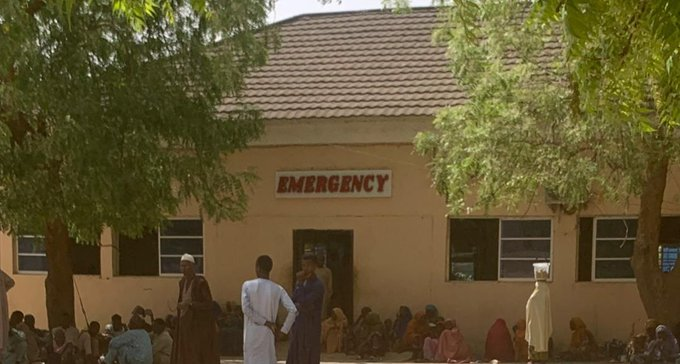
Emergency responders were deployed to the scene shortly after the incident, with the Yobe State Emergency Management Agency coordinating relief efforts alongside security agencies and health officials, as injured victims were transported to nearby medical facilities in Geidam and other surrounding towns for treatment.
Preliminary assessments from local sources and humanitarian observers suggest that the incident occurred during a peak trading period, when the market was crowded with civilians from nearby communities who rely on weekly commerce for essential goods and livelihood support in a region already affected by long standing insecurity.
Military authorities have stated that the operation was intelligence driven and aimed at disrupting suspected insurgent logistics networks operating along border corridors between Yobe and Borno States, although they have not yet provided a detailed breakdown of target identification procedures or confirmed casualty figures.
The Nigerian Air Force has acknowledged conducting air operations in the general area but maintains that the strike targeted militant positions, adding that post operation assessments are ongoing to determine the extent of damage and verify reports of civilian impact that have circulated from local accounts.
The Yobe State Government has expressed concern over the development, confirming that emergency support has been activated for affected families and that coordination is ongoing with federal authorities to ensure medical assistance and relief materials reach impacted communities.
Human rights groups and civil society organizations have reacted with concern, calling for an independent investigation into the circumstances of the airstrike, with particular emphasis on strengthening safeguards to prevent civilian harm during military operations in densely populated rural areas.
As investigations continue, uncertainty remains over the final casualty figures, with authorities and observers noting discrepancies between early estimates and official confirmations, while emphasizing the need for verified data before conclusions are drawn about the full scale of the incident.
The Jilli market incident highlights the continuing challenges of counterinsurgency operations in northeastern Nigeria, where security forces must balance the urgency of targeting armed groups with the imperative of protecting civilian populations that often live and trade within conflict affected environments.
Operation Hadin Kai remains the central military campaign in Nigeria’s northeast, focusing on dismantling insurgent strongholds across Borno, Yobe and surrounding border regions with Niger and Chad, where mobility corridors, rural settlements and cross border trade routes often overlap with areas of militant activity, making precise targeting and civilian protection a persistent operational challenge for security planners and field commanders.
Humanitarian agencies operating in the northeast have repeatedly warned that markets such as Jilli serve as critical lifelines for rural populations, functioning not only as trading centers but also as social and economic hubs where displaced families and host communities interact, making any disruption to such spaces particularly damaging to already fragile livelihoods.
Medical facilities in Geidam and neighboring towns are reported to be under significant pressure following the influx of injured persons, with limited resources, transportation challenges and security constraints affecting the speed and quality of emergency care in the immediate aftermath of the incident.
At national level the incident has reignited debate over rules of engagement in counterinsurgency operations, with analysts and lawmakers urging stronger oversight, improved intelligence verification and enhanced coordination between air and ground units to reduce the risk of civilian casualties in conflict zones.
For residents of Jilli and surrounding settlements the incident has deepened fear and uncertainty as families seek missing relatives and attempt to account for those who were present at the market during the strike, while community leaders appeal for calm and accurate information.
The evolving situation underscores the complexity of Nigeria’s ongoing security challenges in the northeast, where counterinsurgency operations continue to intersect with civilian life in ways that demand sustained reforms, improved operational precision and strengthened humanitarian coordination to prevent further tragedies.
Security operations in the northeast have increasingly relied on aerial reconnaissance and rapid strike capabilities due to the difficult terrain, sparse infrastructure and the mobility of armed groups, but these same conditions also raise the risk of misidentification, particularly in areas where civilians and militants sometimes share overlapping movement corridors and temporary settlements.
Legal and accountability frameworks governing military conduct in internal security operations require adherence to international humanitarian principles including distinction, proportionality and precaution, principles that are often cited in public discourse following incidents involving civilian harm and which are expected to guide any investigation into the Jilli airstrike.
In the immediate aftermath of such incidents, information often remains fluid as authorities, local witnesses and humanitarian actors provide differing accounts, underscoring the importance of verification processes before definitive casualty figures or operational conclusions are established.
As investigations proceed, authorities are expected to refine casualty assessments and release clearer operational details while communities and humanitarian partners continue to provide support to affected families in one of the most security sensitive regions of the country.
Markets like Jilli play a crucial role in sustaining cross border trade between rural communities in Yobe and neighboring regions, providing access to food supplies, livestock goods and basic commodities, and any disruption to such markets can have immediate economic consequences for households that depend on weekly trading cycles for survival.
State and federal authorities are expected to strengthen coordination mechanisms in response to the incident, including improved intelligence sharing, community engagement and review of operational protocols aimed at reducing civilian exposure during military actions in volatile border communities.
Experts note that sustained investment in early warning systems and civilian protection infrastructure remains essential for reducing accidental harm in conflict zones, particularly in regions where insurgent groups operate among civilian populations and where limited communications infrastructure complicates real time decision making during fast moving military operations.
Further updates are expected as investigations continue on ground.
📩 Stone Reporters News | 🌍 stonereportersnews.com
✉️ info@stonereportersnews.com | 📘 Facebook: Stone Reporters News | 🐦 X (Twitter): @StoneReportNew | 📸 Instagram: @stonereportersnews
Add comment
Comments