

Reported by: Ijeoma G | Edited by: Oravbiere Osayomore Promise.
Residents of Okuama community in Ughelli South Local Government Area of Delta State have renewed their appeal for government intervention over what they describe as prolonged hardship, displacement, and continued detention of their leaders following the violent events that rocked the area in March 2024.
The community, once a busy riverside settlement, has remained largely deserted since the killing of 17 military personnel during a confrontation linked to tensions between Okuama and a neighbouring community. In the aftermath of the incident, security operations led to the destruction of structures across Okuama, leaving only the Anglican Church reportedly intact as residents fled for safety.
More than two years after the incident, residents say they are still living in makeshift tents and temporary shelters, many of them displaced within and outside the community. They claim that essential services such as schools, healthcare facilities, and clean water remain unavailable, forcing families to rely on unsafe alternatives for survival.
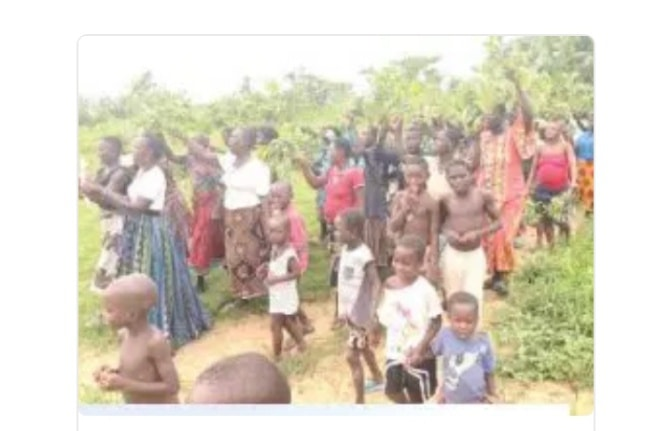
During a recent protest, community members demanded the release of detained leaders, insisting that their continued detention without trial reflects a breakdown of justice. Among those mentioned are Professor Arthur Ekpekpo, Chief Belvis Adugbo, Dennis Amalaka, and Mabel Owhemu, who were reportedly arrested in 2024 and have yet to be formally arraigned in court according to community accounts.
Residents also allege that a court order directing that some detainees be brought before a competent court has not been obeyed, a claim that has intensified public concern and renewed calls for judicial intervention. They argue that the absence of due process undermines confidence in the legal system and deepens their sense of abandonment.
Community leaders say the humanitarian situation has worsened over time. They report that many families are still without permanent shelter, while children have been out of school for extended periods due to the destruction of educational infrastructure and lack of operational facilities. Health services, they add, remain virtually non-existent, leaving residents dependent on distant towns for medical care.
Tensions escalated further following recent weather disturbances that damaged temporary shelters in the area. Residents claim that a storm led to injuries and at least one death, further highlighting the vulnerability of displaced families living in exposed conditions without adequate protection.
Some residents also raised concerns about long-term psychological and social impacts, including unemployment, lack of education for children, and deteriorating living conditions. They say young people in the community have become increasingly vulnerable due to lack of opportunities and stable support systems.
Legal practitioner and human rights advocate Frank Tietie has weighed in on the matter, describing the continued detention of community leaders without formal charges as a serious constitutional concern. He argued that while the allegations linked to the killing of soldiers are grave, due process must be followed, including prompt arraignment and fair trial in accordance with Nigerian law.
Tietie further called on relevant authorities, including the federal government, military leadership, Delta State Government, and traditional leaders in the Niger Delta, to ensure that those detained are either released or brought before a competent court without further delay. He stressed that prolonged detention without trial undermines the rule of law and public trust in state institutions.
He also noted that the situation reflects broader concerns about justice and accountability in conflict-affected communities, warning that failure to address such cases could deepen mistrust between citizens and government authorities.
Community representatives, including Chairman Vote Johnwalker, reiterated their demands for urgent action, stating that their community has been left in ruins with no functioning infrastructure. They called on political leaders at both state and federal levels to intervene and facilitate either the release or prosecution of detained individuals.
Other residents expressed frustration over what they perceive as neglect, insisting that schools built by government authorities remain non-functional due to lack of staff and equipment, while health centres remain closed despite being constructed.
The community also voiced frustration over ongoing insecurity and displacement, claiming they were forced to live in forests and temporary shelters after fleeing violence. Some residents described daily struggles for food, clean water, and basic healthcare, painting a picture of prolonged humanitarian distress.
Women in the community reported particularly harsh conditions, including lack of maternal healthcare and exposure of children to unsafe environments. Some families say they have been separated for long periods due to displacement and security concerns.
The Okuama crisis has continued to generate debate across Delta State and beyond, with calls for independent investigations into both the original killings and the subsequent military response. Human rights groups have repeatedly urged authorities to balance security operations with the protection of civilian lives and property.
As of now, the situation remains unresolved, with residents insisting that justice, rehabilitation, and rebuilding efforts are urgently needed to restore normal life to the community. They maintain that without meaningful intervention, the humanitarian situation could deteriorate further.
Authorities have yet to issue a comprehensive public update addressing all allegations raised by residents, particularly concerning court orders and the status of detained individuals, leaving many questions unanswered in the ongoing crisis.
For now, Okuama remains a community in distress, caught between unresolved legal questions, humanitarian challenges, and the lingering impact of a violent conflict that has reshaped its existence.
Local leaders and stakeholders in the Niger Delta have called for a coordinated peace and reconstruction plan to address humanitarian needs and the legal questions surrounding detained community members. They say rebuilding Okuama requires joint action by federal and state authorities, security agencies, and traditional institutions to restore trust. Without clear timelines for rebuilding homes, reopening schools, and restoring health facilities, frustration may persist within the community. Analysts link the situation to wider post-conflict recovery challenges in riverine areas where insecurity, environmental hardship, and governance gaps intersect. Residents insist that compensation for destroyed property, functional public services, and transparent judicial processes for detainees are essential for lasting peace. They maintain that only a comprehensive and accountable approach can restore dignity and prevent further escalation of tensions in the community after years of hardship and displacement.
📩 Stone Reporters News | 🌍 stonereportersnews.com
✉️ info@stonereportersnews.com | 📘 Facebook: Stone Reporters News | 🐦 X (Twitter): @StoneReportNew | 📸 Instagram: @stonereportersnews
Add comment
Comments