

Reported by: Ijeoma G | Edited by: Oravbiere Osayomore Promise.
MAIDUGURI, Nigeria — A military air operation in northeastern Nigeria has triggered a humanitarian emergency after an incident at a weekly market in Jilli village left dozens feared dead and many others injured, overwhelming medical facilities in Borno State.
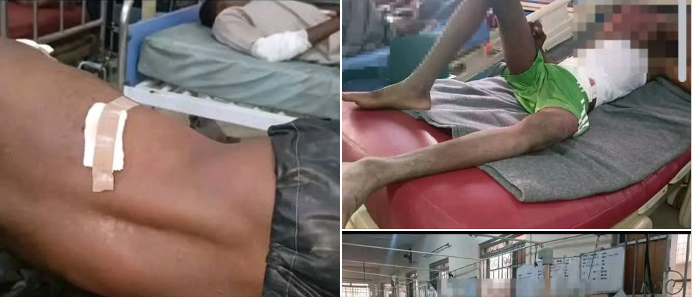
Medical authorities at the Borno State Specialist Hospital in Maiduguri confirmed that they are struggling to cope with a sudden influx of patients brought in from the Jilli Market incident, which occurred on Saturday evening along the border area between Borno and Yobe states.
Hospital officials said at least 21 injured civilians have been admitted, with patients suffering from blast-related trauma and other severe injuries requiring urgent care, while the facility continues to operate under severe pressure due to limited medical supplies.
Preliminary accounts from local sources indicate that the incident occurred during peak trading activity at the Jilli weekly market in Gubio Local Government Area, a commercial hub that attracts traders from surrounding communities across the northeast region.
Reports suggest that the air operation was conducted as part of ongoing counterinsurgency efforts in the region, although authorities have not issued a detailed public explanation regarding the specific circumstances of the strike or its intended targets.
Survivors and residents described scenes of panic as explosions rocked the crowded marketplace, forcing traders and customers to flee while emergency responders later evacuated the injured to nearby medical centers for urgent treatment.
Local authorities and humanitarian agencies have mobilized response efforts, with injured victims transported to hospitals in Maiduguri and other nearby towns, while officials coordinate emergency medical support and logistics.
The Borno State Specialist Hospital has issued an urgent appeal for blood donations, warning that the rising number of critically injured patients has placed additional strain on already stretched healthcare resources.
Security analysts note that northeastern Nigeria has long faced persistent violence involving armed groups, and military operations in populated areas often carry heightened risks of civilian harm, prompting renewed calls for improved intelligence and operational safeguards.
Investigations into the incident are ongoing, with authorities seeking to establish the exact casualty figures, identify those affected, and determine the operational circumstances that led to the strike on the market.
Humanitarian organizations operating in the northeast have expressed concern over the strain placed on emergency services following the incident, noting that facilities in conflict-affected areas often operate with limited supplies, understaffing, and inconsistent access to essential medical commodities.
The region has experienced a prolonged insurgency over the past decade, with military counteroperations frequently taking place in rural and semi-urban communities where distinguishing between armed actors and civilians remains a significant operational challenge.
Officials say coordination between security forces and humanitarian agencies remains critical to minimizing civilian harm while maintaining pressure on armed groups operating in the region.
At the Borno State Specialist Hospital, medical personnel described an urgent need for blood supplies as surgeons and emergency teams worked continuously to stabilize patients arriving in waves from the affected community, many of whom required immediate transfusion support due to significant blood loss.
State emergency management officials confirmed that assessments are ongoing in collaboration with local authorities to determine the full extent of damage, casualties, and displacement resulting from the incident, while relief coordination efforts continue across affected communities.
The incident has also renewed national discussion about the conduct of air operations in densely populated areas, particularly in regions where insurgent groups are known to operate among civilian populations, raising complex ethical and operational considerations for security planning.
Families in surrounding communities have continued to search for missing relatives, as local volunteers assist in identifying victims and reuniting survivors with their families amid ongoing uncertainty in the aftermath of the attack.
Emergency transport systems, already stretched across rural northeastern corridors, were quickly deployed to move critically injured victims to major hospitals in Maiduguri, Geidam, and other accessible treatment centres.
Authorities have cautioned against the spread of unverified information regarding casualty figures, emphasizing that official confirmation will follow comprehensive field verification and medical reporting from multiple facilities.
As operations continue in the region, residents and aid workers remain focused on immediate survival needs, with emergency medical care, blood donations, and humanitarian coordination forming the core of the response in the days following the incident.
Hospital administrators in Maiduguri said the facility has been operating beyond capacity due to the influx of emergency cases, with medical teams prioritizing triage systems to ensure the most critically injured patients receive immediate attention while others are stabilized as resources allow.
Security analysts note that the northeast continues to experience sporadic violence linked to insurgent factions, with rural markets and transportation routes often exposed to operational risks during counterterrorism activities conducted by security forces.
Local officials say they will continue monitoring the situation as recovery efforts progress, while humanitarian agencies emphasize the need for sustained medical support and improved emergency preparedness in conflict-affected communities.
International humanitarian law experts have reiterated that operations conducted in populated civilian areas require heightened precautionary measures to prevent harm, stressing that accurate intelligence, verification of targets, and real-time situational awareness are essential components of lawful conduct during armed conflict. They note that incidents involving civilian casualties often lead to calls for independent review mechanisms to ensure transparency and accountability, particularly in protracted conflicts where distinguishing combatants from non-combatants remains difficult. In the aftermath of the Jilli incident, observers emphasize that credible investigations must include testimonies from survivors, medical reports, and operational data from security forces in order to establish a clear sequence of events. They also highlight the importance of timely communication with affected communities to reduce misinformation and restore public confidence. Humanitarian actors further underline that sustained support for victims, including trauma care and psychosocial assistance, is critical in addressing the long-term impact of such events on vulnerable populations across the region at this time ongoing
📩 Stone Reporters News | 🌍 stonereportersnews.com
✉️ info@stonereportersnews.com | 📘 Facebook: Stone Reporters News | 🐦 X (Twitter): @StoneReportNew | 📸 Instagram: @stonereportersnews
Add comment
Comments