

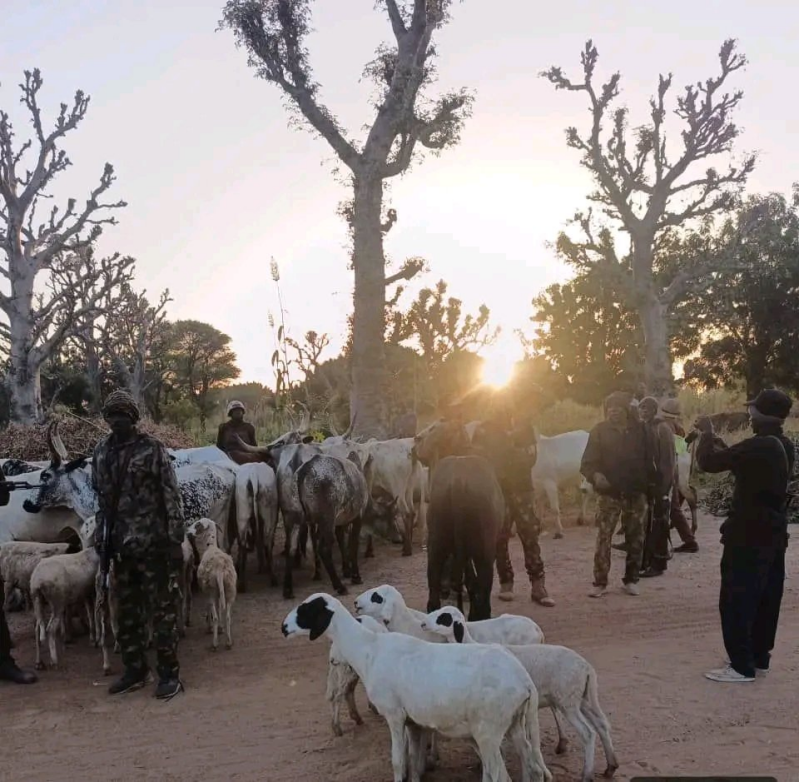
Troops operating from the Tsaure security base in Shanono Local Government Area of Kano State have reportedly recovered cattle and sheep after confronting suspected livestock rustlers during an overnight operation, forcing the intruders to abandon some animals as they retreated.
The incident was reported on Friday, October 30, 2026, following an encounter said to have taken place the previous night. According to the initial account, the operation was led by Sadiq Mu’azu, identified as the commander of the Tsaure base. The precise time and location of the confrontation within Shanono were not immediately established.
The account said security personnel intercepted suspected rustlers moving with livestock and confronted them. Some suspects reportedly fled, leaving cattle and sheep behind, while others escaped carrying their weapons. The number of animals recovered, the number of suspected rustlers involved and the duration of the encounter were not specified.
There was no independently confirmed information about arrests, injuries or deaths. It was also unclear whether any weapons or ammunition were recovered, whether the animals had been moved to a secure holding area or whether their owners had been identified.
The account did not establish whether the confrontation involved an exchange of gunfire. Describing the incident as a confrontation therefore does not, without further evidence, establish that shots were fired by either side.
The reported recovery is the latest in a series of security incidents affecting communities in Shanono, a rural district near Kano State’s boundary with Katsina. Residents in parts of the area have faced threats associated with armed raids, livestock theft and the movement of suspected bandits through neighbouring communities.
Livestock rustling is particularly damaging to households that depend on cattle, sheep and goats for income, food and savings. Animals stolen during raids can represent years of investment, and the resulting losses can affect entire families, including those who rely on herding, trading or related services.
The Tsaure area has featured in earlier security reports. On October 19, security analyst Zagazola Makama reported that Nigerian Army troops from the 3 Brigade, deployed at the Tsaure Forward Operating Base, had recovered 37 cattle and 12 sheep after responding to a reported rustling incident the previous afternoon.
That earlier operation was said to have occurred on October 18 at approximately 3:30 p.m. Suspects reportedly fled when soldiers arrived, abandoning the animals, which were placed in custody pending identification of their owners.
Those figures relate to the earlier incident and cannot be treated as the number of animals recovered in the newly reported overnight operation. The available accounts do not establish whether the two incidents involved the same suspected criminal group.
Mu’azu’s name has also appeared in reporting about local security activity. On October 1, Daily Post reported that vigilantes under the command of Sadiq Mu’azu, described as the Tsaure area commander, had apprehended a man in Toronya over allegations that he was inviting armed bandits into the community.
That allegation was attributed to local sources and had not been independently established. The report nevertheless illustrates the involvement of locally organised security personnel in efforts to respond to threats in the Shanono area.
The precise organisational status of the personnel involved in the latest operation was not established by the initial account. Although it described troops operating from a military base, no fresh official statement identifying the participating unit or confirming the command structure was available for this report.
Other operations in Kano have demonstrated how livestock theft can prompt coordinated responses from the military, police and local security groups. In March, the Nigerian Army said a joint task force recovered 257 animals after intercepting suspected rustlers in Gwarzo Local Government Area.
According to the army’s statement at the time, the recovered livestock comprised 135 cattle, 119 sheep, one goat and two donkeys. Authorities said the animals were subsequently returned to their rightful owners through local officials.
In May, police announced another recovery in Gwarzo following cooperation with military personnel along the Kano–Katsina border. The police said the animals were released after identification and verification through local authorities.
Those earlier recoveries provide context for the security response but should not be conflated with the Tsaure incident. Each operation involves separate circumstances, and figures from one encounter cannot be used to fill gaps in reporting about another.
Shanono’s proximity to communities affected by insecurity in neighbouring Katsina has heightened concern about the ability of armed groups to cross administrative boundaries. Such movements can complicate patrols, investigations and efforts to prevent stolen animals from being transported or sold.
Community intelligence often plays an important role in responding to livestock theft because residents may notice unfamiliar armed movements, missing animals or suspicious activity along rural routes. However, allegations against individuals still require proper investigation and should not be treated as proof of criminal responsibility.
For families awaiting the return of recovered animals, verification of ownership is an important next step. Appropriate documentation and transparent handover arrangements can help ensure that cattle and sheep are returned to the correct households without creating fresh disputes.
Authorities may also need to establish whether the animals recovered overnight belong to one owner or several households. No official inventory or ownership list had been confirmed in the information available about the latest incident.
The reported escape of suspects with weapons raises continuing concerns about the possibility of further attacks, although no specific subsequent threat has been independently verified. There was no confirmed information indicating that security personnel had launched a pursuit or arrested anyone after the encounter.
The incident highlights the importance of distinguishing immediate operational success from a lasting improvement in security. Recovering stolen animals can prevent financial losses, but it does not necessarily dismantle the networks responsible for organising raids or moving stolen livestock.
Longer-term protection requires sustained patrols, reliable intelligence, cooperation among security agencies and effective criminal investigations. Rural residents also need accessible channels for reporting threats without exposing themselves to retaliation.
The latest account credits the operation to personnel led by Mu’azu, but a fuller assessment will depend on confirmation from the relevant security authorities, including an inventory of the recovered livestock and details of any follow-up investigation.
For now, the reported outcome is that cattle and sheep were recovered after suspected rustlers abandoned them during an encounter near Tsaure. The identities of the suspects, the ownership of the animals and the circumstances of their escape remain unresolved.
As Shanono communities continue to confront the effects of livestock theft and armed insecurity, the safe return of recovered animals and prevention of further raids remain immediate priorities for residents and security personnel alike.
📩 Stone Reporters News | 🌍 stonereportersnews.com
✉️ info@stonereportersnews.com | 📘 Facebook: Stone Reporters News | 🐦 X (Twitter): @StoneReportNew | 📸 Instagram: @stonereportersnews
Add comment
Comments