

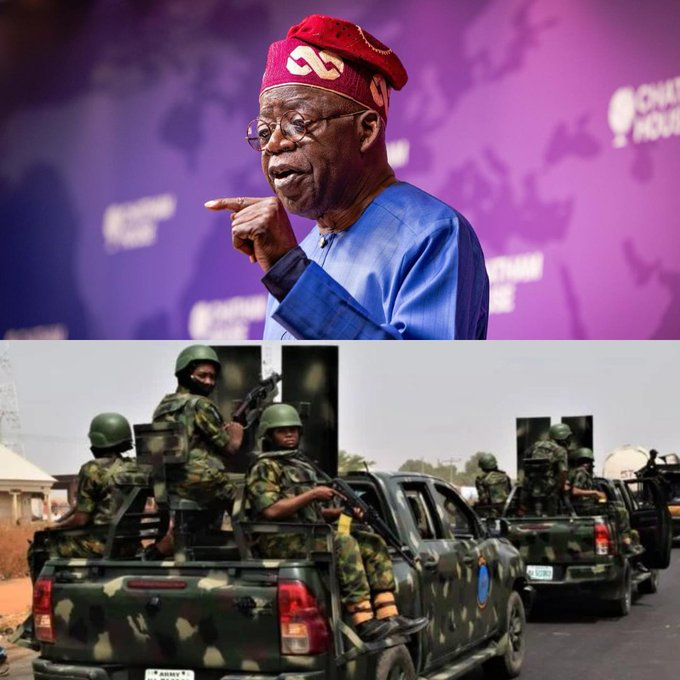
The Federal Government has reportedly disbursed ₦5.15 trillion in special intervention funds to the Nigerian military and other security agencies between November 2023 and September 2026, raising fresh questions about the effectiveness of security expenditure as terrorism, banditry, kidnapping and other violent crimes continue to threaten communities across the country.
The substantial financial commitment, spanning nearly three years of President Bola Ahmed Tinubu's administration, highlights the scale of resources directed towards strengthening Nigeria's security operations. However, continuing attacks in several parts of the country have intensified public concerns about whether the expenditure has translated into adequate protection for citizens.
According to a report by The PUNCH, the disbursements were identified through an examination of records associated with the Federation Account Allocation Committee. The investigation revealed that special intervention funds had been channelled towards security-related purposes during the period under review.
The report identified approximately ₦5.65 trillion in total receipts, with ₦5.15 trillion disbursed and about ₦500 billion remaining as of October 14, 2026. The records reportedly covered 30 payment transactions, although the publicly reported figures did not provide a comprehensive breakdown of the specific operations, equipment or projects financed.
The distinction between funds received, funds disbursed and expenditure actually incurred is significant. A government disbursement does not necessarily establish that the receiving institution has completed the procurement or operational activity for which the money was released.
Similarly, the reported intervention funds should not automatically be treated as additional to every allocation contained in Nigeria's annual security budgets without examining the underlying accounting records.
The figures have nevertheless drawn attention to the country's continuing security challenges, particularly in the North-West and North-East, where armed groups have carried out attacks involving killings, kidnappings and destruction of property.
In Zamfara, Katsina, Sokoto and parts of Kaduna states, communities have repeatedly experienced violence attributed to armed bandits. Residents in affected areas have reported attacks on villages, abductions and disruptions to farming and commercial activities.
The North-East continues to face threats associated with Boko Haram and the Islamic State West Africa Province, despite years of military operations aimed at weakening insurgent networks and restoring security.
Elsewhere, communities have experienced different forms of violence, including communal clashes, armed robbery, attacks on travellers and other criminal activities requiring coordinated responses from security agencies.
These threats have placed considerable demands on the Nigerian Armed Forces, police, intelligence institutions and other organisations responsible for protecting lives and property.
The government has repeatedly identified national security as a priority, maintaining that improvements in military capability, intelligence gathering and operational coordination are essential to confronting armed groups.
Security interventions can require substantial expenditure on logistics, surveillance systems, communications equipment, transportation, personnel support and the maintenance of operational assets.
However, the available financial information does not establish how much of the reported ₦5.15 trillion was allocated to each of these purposes.
Without a detailed expenditure breakdown, it is difficult to determine whether the funds addressed the most urgent operational requirements or whether the allocations produced measurable improvements in security.
The situation raises broader questions about accountability in Nigeria's security financing system.
Although certain military expenditures require confidentiality to protect sensitive operations and intelligence capabilities, public finance principles still demand appropriate oversight and verification.
The National Assembly, through its relevant committees, has constitutional responsibilities relating to the scrutiny of public expenditure and the activities of government institutions.
Effective legislative oversight can involve examining financial records, questioning responsible officials and ensuring that appropriated or specially released funds are used for their authorised purposes.
The Office of the Auditor-General and other legally empowered institutions also have important roles in strengthening financial accountability, subject to applicable laws and restrictions concerning classified information.
Security experts have long emphasised that military expenditure alone cannot resolve every dimension of Nigeria's insecurity.
Operations against armed groups may require improved intelligence, cooperation between agencies, effective policing and stronger mechanisms for investigating and prosecuting criminal offences.
Community confidence is also important because security institutions frequently depend on information from residents to identify emerging threats and respond before attacks occur.
Where communities fear retaliation or lack confidence in the authorities, obtaining timely intelligence can become more difficult.
The continuing security crisis has serious consequences for Nigeria's economy.
In agricultural communities affected by banditry, insecurity can prevent farmers from accessing their land, disrupt food production and increase transportation risks.
Traders and transport operators may face additional costs when travelling through areas where kidnapping and armed attacks remain concerns.
Families whose relatives are abducted can experience severe emotional distress and financial hardship, particularly when breadwinners are unable to work or households are displaced.
Children may also suffer interruptions to their education when insecurity forces schools to close or families to relocate.
These consequences demonstrate why security expenditure must ultimately be assessed through improvements in everyday conditions rather than the volume of money released.
A reduction in attacks, safer transport routes, the return of displaced residents and improved access to schools and markets would provide meaningful indicators of progress.
Nevertheless, assessing security performance requires reliable data and careful consideration of differences between regions.
An increase or decrease in reported incidents does not, by itself, establish the effectiveness of every military operation. Changes in reporting practices, intelligence activities and the movements of armed groups can influence available statistics.
The reported ₦5.15 trillion also comes at a time when Nigeria faces competing demands for public resources.
The government continues to manage expenditure pressures involving infrastructure, education, healthcare, social welfare and debt servicing.
While protecting citizens remains a fundamental responsibility of the state, the scale of security spending makes transparency and value for money particularly important.
Questions surrounding the intervention funds include which agencies received the largest allocations, whether the releases were linked to approved projects and what mechanisms were established to monitor implementation.
It is equally important to determine whether any procurement contracts financed through the interventions have been completed and whether the resulting assets are operational.
Military equipment, for example, may require sustained maintenance, trained personnel and logistical support before it can contribute effectively to national security.
The absence of publicly available project-level information should not automatically be interpreted as proof of wrongdoing. However, it limits independent assessment of how the reported resources have been utilised.
For the Federal Government, the challenge is to demonstrate that substantial financial commitments are producing sustainable improvements in the country's security environment.
For lawmakers and oversight institutions, the responsibility is to ensure that public funds are properly accounted for without compromising legitimate operational confidentiality.
For Nigerians living in communities affected by terrorism, banditry and kidnapping, the immediate priority remains protection from violence and the restoration of normal economic and social activities.
The reported ₦5.15 trillion disbursement therefore represents more than a significant financial figure. It raises an important question about the relationship between government expenditure, institutional accountability and public safety.
As security operations continue across the country, the effectiveness of the intervention funds will ultimately depend on transparent management, measurable operational outcomes and lasting improvements in the protection of lives and property.
📩 Stone Reporters News | 🌍 stonereportersnews.com
✉️ info@stonereportersnews.com | 📘 Facebook: Stone Reporters News | 🐦 X (Twitter): @StoneReportNew | 📸 Instagram: @stonereportersnews
Add comment
Comments