

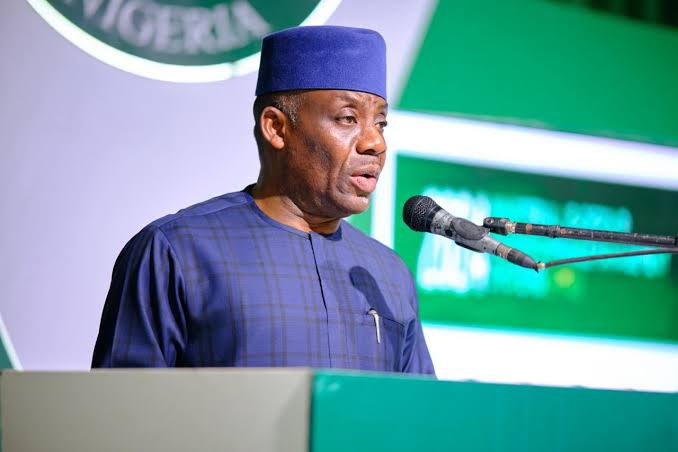
Nigeria's Minister of Education, Dr Maruf Tunji Alausa, has challenged administrators of colleges of education to demonstrate measurable improvements in teacher preparation, institutional accountability and academic standards as the Federal Government advances its dual-mandate policy, allowing eligible institutions to offer both teaching certificates and bachelor's degrees.
The minister delivered the message on Thursday, October 29, 2026, during the National Commission for Colleges of Education (NCCE) Teacher Education Leadership and Impact Award ceremony at the Wells Carlton Hotel in Asokoro, Abuja. Represented by the ministry's Director of Colleges of Education, Dr Cecilia Uba, Alausa emphasised that successful implementation would require effective leadership, collaboration and demonstrable educational outcomes.
The dual-mandate policy permits eligible colleges to retain their traditional Nigeria Certificate in Education (NCE) programmes while introducing approved bachelor's degree programmes in education. The reform seeks to broaden academic opportunities, strengthen teacher preparation and improve professional advancement without requiring every participating college to become a university.
Alausa described the initiative as an important opportunity to reposition teacher-training institutions within Nigeria's higher education system. He stressed that institutional leaders must translate the expanded academic mandate into improvements in teaching quality and graduate competence rather than concentrating solely on introducing additional qualifications.
“The effective implementation of the Dual Mandate presents a significant opportunity to reposition Colleges of Education, strengthen teacher preparation and expand pathways for academic and professional advancement,” the minister said.
He added that achieving these objectives required strategic leadership, institutional accountability, collaboration and a collective commitment to excellence. The Federal Ministry of Education, he explained, would continue working with the NCCE, college provosts and other stakeholders to improve the relevance and competitiveness of teacher education.
The minister also commended the commission for recognising outstanding educational leadership through its awards programme. He urged recipients to regard their recognition as an obligation to pursue further innovation, strengthen their institutions and contribute more effectively to national development.
The ceremony formed part of a wider national retreat and workshop examining implementation of the dual mandate and the strategic direction of colleges of education. The programme was organised in partnership with Gosima Group and brought together education administrators, government representatives and private-sector stakeholders.
Earlier in the week, the Federal Government had reinforced its expectations for institutions seeking to introduce degree programmes. Minister of State for Education, Professor Suwaiba Sa'id Ahmad, warned that colleges must demonstrate adequate staffing, appropriate infrastructure and effective quality assurance before expanding their academic offerings.
Speaking at the retreat on Tuesday, October 27, Ahmad emphasised that the number of colleges introducing degrees would not constitute sufficient evidence of success. She maintained that implementation must be assessed through academic quality, institutional readiness, regulatory compliance and the professional competence of graduating teachers.
Her remarks accompanied the unveiling of a new Dual Mandate Curriculum and the NCCE's Medium-Term Strategic Plan for 2026–2031. The documents are intended to guide institutional development, curriculum delivery and regulatory oversight as participating colleges assume additional responsibilities.
The curriculum incorporates digital competencies, inclusive education, entrepreneurship, innovative teaching approaches and practical professional skills. It also establishes academic expectations covering subject knowledge, student assessment, teaching methods and classroom preparation.
Ahmad called for closer cooperation among the Federal Ministry of Education, NCCE, National Universities Commission and college managements. Such coordination is intended to support consistent implementation while reducing unnecessary duplication in regulatory processes.
The Executive Secretary of the NCCE, Dr Angela Ajala, similarly challenged college provosts to move beyond policy announcements and demonstrate improvements in institutional performance.
Ajala described provosts as central figures in developing educational institutions and preparing the professionals responsible for teaching future generations. She urged administrators to embrace research, innovation, sustainable financing and modern approaches to student learning.
“Our Provosts are not merely administrators; you are builders of institutions, developers of human capacity and custodians of the future of our children,” she said.
According to Ajala, the dual mandate should encourage colleges to reconsider how they are governed, how lecturers deliver instruction and how students acquire professional skills. She emphasised that awarding additional qualifications would have limited value without corresponding improvements in educational quality.
She also urged colleges to become institutions capable of attracting students, earning parental confidence and developing stronger relationships with employers. Financial sustainability, academic excellence and innovation, she maintained, must become priorities for institutional leadership.
The commission plans to use its national retreat as a recurring platform for assessing progress, identifying implementation challenges and exchanging institutional experiences. Colleges have been encouraged to examine their existing capacities and develop realistic plans for addressing deficiencies.
Former Senate President Anyim Pius Anyim, who chaired the awards ceremony, placed the discussion within Nigeria's broader development priorities. He described teacher education as a matter of national security, arguing that inadequate investment in teachers could produce consequences extending across generations.
Anyim compared teachers with essential economic infrastructure, observing that roads and electricity facilities support development while educators build the human capacity necessary for society to function.
He warned that neglecting teacher preparation would affect national progress over the long term. The former Senate president consequently called for modern teaching facilities, sustainable financing and expanded professional development opportunities.
Anyim also praised the NCCE's regulatory responsibilities, maintaining that credible oversight was essential to preserving confidence in qualifications awarded by colleges of education.
Private-sector participation featured prominently at the ceremony. Gosima Group President and Group Managing Director, Dr Gideon Chidiebere Osi, announced plans to expand scholarship opportunities for deserving students through the Gideon and Joy Life and Leadership Foundation.
Osi said the partnership with the commission was intended to strengthen educational leadership, mentorship and institutional support. He argued that investment in education should be regarded as a responsibility shared by government and private enterprises.
The latest ministerial directive follows the Federal Government's introduction of the dual-mandate initiative in 2025. In May 2026, Alausa disclosed that most federal colleges of education had begun operating under arrangements permitting both NCE and approved education degree programmes.
The reform represents a significant change for institutions traditionally associated primarily with certificate-level teacher preparation. Its implementation nevertheless depends on the ability of participating colleges to meet the academic and infrastructural standards required for higher-level qualifications.
For students, the expanded mandate creates additional pathways for professional advancement. For regulators and administrators, it introduces greater responsibilities concerning staffing, curriculum quality, assessment and institutional management.
The government has not announced a comprehensive national performance assessment establishing how effectively every participating college has implemented the reform. Consequently, the minister's demand for results places renewed attention on measurable outcomes rather than policy adoption alone.
As implementation continues, the Federal Ministry of Education and NCCE face the task of ensuring that expanded degree-awarding opportunities translate into competent teachers, credible qualifications and stronger learning outcomes.
Alausa's message to college leaders is that the success of the dual mandate will ultimately depend on institutional performance, professional standards and the quality of teachers entering Nigeria's classrooms.
📩 Stone Reporters News | 🌍 stonereportersnews.com
✉️ info@stonereportersnews.com | 📘 Facebook: Stone Reporters News | 🐦 X (Twitter): @StoneReportNew | 📸 Instagram: @stonereportersnews
Add comment
Comments