

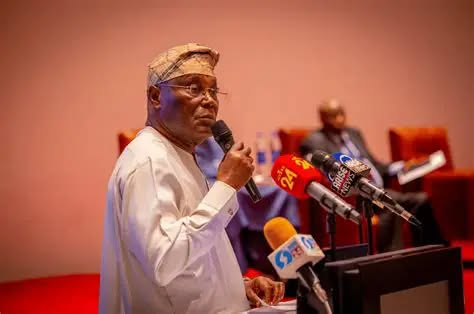
The Federal Government has defended its proposed $21.7 billion external borrowing programme, insisting that the funds will finance productive investments capable of stimulating economic growth, improving infrastructure and strengthening essential public services, despite mounting concerns from opposition leaders about Nigeria's rising debt obligations.
Minister of Finance and Coordinating Minister of the Economy, Taiwo Oyedele, presented the government's position on Wednesday, October 28, 2026, while addressing State House correspondents after a Federal Executive Council meeting chaired by President Bola Ahmed Tinubu at the Presidential Villa in Abuja. His explanation followed criticism from former Vice-President Atiku Abubakar and opposition leader Peter Obi.
The proposed financing forms part of Nigeria's 2026–2027 Supplementary External Borrowing Rolling Plan, which Tinubu submitted to the National Assembly for legislative consideration. It comprises approximately $20.52 billion and €1.045 billion, bringing the combined value to about $21.7 billion at prevailing exchange rates.
Oyedele emphasised that the proposal represents a financing framework rather than confirmation that the government has already received or spent the entire amount. He explained that the projects covered by the programme have an average implementation period of five years.
“This is investment, not borrowing,” the minister declared, arguing that the economic value of the infrastructure and services created should determine how Nigerians assess the proposed financing.
He maintained that borrowing to develop productive assets differs economically from borrowing to finance recurrent consumption, particularly where completed projects can improve transportation, expand electricity supply and strengthen national productivity.
Nevertheless, the proposed facilities would constitute debt obligations if contracted and disbursed, regardless of their intended investment purposes. Their eventual financial implications will depend on repayment terms, implementation costs and the economic benefits generated.
According to the minister, transportation infrastructure accounts for approximately $10.6 billion of the financing plan. Projects identified include the Sokoto–Badagry highway, Lagos–Calabar coastal highway and Kano–Kaduna railway corridor.
These projects are intended to improve connectivity between economic centres, facilitate the movement of agricultural produce and industrial goods, and reduce transportation difficulties affecting businesses and households.
The borrowing programme also covers healthcare, education, agriculture, energy, digital infrastructure, security, environmental protection and social welfare. The government says investments across these sectors are necessary to address infrastructure deficits and support sustainable development.
Oyedele disclosed that approximately $4.8 billion would support projects involving state governments, the Federal Capital Territory, public agencies and development finance institutions. The Federal Government would coordinate the financing arrangements across participating institutions.
He further explained that approximately $7.9 billion was expected from multilateral and bilateral development partners, including the World Bank.
A proposed $5 billion World Bank component would attract concessional interest rates averaging approximately 2.1 percent, while some social-sector facilities would carry rates around two percent.
The minister also identified an indicative average interest rate of 7.8 percent for the commercial borrowing component, describing it as favourable compared with Nigeria's November 2025 Eurobond financing.
These figures illustrate differences between the proposed financing sources. However, interest rates alone do not establish the total borrowing cost, which also depends on repayment periods, fees, currency movements and other contractual conditions.
Oyedele argued that access to appropriately structured external financing could enable Nigeria to complete major infrastructure projects more quickly than relying exclusively on annual budgetary allocations.
He cited the Dangote Refinery as an example of a large investment requiring substantial financing, maintaining that transformative projects often depend on funding arrangements extending beyond immediately available resources.
The minister's defence followed Atiku's call for the National Assembly to withhold approval until the administration provides comprehensive information about the proposed projects and financial commitments.
Atiku demanded greater transparency concerning project costs, contractors, financing conditions and repayment obligations. His position reflects concerns about whether additional borrowing will produce measurable benefits and whether legislators possess sufficient information to assess the proposal.
Obi has similarly questioned Nigeria's growing debt-servicing commitments, warning that increased repayment obligations could restrict resources available for healthcare, education and other essential public services.
The opposition criticism centres on the government's capacity to manage additional debt while addressing existing fiscal pressures and improving living standards.
Neither criticism establishes that the proposed projects lack economic value. However, both raise questions about the affordability, prioritisation and accountability of the planned investments.
Nigeria has experienced sustained pressure on public finances, including substantial debt-servicing obligations, infrastructure shortages and the effects of exchange-rate movements on foreign-currency liabilities.
External borrowing can provide access to capital for development projects, but it also creates exposure to currency fluctuations because repayment obligations are generally denominated in foreign currencies.
A depreciation of the naira can increase the domestic-currency cost of servicing dollar- or euro-denominated loans, even where the original interest rates appear relatively favourable.
The financial sustainability of the programme will therefore depend partly on government revenue, economic performance and the extent to which financed projects generate measurable public benefits.
During Wednesday's Federal Executive Council meeting, the government also considered specific financing arrangements linked to infrastructure development.
Among the approvals discussed was a €155.9 million credit facility involving Deutsche Bank and other lenders for upgrades to electricity substations under the Presidential Power Initiative.
Another involved a $970 million syndicated loan from Standard Chartered and the Africa Finance Corporation for railway rolling stock intended to strengthen transportation and regional trade.
The council also considered a €76.8 million facility from the ECOWAS Bank for Investment and Development for transport infrastructure in Bauchi State.
These financing decisions demonstrate the administration's emphasis on infrastructure expansion, although individual approvals must be distinguished from the broader borrowing programme awaiting legislative consideration.
Oyedele also addressed Nigeria's economic outlook, expressing confidence that government reforms could reduce inflation to a single-digit rate by the end of 2027 or earlier.
That objective remains a government target rather than an achieved outcome. Its realisation will depend on monetary conditions, fiscal policy, food prices, exchange-rate stability and wider economic developments.
The administration has defended its economic reforms as necessary measures to strengthen public finances and encourage investment, while acknowledging that many Nigerians continue to face significant financial difficulties.
The National Assembly now faces responsibility for scrutinising the proposed borrowing arrangements, including their financing terms, project allocations and expected economic returns.
Lawmakers must also consider how implementation will be monitored and whether sufficient safeguards exist to prevent delays, cost overruns and inefficient expenditure.
For the Federal Government, the central argument is that productive investment can strengthen Nigeria's economic position even when financed through borrowing.
For critics, the essential concern is whether the administration can demonstrate that additional debt will produce benefits sufficient to justify its long-term financial obligations.
The proposed $21.7 billion programme remains subject to legislative consideration. Its ultimate value to Nigerians will depend not simply on the scale of financing secured, but on transparent execution, completed projects and measurable improvements in economic and social conditions.
📩 Stone Reporters News | 🌍 stonereportersnews.com
✉️ info@stonereportersnews.com | 📘 Facebook: Stone Reporters News | 🐦 X (Twitter): @StoneReportNew | 📸 Instagram: @stonereportersnews
Add comment
Comments