

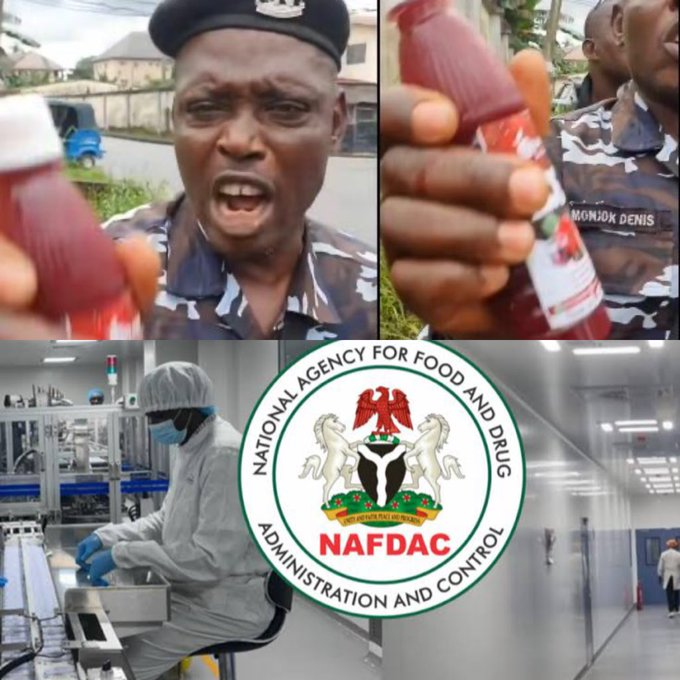
The National Agency for Food and Drug Administration and Control (NAFDAC) has clarified that locally prepared Zobo drinks sold in ordinary, unsealed and unlabelled containers do not require its product registration, following a viral confrontation between police officers and a female beverage vendor in Delta State. The agency, however, maintained that commercially packaged, sealed and labelled Zobo falls within its regulatory requirements.
The clarification was reported on Wednesday, October 28, 2026, after a video circulated on social media showing police officers questioning a woman selling bottled Zobo about the absence of a NAFDAC registration number. The confrontation attracted public attention and raised questions about the regulation of locally produced beverages, the authority of police officers and the treatment of small-scale traders.
Speaking about the incident, NAFDAC spokesperson Christiana Obiazikwor explained that the agency distinguishes between drinks sold informally in ordinary containers and products prepared for commercial distribution with packaging, seals and labels. She said the distinction determines whether the beverage falls within the agency's product registration framework.
“If you produce Zobo without packaging it – putting a label, without sealing it. It is not under NAFDAC’s purview to regulate it,” Obiazikwor said, explaining that packaged, sealed and labelled versions come under the agency's regulatory oversight.
She added that simply preparing Zobo and selling it in an ordinary container does not automatically create a requirement for NAFDAC registration. However, once a producer packages and labels the drink for commercial sale, the applicable registration requirements must be considered.
The clarification followed a confrontation captured in a video that circulated widely on Facebook and other social media platforms. In the recording, police officers were seen examining bottles of Zobo and questioning the vendor about whether the drinks carried an official registration number.
One officer shook a bottle while demanding information about its regulatory status. Another defended the questioning, insisting that the beverage should have a NAFDAC number and asking whether police officers were entitled to raise concerns about products being sold for human consumption.
A man who witnessed the encounter challenged the officers and began recording the exchange. Describing himself as a content creator, he argued that the woman was selling an ordinary locally prepared drink and questioned why the police were concentrating on her business.
The man also alleged that the encounter had continued for more than four hours. That claim has not been independently established, and the available reports do not confirm precisely how long the vendor was questioned or whether she was formally detained.
The disagreement attracted bystanders and subsequently generated debate online. Some commentators questioned whether the police were exercising appropriate authority, while others argued that ensuring the safety of beverages sold to consumers was a legitimate concern.
Delta State Police Command spokesperson Bright Edafe defended the officers, maintaining that they were carrying out their duties. He criticised the intervention of the individual who recorded the confrontation and questioned why officers should be challenged for seeking information about the registration of a consumable product.
Edafe argued that products subject to NAFDAC regulation should comply with the agency's requirements. His comments reflected the police position that checking the regulatory status of goods intended for consumption was not inherently inappropriate.
NAFDAC's subsequent explanation introduced an important distinction into the controversy. The question was not simply whether Zobo is a beverage consumed by the public, but whether the particular product was presented for sale in a manner that brought it within the agency's registration requirements.
Obiazikwor compared the situation with cooking oil sold in open markets. She explained that products sold informally without commercial packaging and labelling are treated differently from those prepared and presented as packaged consumer goods.
When informed about the specific Delta State incident, the spokesperson said a product should have a NAFDAC registration number if it was packaged and labelled. A photograph associated with the viral encounter appeared to show Zobo in a labelled bottle, although the complete circumstances of its production and sale have not been independently verified.
This detail is significant because the clarification does not establish that the officers were necessarily wrong to ask about registration. Equally, it does not establish that their handling of the vendor complied with applicable legal and professional standards.
Those are separate issues requiring consideration of the product's presentation, the circumstances of the police intervention and the legal authority under which the officers acted.
Zobo is a widely consumed Nigerian beverage traditionally prepared from dried hibiscus calyces. Producers commonly add ingredients such as ginger, pineapple, cloves and other flavourings, making it a familiar drink sold in homes, markets, roadside stalls and commercial establishments.
Its affordability and relatively simple preparation have made Zobo an important product for small-scale entrepreneurs, particularly traders who produce beverages in limited quantities for direct sale to consumers.
Some producers sell the drink in reusable or ordinary containers, while others have developed branded products with commercial packaging, labels and distribution arrangements. These different methods of production and presentation help explain why registration questions can arise even when the beverage itself is familiar.
NAFDAC's responsibilities include regulating food and beverage products within its statutory mandate and establishing requirements intended to protect consumers from unsafe, adulterated or improperly presented goods.
Registration requirements are part of that framework, particularly for packaged products entering commercial distribution. However, the agency's clarification indicates that the absence of a registration number should not automatically be treated as evidence of wrongdoing in every informal Zobo transaction.
The distinction also does not mean that unregistered, unpackaged beverages are automatically safe or exempt from all applicable public health and sanitation requirements. Food hygiene remains important regardless of whether a particular product requires NAFDAC registration.
For small-scale beverage producers, the incident highlights the importance of understanding when informal production becomes a packaged commercial operation subject to additional regulatory obligations.
For law enforcement authorities, it raises questions about the need for clear understanding of specialised regulatory requirements when interacting with traders.
No official finding establishing misconduct by the vendor or the officers has been reported. The available accounts also do not establish that NAFDAC conducted a formal inspection of the particular beverage involved.
The controversy ultimately demonstrates the importance of distinguishing regulatory compliance from assumptions based solely on the type of product being sold.
NAFDAC's position is that ordinary unsealed and unlabelled Zobo is treated differently from commercially packaged and labelled beverages. Whether the product involved in the Delta confrontation required registration depends on its actual presentation and the applicable requirements, rather than the fact that it was Zobo alone.
📩 Stone Reporters News | 🌍 stonereportersnews.com
✉️ info@stonereportersnews.com | 📘 Facebook: Stone Reporters News | 🐦 X (Twitter): @StoneReportNew | 📸 Instagram: @stonereportersnews
Add comment
Comments