

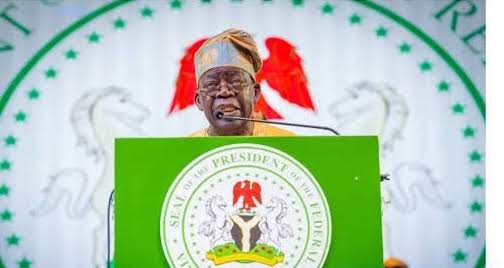
President Bola Ahmed Tinubu has defended his administration's economic reforms, declaring that policies introduced since May 2023 have strengthened Nigeria's public finances, improved macroeconomic stability and restored confidence in the country among international investors and financial institutions.
The President made the assertion in a statement released on Thursday, October 29, 2026, through his Special Adviser on Information and Strategy, Bayo Onanuga. The statement accompanied an essay titled From Reforms to Delivery: Our Infrastructure Investment and Growth Strategy, in which Tinubu outlined the government's economic achievements and defended its plans for additional borrowing.
According to the President, the administration's economic decisions, including the removal of petrol subsidies, foreign exchange reforms and changes to the tax system, have helped improve Nigeria's financial position despite the difficulties experienced by households and businesses.
“Confidence has a price; our cost of borrowing is going down, and the country risk premium has drastically decreased,” Tinubu stated.
He maintained that improved economic indicators and growing investor confidence had created opportunities for Nigeria to attract long-term financing, expand infrastructure and strengthen productive sectors.
Tinubu said the reforms introduced after his inauguration in May 2023 were necessary to address structural weaknesses that had constrained government revenue, discouraged investment and placed pressure on public finances.
“The decisions taken since 2023 were difficult but necessary,” he said.
The President cited economic statistics which, according to him, demonstrated progress in stabilising the economy.
He stated that Nigeria's real Gross Domestic Product grew by 4.43 per cent in the second quarter of 2026, while headline inflation declined to 14.63 per cent in September from 20.98 per cent during the corresponding period in 2025.
Tinubu also reported that gross external reserves had increased to $55.1 billion as of October 9, 2026, including approximately $46 billion in net reserves.
He further said Nigeria's tax-to-GDP ratio had risen from seven per cent to 12.5 per cent, indicating an improvement in the government's ability to generate revenue relative to the size of the economy.
The President presented these developments as evidence that his administration's policies were producing measurable improvements in Nigeria's economic fundamentals.
However, improvements in national economic indicators do not necessarily translate immediately into higher purchasing power or improved living standards for individual households.
Although a decline in inflation indicates that the general pace of price increases has slowed, it does not mean that prices have returned to their previous levels.
Many Nigerians continue to face financial pressures associated with food prices, transportation, housing and other essential expenses.
The administration has acknowledged these challenges while maintaining that sustained reforms are necessary to create conditions for stronger and more inclusive economic growth.
Tinubu argued that international assessments of Nigeria's financial position supported the government's claims of progress.
“These are not political endorsements; they are independent assessments by global rating agencies, index providers, regulators and investors, recognising stronger external reserves, improved macroeconomic management and greater financial credibility,” he stated.
The International Monetary Fund, in its May 2026 assessment of Nigeria, acknowledged that reforms introduced since 2023 had strengthened macroeconomic stability, improved foreign exchange market functioning and reduced some fiscal vulnerabilities.
The IMF also identified the rebuilding of external financial buffers and renewed access to international capital markets as positive developments.
Nevertheless, international assessments have continued to recognise the importance of addressing poverty, food insecurity and other challenges affecting households.
Tinubu maintained that the government's improved standing in financial markets could help attract institutional investors and secure longer-term financing on more favourable conditions.
He said the administration was seeking to redirect public borrowing towards investments capable of generating economic returns rather than relying on debt primarily to address short-term fiscal pressures.
The President defended borrowing for major infrastructure projects, arguing that Nigeria could not achieve its ambition of becoming a $1 trillion economy by 2030 without substantial investment.
“The real question is not how much we borrow, but what we build, what value we create and what future we leave behind,” he declared.
Among the projects identified were the Lagos-Calabar Coastal Highway, Sokoto-Badagry Superhighway, Trans-Sahara Superhighway, electricity transmission upgrades and the modernisation of major commercial ports in Lagos.
Tinubu said these investments would improve transportation, connect economic regions, reduce logistics costs and create opportunities for agricultural and industrial development.
He also identified healthcare, education and vocational training as important components of the government's long-term economic strategy.
According to the President, the Lagos-Calabar Coastal Highway could reduce logistics costs along its corridor by between 15 and 20 per cent.
He further projected that the project could contribute up to two per cent to Nigeria's GDP through increased trade, tourism and industrial activity.
The administration also estimates that the highway could support approximately 100,000 direct construction and engineering jobs, alongside more than 150,000 indirect employment opportunities.
These figures remain government projections rather than independently established outcomes from the completed project.
Tinubu insisted that infrastructure development should be assessed through the economic opportunities it creates and the benefits delivered to citizens.
The President also outlined five priorities for the next phase of his administration's economic strategy.
These include improving food affordability and energy price stability, strengthening fiscal discipline, completing high-impact infrastructure projects, improving the regulatory environment and expanding targeted support for households.
He maintained that greater attention would be directed towards ensuring that economic improvements translate into tangible benefits for ordinary Nigerians.
The government's borrowing strategy has nevertheless attracted criticism from opposition figures and organised labour, particularly over concerns about rising debt obligations and the affordability of additional loans.
Critics have questioned whether the economic benefits of proposed projects will justify their costs and whether sufficient safeguards exist to ensure transparency and accountability.
Nigeria's foreign-currency borrowing also creates exposure to exchange-rate fluctuations, which can increase repayment costs when the naira depreciates.
For this reason, the financial sustainability of infrastructure investments depends not only on their expected economic benefits but also on borrowing terms, project execution and the government's capacity to meet repayment obligations.
Tinubu acknowledged that securing financing alone would not constitute success.
“Securing financing is not the achievement. Completing the project, delivering value and improving the lives of Nigerians is the achievement,” he said.
The President maintained that the administration would continue pursuing responsible borrowing and investments intended to expand economic opportunities for future generations.
His remarks reflect the government's determination to present its reforms as the foundation for long-term economic transformation ahead of the 2027 general elections.
However, the broader assessment of those policies will depend on whether improvements in public finances and investor confidence produce sustained employment, affordable essential goods and better living conditions.
For Nigerians facing continuing economic hardship, the immediate concern remains the extent to which the reported gains translate into meaningful improvements in household welfare.
Tinubu insists that the difficult decisions taken since May 2023 have strengthened the economy and created opportunities for future growth.
The administration now faces the challenge of converting those reported gains into completed infrastructure, productive investment and measurable improvements in the lives of citizens.
📩 Stone Reporters News | 🌍 stonereportersnews.com
✉️ info@stonereportersnews.com | 📘 Facebook: Stone Reporters News | 🐦 X (Twitter): @StoneReportNew | 📸 Instagram: @stonereportersnews
Add comment
Comments