

Reported by: Ijeoma G | Edited by: Carmen Diego
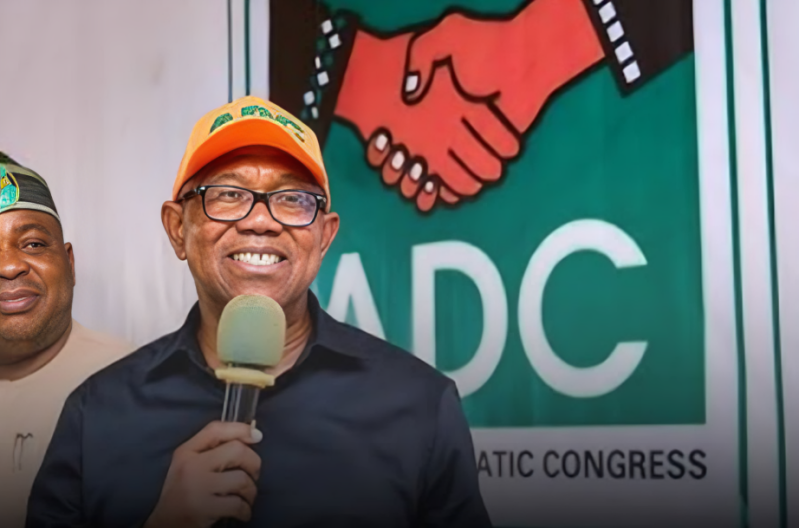
Fresh pressure has mounted on Nigeria’s African Democratic Congress after Peter Obi publicly warned that he could leave the party if its internal processes are compromised, a remark that has sharpened doubts about the cohesion of the opposition coalition gathering around the ADC ahead of the 2027 general election. Obi made the comments during an interview with Arise Television on Monday, April 13, where he insisted that his history of moving between parties was driven by principle and resistance to what he called transactional politics, not by personal convenience.
In the interview, Obi defended his earlier departures from APGA, the PDP and later Labour Party, arguing that he leaves when a political platform stops following rules or becomes destructive to governance. He said he moved from APGA to the PDP because of disagreements with his successor in Anambra State and wanted to avoid a breakdown in governance. He then described the PDP environment as one in which rules were ignored and politics became transactional, saying he could not be part of a primary process built on inducement. Turning to his current position, Obi said he was now in the ADC with many of the same political actors he had encountered before, but added that if the process in the party was again compromised, he would speak out and move if necessary. He went further, saying that if he had to change parties 20 times in order to remain consistent with his principles, he would do so.
The significance of the statement lies not only in the threat of another possible defection, but in its timing. Obi spoke at a moment when the ADC is already battling a fierce leadership dispute that has spilled into the courts, the electoral commission and public protests. He also used the same interview to insist that the ADC’s national convention would go ahead in Abuja on Tuesday, April 14, despite warnings from INEC and mounting internal disputes. Obi said the party had been denied access to major venues, including Eagle Square and the Moshood Abiola National Stadium, and alleged that opposition politics was being deliberately weakened. He argued that democratic competition requires the protection, not suffocation, of opposition parties.
At the centre of the ADC crisis is a battle over who actually controls the party. The dispute pits former Senate President David Mark, who heads the coalition-backed leadership structure, against Nafiu Bala, a former deputy national chairman who argues that he should have automatically succeeded to the top office after changes in the party’s national leadership. The conflict arose after opposition leaders from several parties gravitated toward the ADC in 2025 as a platform for a broader anti-APC coalition. Those figures include Atiku Abubakar, Peter Obi, Nasir El-Rufai, Rotimi Amaechi, Rauf Aregbesola and other senior politicians trying to build a stronger opposition vehicle for 2027.
Court proceedings have since complicated that realignment. According to accounts of the litigation, Bala approached the Federal High Court in Abuja in September 2025 to challenge Mark’s leadership and to stop INEC from recognising the coalition-backed structure. Mark later appealed, but the Court of Appeal on March 12, 2026 dismissed his case, held it to be procedurally defective and ordered all sides to maintain the status quo ante bellum pending determination of the substantive suit. Crucially, the appellate court did not settle the underlying question of who the legitimate leader of the ADC is; it left that issue for the Federal High Court. That legal ambiguity opened the way for fresh administrative conflict and competing interpretations.
INEC then moved to withdraw recognition from the Mark-Aregbesola leadership on its portal, saying it was complying with the court’s preservatory order and maintaining the status quo before the suit was filed. That decision triggered a furious response from the ADC coalition camp, which argued that the commission had misread the court ruling. The party’s spokesman, Bolaji Abdullahi, said the proper status quo to preserve was the position before Bala went to court, which, according to him, meant David Mark remained the recognised leader. The row escalated into a public protest at INEC headquarters in Abuja on April 8, led by Mark and joined by Atiku, Obi, Rabiu Kwankwaso, Rotimi Amaechi and other coalition figures. They accused the electoral body of siding against the opposition and undermining democratic competition.
That wider backdrop gives Obi’s remarks a sharper political edge. His comments were not simply about party loyalty; they were also a warning that the ADC risks repeating the same patterns that, in his view, discredited older parties. In the Arise interview, he said the issue was not about his personal ambition but about the integrity of the democratic process. He accused external forces, specifically the government, of instigating and supervising problems inside opposition parties in order to weaken them. He also said he had never been involved in election rigging at the primary level, in the general election, or afterward, and maintained that he could not preach change while participating in the same methods he condemns.
The Presidency has strongly rejected that line of argument. In a statement issued earlier, presidential adviser Bayo Onanuga dismissed claims linking President Bola Tinubu to the internal crises around Obi and the ADC, calling the allegations unfounded. He said Tinubu had nothing to do with Obi’s departure from Labour Party or with the turmoil inside the ADC, and described the party’s difficulties as self-inflicted. Onanuga also argued that Obi failed to resolve the crisis in Labour Party before leaving and suggested that his move into the ADC reflected the search for an existing political structure rather than evidence of principle. That response underlines how the ADC crisis has now become part of the wider struggle over public perception ahead of 2027.
The immediate practical question is whether Obi’s warning will translate into another political migration. For now, there is no indication that he has begun any formal process to leave the ADC. On the contrary, he has continued to identify with the party publicly, defended its convention plans and appeared alongside other ADC coalition leaders at a recent protest. But his statement unmistakably sets a red line: if the party’s internal mechanism for leadership, convention and candidate selection is seen as compromised, he is prepared to break away rather than stay inside a process he considers tainted.
For the ADC, that is a serious warning. The party is trying to present itself as the principal platform for a credible opposition challenge in 2027, yet it is entering a crucial phase burdened by lawsuits, rival claimants, INEC disputes and now open concerns from one of its most prominent figures. Obi’s remarks have therefore done more than revive debate over his party-switching history. They have exposed the central vulnerability of the ADC project: a coalition built to challenge the ruling party must first prove it can govern itself by rules strong enough to keep its own leading figures inside the tent.
📩 Stone Reporters News | 🌍 stonereportersnews.com
✉️ info@stonereportersnews.com | 📘 Facebook: Stone Reporters News | 🐦 X (Twitter): @StoneReportNew | 📸 Instagram: @stonereportersnews
Add comment
Comments