

Reported by: Oahimire Omone Precious | Edited by: Oravbiere Osayomore Promise.
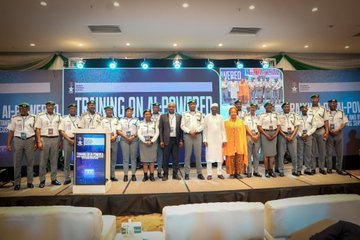
The Nigeria Customs Service has commenced a capacity-building programme focused on the application of Artificial Intelligence in revenue generation, remittances, and financial reconciliation, in what officials describe as a major step toward modernising Nigeria’s public financial management systems.
The training session began on April 13, 2026, at the Ladi Kwali Hall of the Abuja Continental Hotel, bringing together senior Customs officers, technology specialists, and members of the National Assembly’s oversight committees. The initiative reflects a growing institutional push to integrate digital tools into revenue administration and strengthen accountability in government collections.
The Comptroller-General of Customs, Adewale Adeniyi, said the Service is committed to improving transparency in public accounting through the adoption of emerging technologies. He explained that Artificial Intelligence offers significant opportunities to enhance operational efficiency, detect irregularities, and improve understanding of international trade patterns that directly impact revenue flows.
He noted that the Customs Service operates within a complex global trade environment and must continuously adapt to technological advancements to remain effective. According to him, the introduction of AI tools will help the agency better manage data, identify revenue leakages, and strengthen compliance mechanisms across its operations.
Adeniyi also emphasized the importance of active participation in the training programme, urging officers to engage fully with facilitators and apply the knowledge gained to real-world operations. He described the initiative as part of broader reforms aimed at ensuring that the Customs Service remains aligned with global best practices in trade facilitation and border management.
The Deputy Comptroller-General in charge of Finance, Administration, and Technical Services, Kikelomo Adeola, described the programme as both timely and strategic, noting that Artificial Intelligence is rapidly becoming an essential tool in governance and financial management.
She stated that the training was designed to close existing gaps in revenue management processes and equip officers with the technical skills needed to apply AI-driven solutions in safeguarding public funds. She added that strengthening institutional capacity in this area is critical to improving efficiency and reducing losses in revenue collection systems.
Adeola also highlighted the involvement of lawmakers in the programme, describing it as an important demonstration of collaboration between the Customs Service and the National Assembly. She said such synergy is vital for strengthening oversight, improving transparency, and ensuring that reforms are effectively implemented.
The Chairman of the House of Representatives Public Accounts Committee, Bamidele Salam, commended the Customs Service for its reform-oriented approach and commitment to innovation. He noted that Customs plays a central role in Nigeria’s economic structure and significantly influences the country’s fiscal performance and international trade reputation.
Salam stressed the need for continued capacity development within public institutions, warning that the effectiveness of any system depends largely on the competence of those who operate it. He described the adoption of Artificial Intelligence in public administration as necessary, given the increasing complexity of financial and trade systems.
Similarly, the Chairman of the Senate Public Accounts Committee, Senator Ahmed Aliyu, called for sustained collaboration among stakeholders in building resilient systems capable of supporting long-term national development. He emphasized the importance of institutional reforms that can endure beyond individual administrations and continue to serve future generations.
Aliyu commended the Nigeria Customs Service for its ongoing reform efforts and encouraged deeper inter-agency cooperation in the implementation of technology-driven solutions aimed at improving governance outcomes.
The training programme also featured technical presentations from experts in the field of digital transformation and artificial intelligence. One of the facilitators, Bamidele Oyedeji, outlined how AI can be used to improve trade facilitation, enhance risk assessment, and streamline customs operations.
He explained that modern customs administrations around the world are increasingly relying on data-driven systems to monitor imports and exports, detect anomalies, and improve revenue collection efficiency. According to him, Nigeria stands to benefit significantly from adopting similar technologies if properly implemented and supported by adequate institutional frameworks.
Participants at the training were exposed to practical applications of AI in areas such as revenue tracking, data reconciliation, fraud detection, and predictive analysis of trade flows. Officials said the goal is to ensure that officers are not only familiar with the technology but are also capable of integrating it into daily operational procedures.
The Nigeria Customs Service has in recent years intensified efforts to modernise its operations through digital platforms, automation of processes, and improved data management systems. The introduction of Artificial Intelligence training is seen as a continuation of these reforms aimed at strengthening efficiency and reducing opportunities for revenue leakages.
Observers note that the success of such initiatives will depend on sustained investment in infrastructure, continuous training, and effective collaboration between government agencies and the private sector. They also emphasize the importance of aligning technological adoption with clear policy frameworks to ensure consistency and accountability.
As the programme progresses, Customs authorities say further phases of training will be rolled out to cover more personnel across different commands. The long-term objective, according to officials, is to build a fully digitised and intelligence-driven customs administration capable of supporting Nigeria’s economic growth and trade competitiveness.
📩 Stone Reporters News | 🌍 stonereportersnews.com
✉️ info@stonereportersnews.com | 📘 Facebook: Stone Reporters News | 🐦 X (Twitter): @StoneReportNew | 📸 Instagram: @stonereportersnews
Add comment
Comments