

Reported by: Ijeoma G | Edited by: Oravbiere Osayomore Promise.
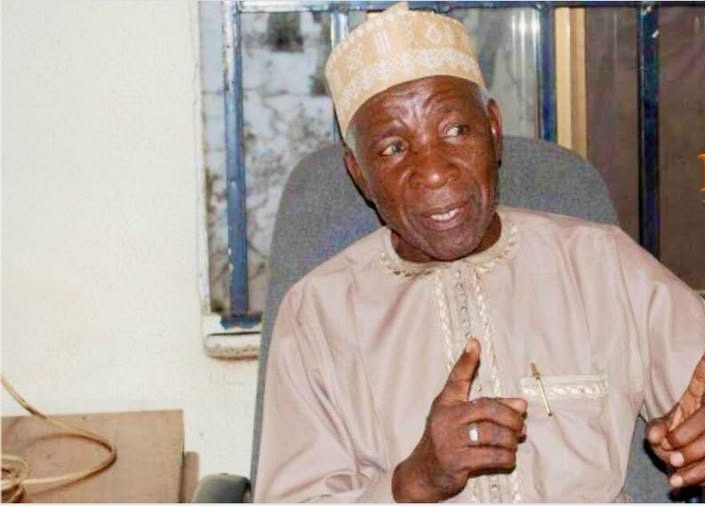
At a national convention of the African Democratic Congress held in Abuja, senior party figure Buba Galadima made a striking assertion about Nigeria’s political trajectory ahead of the 2027 general elections, claiming that the ruling All Progressives Congress would be defeated regardless of the opposition candidate presented.
Speaking to delegates gathered at the event, Galadima argued that widespread public dissatisfaction with the current administration would play a decisive role in shaping electoral outcomes, insisting that political sentiment across the country had shifted significantly since the last general election.
He further stated that the opposition camp was confident of victory in the forthcoming polls, suggesting that the governing party had lost considerable goodwill among voters due to economic and governance challenges confronting the nation.
In one of the most controversial remarks of his address, Galadima claimed that even an “unlikely candidate” fielded by opposition forces would still emerge victorious if elections were conducted under present conditions, a statement that has since generated widespread debate.
The political veteran also accused the ruling party of attempting to weaken opposition structures and frustrate their activities, alleging that institutional pressure was being applied to limit their operational capacity, though he did not provide specific evidence for the claim.
His comments come at a time when political parties across Nigeria are beginning early strategic positioning for the 2027 general elections, with coalition discussions, internal reorganizations, and leadership contests gradually intensifying behind the scenes.
The African Democratic Congress has in recent months sought to reposition itself as a viable alternative in Nigeria’s political landscape, attracting attention from figures critical of both the ruling party and the major opposition blocs.
Galadima’s remarks quickly circulated across political and media spaces, prompting reactions from supporters of both the governing All Progressives Congress and opposition groups, many of whom interpreted his comments as either political optimism or provocative rhetoric.
While APC supporters dismissed the statement as exaggerated and politically motivated, opposition sympathizers pointed to it as evidence of growing discontent among the electorate, though no independent electoral data was cited in the remarks.
Analysts note that early political declarations of this nature are common in Nigeria’s pre-election period, often reflecting strategic positioning rather than definitive forecasting of electoral outcomes.
The 2027 general elections, expected to be held in January 2027 according to the Independent National Electoral Commission’s broad timeline, are anticipated to be highly competitive, with multiple parties preparing for nationwide contests across presidential, gubernatorial, and legislative seats.
As political alignments continue to evolve, statements such as Galadima’s are likely to fuel further debate about the strength of opposition forces and the electoral prospects of the incumbent administration in the coming years.
Galadima, a long-time political actor known for his involvement in several Nigerian opposition movements over the years, has remained a vocal critic of successive administrations and frequently participates in national political discourse through party platforms and public commentary. The African Democratic Congress, though not among the dominant political parties in Nigeria, has in recent cycles positioned itself as part of broader opposition realignments seeking to challenge the dominance of the ruling party at federal level.
The statement has drawn immediate reactions across Nigeria’s political landscape, with party supporters, commentators, and civil society observers engaging in debate over its implications. While some opposition supporters interpreted the remark as an expression of confidence in shifting public sentiment, others viewed it as an example of heightened political rhetoric typical of pre-election periods. Supporters of the ruling party, meanwhile, rejected the claim as unrealistic, arguing that electoral outcomes cannot be predetermined by sentiment alone and must reflect structured voting processes.
The ruling All Progressives Congress has not issued an official response to Galadima’s specific remarks, but party figures in previous similar instances have consistently dismissed opposition predictions of electoral defeat as politically motivated and lacking empirical basis. Within Nigeria’s broader political environment, such exchanges are common as parties position themselves ahead of elections, often trading accusations over governance performance and electoral credibility.
The Independent National Electoral Commission is expected to outline a clearer timetable for the 2027 general elections as the electoral cycle progresses, though current projections place the polls within the early part of the year. Analysts note that early political statements, such as those made at party conventions, often reflect strategic messaging intended to shape public perception long before official campaigns begin.
The remarks also highlight the increasingly heated nature of political discourse in Nigeria as the country moves closer to another general election cycle, with early positioning and coalition building already influencing public debate. Experts caution that while such statements attract attention, they do not necessarily translate into measurable electoral outcomes, which depend on voter turnout, party organization, and the credibility of the electoral process.
In previous election cycles in Nigeria, similar statements from political figures have often been used to mobilize party supporters and signal confidence ahead of contests, even when electoral outcomes remained uncertain. Political analysts note that such rhetoric is part of a broader pattern of competitive messaging that intensifies as elections approach, particularly in multi-party systems where coalition-building and voter persuasion play central roles.
The unfolding political conversation around the 2027 elections is expected to continue evolving as parties refine their strategies, build alliances, and respond to shifting public sentiment. As campaigns draw nearer, statements such as those made at party conventions are likely to be revisited in light of emerging political realities, with both supporters and critics assessing their accuracy against actual electoral developments on the ground.
Weeks and months ahead are expected to bring intensified political engagement across Nigeria as parties continue preparations for the next general elections, with attention increasingly focused on policy messaging, voter outreach, and internal party cohesion as key determinants of future electoral success.
Political observers expect sustained debate nationwide ahead.
📩 Stone Reporters News | 🌍 stonereportersnews.com
✉️ info@stonereportersnews.com | 📘 Facebook: Stone Reporters News | 🐦 X (Twitter): @StoneReportNew | 📸 Instagram: @stonereportersnews
Add comment
Comments