

Reported by: Ijeoma G | Edited by: Oravbiere Osayomore Promise.
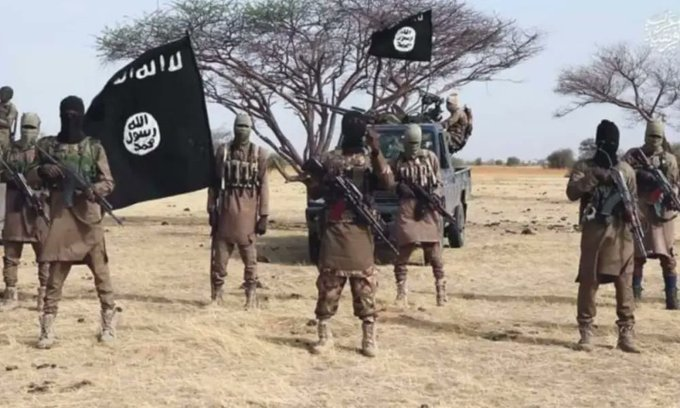
Suspected fighters of the Islamic State West Africa Province have reportedly killed a Nigerian police officer and two members of the Civilian Joint Task Force in Nigeria’s conflict-ridden northeast, underscoring persistent security challenges in the region despite ongoing counterinsurgency operations.
The incident, which came to light on April 15, 2026, was disclosed by security analyst Brant Philip via a post on the social media platform X. According to the account, the victims had been captured earlier in separate locations across Borno State, a region that has remained the epicenter of insurgent activities for over a decade.
Details indicate that the victims were held for several days before being killed, a pattern analysts say aligns with known tactics employed by ISWAP. The group is believed to detain captured security personnel and local militia members temporarily, often for interrogation or intelligence gathering, before carrying out executions in groups.
The same report revealed that, just days before the latest killings, another member of the Civilian Joint Task Force was similarly killed after being captured near Damasak, a border town that has witnessed repeated attacks due to its strategic location near Niger.
While official confirmation from Nigerian security authorities remained limited at the time of reporting, the development is consistent with a broader pattern of violence in the Lake Chad Basin, where ISWAP continues to stage attacks against both military and civilian targets. The group, which split from Boko Haram in 2016, has since distinguished itself through more structured operations and targeted assaults on security formations.
The Civilian Joint Task Force, a loosely organized militia composed of local volunteers, has played a significant role in supporting Nigeria’s military in counterinsurgency efforts. Their knowledge of local terrain and communities has made them a critical asset in intelligence gathering and patrol operations. However, their involvement has also made them frequent targets for insurgent reprisals.
Security experts note that attacks on CJTF members and security personnel serve multiple purposes for ISWAP, including weakening local resistance networks, deterring collaboration with authorities, and projecting strength within contested territories. The targeting of a police officer alongside CJTF members further highlights the group’s continued focus on undermining state authority in the region.
The northeast has experienced more than a decade of insurgency, with thousands of lives lost and millions displaced. Despite sustained military campaigns and regional cooperation involving neighboring countries such as Niger, Chad, and Cameroon, armed groups continue to exploit difficult terrain and porous borders to sustain their operations.
In recent months, there have been renewed concerns about the evolving tactics of ISWAP, including increased ambushes, kidnappings, and attacks on rural communities. Analysts say the group has adapted to military pressure by decentralizing its operations and relying on mobility and intelligence-driven strikes.
The reported killings also highlight ongoing risks faced by security personnel operating in remote and volatile areas. In many cases, patrol units and local militias operate with limited resources, exposing them to ambushes and capture. The delay between capture and execution, as described in the report, suggests a calculated approach by the insurgents aimed at extracting strategic information before carrying out their actions.
For residents of Borno State and surrounding areas, such incidents continue to reinforce a climate of fear and uncertainty. Communities in affected zones often face the dual challenge of insurgent violence and restricted access to basic services, as insecurity hampers humanitarian and development efforts.
Authorities have repeatedly emphasized their commitment to restoring stability in the northeast, with ongoing military operations targeting insurgent strongholds. However, the persistence of attacks such as this indicates that the conflict remains far from over.
The Nigerian government has also sought to strengthen collaboration with local communities, recognizing the importance of grassroots support in countering insurgency. Initiatives aimed at deradicalization, rehabilitation, and reintegration of former fighters have been introduced, although their long-term impact remains under evaluation.
As the situation develops, observers stress the need for sustained and coordinated efforts combining military action with socio-economic interventions to address the root causes of the conflict. Without such a comprehensive approach, they warn, cycles of violence may continue to undermine progress in the region.
The reported execution of the police officer and CJTF members serves as a stark reminder of the ongoing human cost of the insurgency and the complex security landscape facing Nigeria’s northeast.
📩 Stone Reporters News | 🌍 stonereportersnews.com
✉️ info@stonereportersnews.com | 📘 Facebook: Stone Reporters News | 🐦 X (Twitter): @StoneReportNew | 📸 Instagram: @stonereportersnews
Add comment
Comments